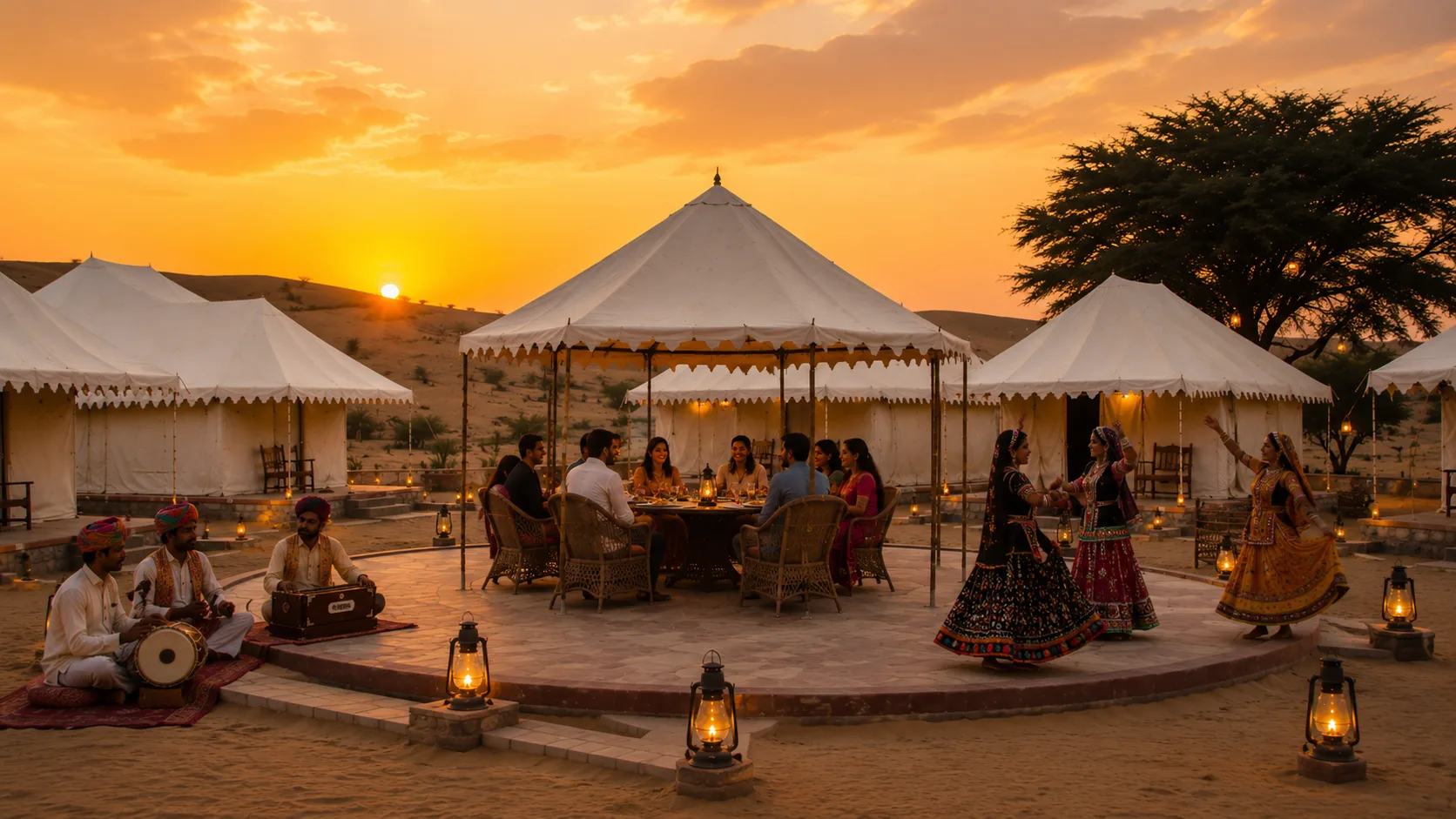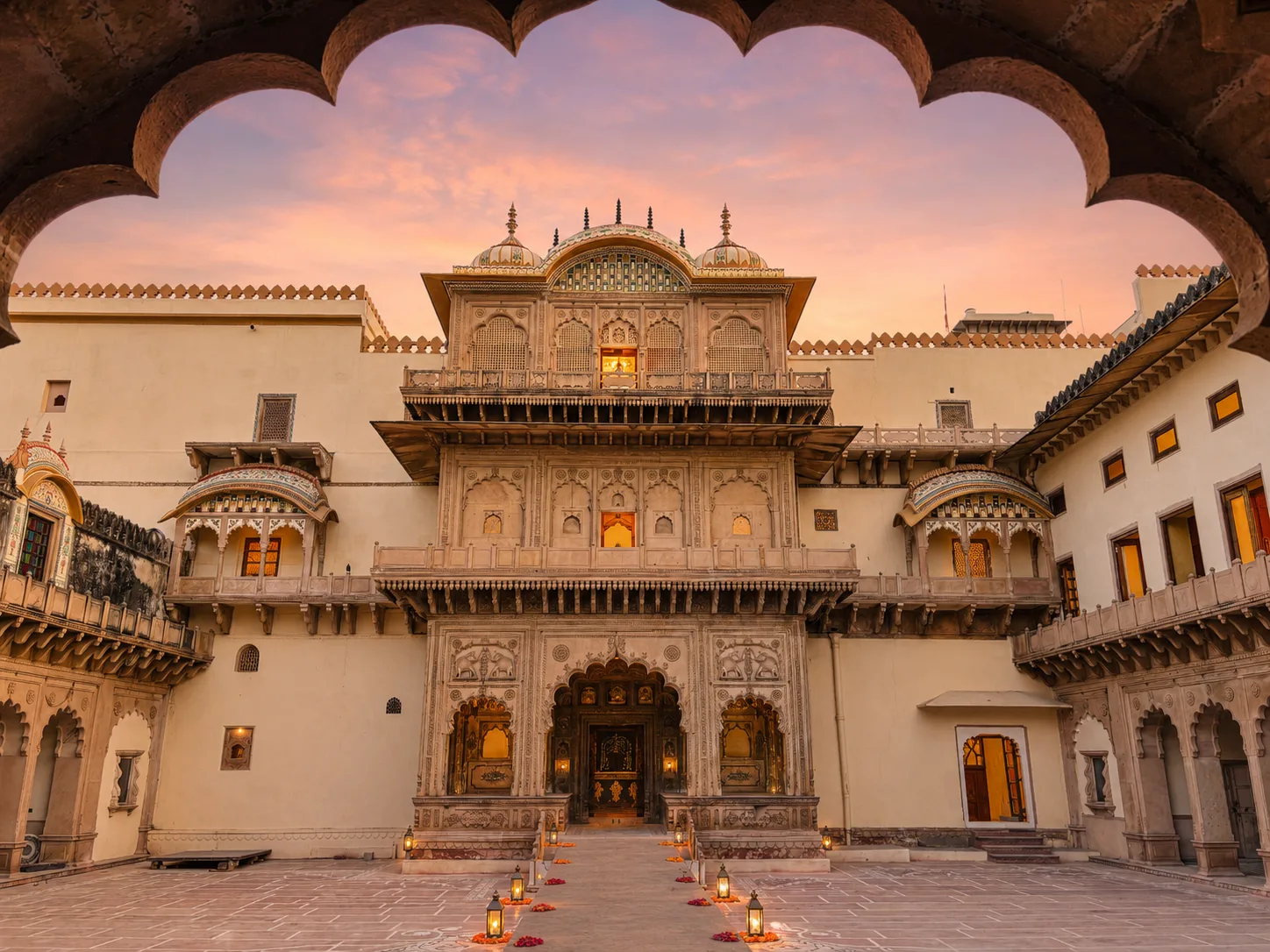
The first memorable moment of a wedding does not always happen at the mandap. It can begin when guests approach the historic surroundings of Lohagarh Fort, see Mahal Khas Palace for the first time and receive a welcome that immediately establishes the character of the celebration.
Arrival influences how guests understand everything that follows. A rushed check-in, unclear directions or crowded entrance can make even a beautiful venue feel unprepared. A coordinated welcome, however, can help travellers move smoothly from their journey into the wedding experience.
Mahal Khas Palace combines a heritage palace setting, royal-inspired suites, lawns, banquet facilities and traditional hospitality within one destination. For couples considering the Best Wedding Hotel in Bharatpur, the palace provides an opportunity to transform arrival from a logistical necessity into the opening ceremony of the wedding story.
At Mahal Khas Palace, a wedding can begin before guests reach the first decorated venue. Its location within the historic surroundings of Lohagarh Fort creates a powerful setting for traditional welcomes, family receptions and ceremonial processions. With thoughtful timing, guest movement, music, hospitality and photography planning, the arrival can become an emotional opening chapter that introduces everyone to the celebration’s royal character.
Why Does the Approach to Mahal Khas Palace Matter?
Mahal Khas Palace is located on Maharaja Surajmal Road within the historic surroundings of Lohagarh Fort. This setting gives the approach a sense of place before guests enter any decorated function area.
Wedding families can use the palace environment to introduce Bharatpur’s royal character naturally. The fort surroundings, palace architecture and heritage ambience already provide a visual foundation, reducing the need to manufacture an artificial royal theme.
The approach should still be planned carefully. Vehicle movement, pedestrian safety, signage and photography positions should be discussed with the palace team before the event. Guests need to admire the setting without being delayed unnecessarily or placed in conflict with arriving vehicles and service operations.
A successful approach builds anticipation while remaining comfortable and organised.
What Should Guests Experience During Their First Five Minutes?
The first few minutes should answer three questions without requiring guests to ask repeatedly:
- Where should they go?
- Who will receive them?
- What happens next?
At Mahal Khas Palace, the welcome point can be designed to provide direction as well as emotion. Family representatives or trained hospitality staff can greet guests, verify their accommodation information and guide them towards refreshments, registration or rooms.
Music, flowers or traditional elements may be incorporated according to the approved wedding plan, but these should support the flow rather than block it. Guests carrying luggage, elderly relatives and families with children require clear movement space.
A welcome becomes genuinely royal when warmth, dignity and organisation work together—not when visual decoration overwhelms practical comfort.
How Can a Traditional Welcome Feel Personal?
Traditional hospitality is already part of Mahal Khas Palace’s identity. A wedding family can build on this by creating a welcome that reflects its customs, regional background and relationship with the arriving guests.
Depending on family tradition and confirmed palace arrangements, the welcome may include ceremonial greetings, music, floral elements, refreshments or personalised notes. The exact activities should be agreed upon beforehand rather than improvised at the entrance.
Personalisation can also appear through smaller details:
- Guest names displayed correctly
- A schedule provided at arrival
- Welcome messages from the couple
- Assistance for senior relatives
- Child-friendly information for families
- Clear contacts for both wedding families
These elements communicate care more effectively than expensive décor without guest support.
How Should Arrival Times Be Organised?
Destination-wedding guests rarely arrive together. Some may travel by train, others by road, and a few may reach Bharatpur earlier or later than expected. One welcome team cannot maintain the same energy for an undefined arrival period without a plan.
Wedding families should prepare an arrival sheet containing guest names, expected times, travel details, room allocation and special assistance requirements. The information should be updated carefully and shared only with the responsible hospitality team.
At Mahal Khas Palace, arrivals can be grouped into manageable windows. Larger groups may receive a coordinated welcome, while individual late arrivals can still be greeted warmly through a smaller arrangement.
The family should also decide what happens when guests arrive before check-in or during another ceremony. Seating, luggage management and refreshments can prevent waiting time from becoming uncomfortable.
Why Is Room Allocation Part of the Welcome?
A guest does not feel fully received until the movement from entrance to accommodation is complete. Confusion over room assignments can weaken the impression created at the arrival point.
Mahal Khas Palace offers the Maharaja Suite, Prince Suite (Gantaghar), Princess Suite, Commodore Subhash Suite, Royal Suite and Maharani Suite. Wedding families should coordinate allocations according to confirmed occupancy, guest needs and the practical requirements of the celebration.
Senior relatives may require convenient access, while the bride, groom and close family may need accommodation suited to preparation and coordination. Couples and special guests may value a category that gives their stay a more distinctive identity.
Room lists should be completed early, and last-minute exchanges should be controlled through one authorised coordinator.
How Can Luggage Movement Remain Invisible?
Wedding guests often arrive with several outfits, footwear, gifts and personal belongings. If luggage accumulates at the palace entrance, it can create congestion, interfere with photography and increase the possibility of confusion.
Each bag should be identifiable through a secure system connected with the guest and room allocation. Responsibility for handling and delivery should be clearly defined with the palace team.
Guests should retain medicines, jewellery, documents, cash and other valuables personally rather than placing them in general luggage movement. The wedding family should communicate this before arrival.
Efficient luggage handling allows guests to participate in the welcome without worrying about where their belongings will go next.
How Does the Baraat Create a Different Type of Arrival?
Guest check-in and the baraat are separate arrival experiences. The baraat is ceremonial, energetic and emotionally significant, requiring its own route, timing and assembly plan.
At Mahal Khas Palace, the historic surroundings can create a powerful background for a traditional procession. However, the route must be approved according to access, safety, sound conditions, vehicle movement and palace operations.
Planning should identify:
- The baraat assembly point
- Permitted procession route
- Expected duration
- Music and sound arrangements
- Groom’s entry sequence
- Family-reception point
- Photography and video positions
- Contingency for weather or delay
Traditional procession elements should only be included when permitted, safe and professionally managed. Animal welfare, local rules and guest safety must be treated as essential requirements rather than decorative concerns.
How Should the Bride’s Family Receive the Procession?
The milni or family reception can become emotionally disorganised when participants do not know where to stand or when their turn will occur. A simple sequence can protect both tradition and timing.
At Mahal Khas Palace, the reception point should provide adequate space for key family members, photographers and arriving guests. Participants can be briefed before the procession approaches so ceremonial introductions happen naturally.
The hospitality team should also consider guests who are not directly involved. They need seating, refreshments or a clear path towards the next area instead of remaining crowded around the ceremony.
A royal welcome is not created only for the groom. It should make both families and every accompanying guest feel recognised.
Why Should Photography Follow the Experience?
Mahal Khas Palace’s heritage architecture and Lohagarh Fort surroundings can create meaningful wedding photographs, but photography should document the welcome rather than repeatedly stopping it.
Positions for photographers and videographers should be planned in advance. Important moments—such as the groom’s approach, family greetings and the couple’s first formal entry—can be identified without turning every movement into a staged retake.
Guests should also be able to enter safely without crossing equipment or cables. Drone use, lighting, tripods and other technical arrangements must be approved according to property rules and applicable regulations.
The strongest photographs often emerge when people are genuinely participating rather than waiting for constant instructions.
How Can Food and Refreshments Support the Arrival?
Travel can leave guests hungry, dehydrated or tired. A welcome refreshment provides comfort while also introducing Mahal Khas Palace’s hospitality.
The serving arrangement should match the arrival pattern. A large group may require efficient counters or circulated service, while scattered arrivals may need refreshments that remain available without losing quality.
Dietary requirements, children’s needs and serving times should be discussed with the palace’s catering team. Refreshments should be positioned where they do not obstruct registration, luggage handling or guest movement.
Food becomes part of the royal welcome when it is timely, thoughtfully presented and easy to access.
How Does the Arrival Lead into the First Function?
The welcome should not feel disconnected from the wedding schedule. Guests need enough time to reach their rooms, refresh, change clothes and travel to the first function without pressure.
Printed or digital schedules should include the function name, location, start time, dress guidance and a contact number. If the first event begins soon after arrival, guests should know this before travelling to Bharatpur.
Mahal Khas Palace allows accommodation and celebrations to remain within one heritage environment, but families must still calculate realistic preparation and movement time. A function should not begin with half the guests still unpacking.
A carefully timed transition helps the first celebration receive the attention it deserves.
Why Does the Palace Setting Support a Royal Wedding Identity?
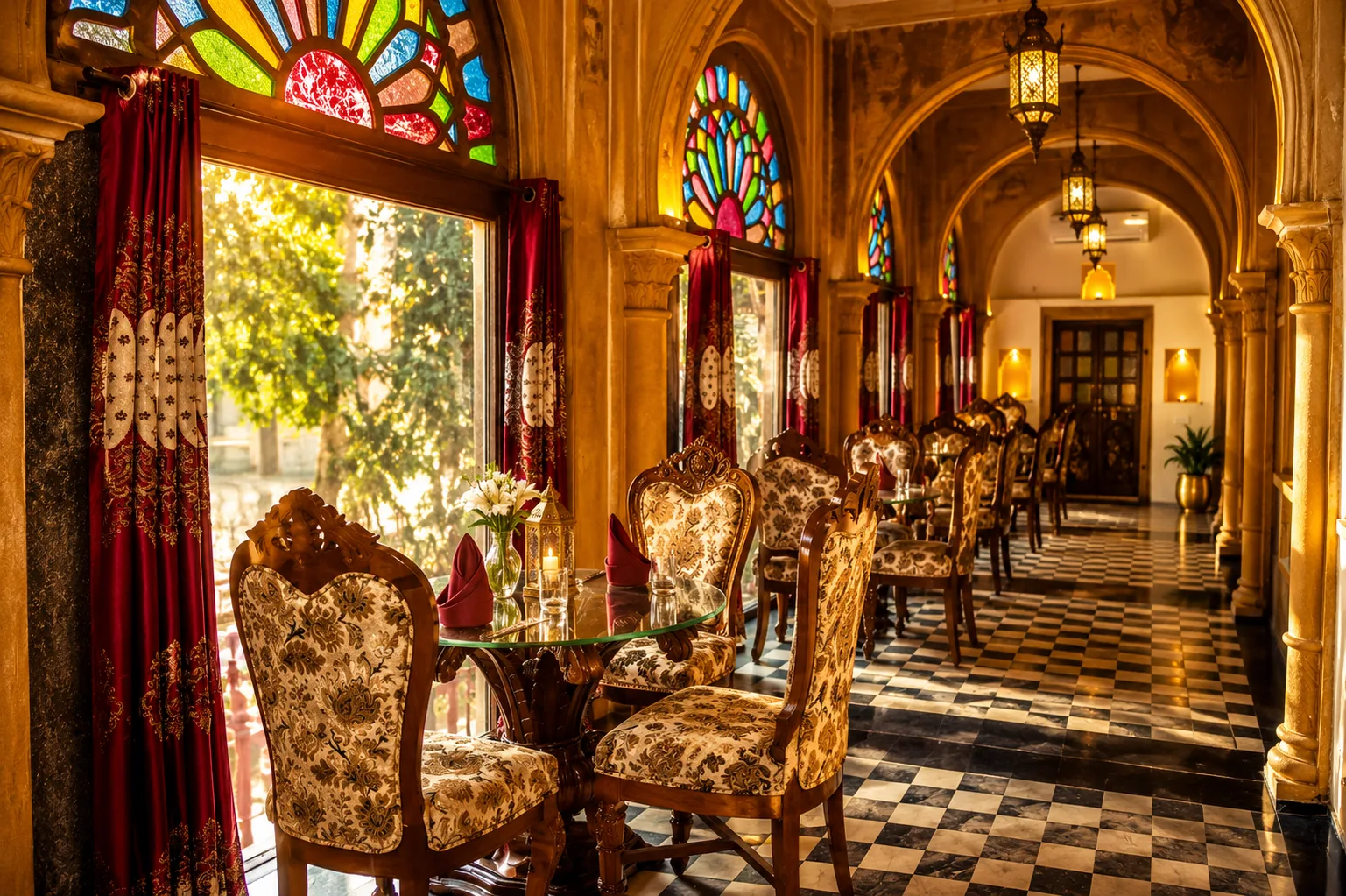
A royal wedding theme is most convincing when it grows from the venue’s authentic character. Mahal Khas Palace offers heritage architecture, palace ambience, elegant suites, wedding lawns and banquet facilities within the surroundings of Lohagarh Fort.
Travellers considering a Luxury Hotel in Bharatpur for a wedding stay can experience both comfort and a strong relationship with the destination. The property’s character extends from guest accommodation to the shared celebration environment.
Mahal Khas Palace can also appeal to travellers seeking the Best Hotel in Bharatpur because the same heritage atmosphere that strengthens weddings gives leisure guests a distinctive stay. This consistency prevents the wedding from feeling like a temporary theme placed over an unrelated property.
What Should Families Confirm Before Finalising the Welcome?
Before approving the arrival experience, the wedding family should confirm:
- Guest and vehicle entry arrangements
- Arrival and registration locations
- Welcome elements permitted by the palace
- Luggage-handling procedure
- Early-arrival arrangements
- Room-allocation process
- Baraat route and timing
- Sound and music permissions
- Photography positions
- Refreshment service
- Weather alternatives
- Responsible family and palace contacts
Every agreed detail should be documented. Written coordination helps the palace, planners and families work from one version of the plan.
Conclusion
A wedding arrival at Mahal Khas Palace can be much more than guests stepping out of vehicles and collecting room keys. The historic Lohagarh Fort surroundings, palace architecture, traditional hospitality and royal suites create an opportunity to introduce the celebration with warmth and character.
The strongest welcome combines emotion with disciplined planning. Guests are greeted personally, luggage moves smoothly, rooms are ready according to the agreed arrangement and the baraat follows a safe, meaningful route.
When every transition is considered, Mahal Khas Palace begins telling the wedding story before the first formal ceremony. Guests do not simply arrive at a hotel—they enter a celebration shaped by Bharatpur’s heritage and the palace’s royal identity.