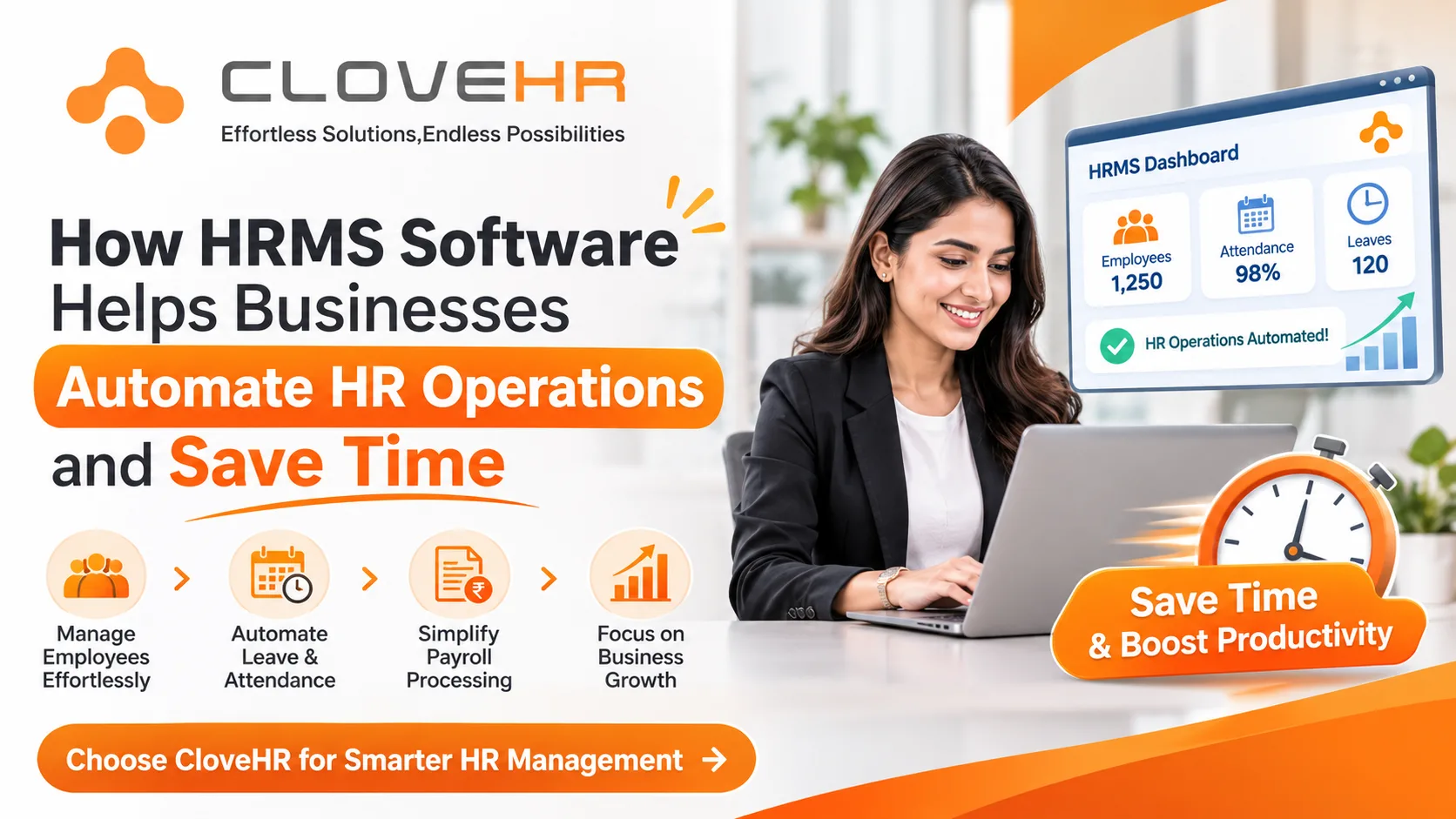
How HRMS Software Helps Businesses Automate HR Operations and Save Time
Managing human resources is one of the most important responsibilities of any organization. From maintaining employee records and processing salaries to tracking attendance, approving leave requests, and monitoring performance, HR teams handle numerous activities every day. When these processes are managed manually, they can consume valuable time, increase administrative workloads, and create unnecessary errors.
This is where Human Resource Management Software becomes an important business solution. HRMS software helps organizations automate routine HR activities, centralize employee information, improve workflow efficiency, and provide a better experience for employees and HR professionals.
Whether a company has a small team or hundreds of employees, an effective HR management system can simplify everyday operations and support long-term business growth.
In this guide, we will explore how HRMS software helps businesses automate HR operations, save time, reduce manual work, and build a more productive workplace.
What Is HRMS Software?
HRMS software is a digital platform designed to manage and automate different human resource functions within an organization. Instead of using multiple spreadsheets, paper documents, emails, and disconnected applications, businesses can manage important employee-related processes through a centralized system.
A modern HRMS platform may include several modules, such as:
- Employee information and record management
- Attendance and working-hours tracking
- Payroll and salary management
- Leave management and approval workflows
- Shift and timesheet management
- Recruitment and onboarding
- Performance and appraisal management
- Training and learning management
- Employee document management
- Employee helpdesk and support
The main purpose of HRMS software is to reduce repetitive administrative tasks and allow HR professionals to focus on more strategic responsibilities.
For example, CloveHR brings multiple HR functions together through a connected HRMS platform, helping organizations manage employee information, attendance, leave, payroll, performance, and other workforce activities.
Why Do Businesses Need HR Automation?
Traditional HR management often involves repetitive activities. An HR executive may spend hours updating attendance records, checking leave balances, responding to employee queries, preparing reports, and verifying payroll information.
As the workforce grows, these activities become more complicated.
Manual HR processes can create several challenges:
- Employee information may be stored in different files and locations.
- Attendance records may require repeated manual verification.
- Leave requests may get delayed because of lengthy approval processes.
- Payroll calculations may require information from multiple sources.
- HR teams may spend too much time answering routine employee questions.
- Managers may lack real-time visibility into workforce activities.
HR automation addresses these challenges by organizing information and automating repetitive workflows.
10 Ways HRMS Software Automates HR Operations and Saves Time
1. Centralizes Employee Information
Maintaining employee records manually can become difficult when an organization has a growing workforce. HR teams may need to manage personal information, employment details, contact information, documents, job roles, and reporting structures.
HRMS software provides a centralized location for organizing employee information.
With an employee management system, authorized HR professionals can access relevant employee records without searching through multiple spreadsheets or physical files.
CloveHR offers employee management capabilities that help organizations maintain employee profiles, records, documents, and essential HR information in one platform.
This saves time, reduces unnecessary duplication, and makes employee information easier to manage.
2. Automates Attendance Management
Tracking employee attendance is another important responsibility of HR departments.
Manual attendance management can involve collecting attendance sheets, checking working hours, calculating absences, and correcting discrepancies.
An attendance management system helps organizations organize employee attendance and working-hour information digitally.
Automated attendance workflows can help HR teams:
- Monitor employee attendance records.
- Review working hours.
- Identify attendance irregularities.
- Manage shift schedules.
- Maintain more consistent attendance information.
By reducing manual data entry, HRMS software helps employees and managers spend less time on administrative attendance activities.
3. Simplifies Payroll Processing
Payroll processing involves multiple activities, including salary structures, attendance information, leave adjustments, deductions, reimbursements, and payslip preparation.
When these activities are managed manually, payroll teams must collect and verify information from several sources.
Payroll management software helps streamline this process by bringing relevant payroll information into a connected workflow.
CloveHR payroll supports salary structures, payroll calculations, attendance and leave inputs, applicable deductions, payroll review, and payslip sharing.
This makes payroll administration more organized and helps reduce repetitive calculations.
However, organizations should always review payroll outputs and verify applicable tax and statutory requirements before finalizing payments.
4. Streamlines Leave Management
Processing employee leave requests manually can involve emails, messages, spreadsheets, and repeated follow-ups.
A leave management system makes the process easier by allowing employees to submit requests digitally and helping managers review and approve them through a structured workflow.
HR teams can manage leave policies, track balances, maintain records, and monitor employee leave activities.
This reduces unnecessary communication and gives employees better visibility into their leave information.
5. Improves Employee Self-Service
Employees frequently contact HR departments for routine information such as leave balances, attendance records, company policies, payslips, and employment documents.
An employee self-service portal reduces this dependency.
Employees can access permitted information and complete common HR activities independently.
Depending on the platform and configured permissions, self-service capabilities may include:
- Applying for leave.
- Viewing attendance information.
- Accessing policies and documents.
- Checking available HR information.
- Raising helpdesk requests.
CloveHR provides employee self-service access through its web platform and mobile application, helping employees handle common HR activities without depending on HR for every request.
6. Simplifies Shift and Timesheet Management
Businesses operating across different shifts need an organized way to assign schedules and monitor working hours.
Managing employee rosters manually can create scheduling conflicts and communication gaps.
Shift management software helps HR teams organize employee shifts and schedules. Timesheet management helps record work duration and provides better visibility into employee working patterns.
CloveHR supports shift scheduling and timesheet-related workflows, helping organizations coordinate workforce activities more efficiently.
7. Organizes Recruitment and Onboarding
Recruitment involves several stages, including job openings, candidate applications, interviews, selection, and joining formalities.
When these activities are handled through scattered emails and spreadsheets, tracking candidates can become challenging.
Recruitment management software helps HR teams organize candidate information and hiring activities.
Digital onboarding processes can also help new employees complete documentation and access essential information more smoothly.
An organized recruitment and onboarding process saves administrative time and creates a more professional experience for new hires.
8. Improves Performance Management
Employee performance management requires regular monitoring, feedback, goal setting, and appraisal activities.
Without an organized system, HR professionals may struggle to maintain consistent performance records.
Performance management software helps organizations establish structured processes for monitoring employee progress and supporting performance reviews.
CloveHR includes performance and appraisal management capabilities that help organizations organize employee performance activities and support continuous improvement.
9. Automates Routine HR Communication and Support
HR teams receive numerous questions about policies, leave, attendance, documentation, and workplace procedures.
Answering the same questions repeatedly consumes valuable working hours.
A structured employee helpdesk and support management system helps organize employee requests and track their progress.
Instead of relying entirely on informal communication, HR teams can maintain a more systematic approach to handling employee concerns.
10. Provides Better Workforce Insights
Business decisions become more effective when managers have access to accurate workforce information.
HRMS software helps centralize employee-related information and makes it easier to review important workforce metrics.
Depending on available reporting features, businesses can analyze:
- Attendance patterns.
- Employee performance.
- Leave utilization.
- Workforce productivity.
- Employee turnover.
- Training progress.
These insights help management identify operational gaps and make better-informed workforce decisions.
Key Benefits of HRMS Software for Small and Large Businesses
HRMS software is useful for organizations of different sizes because it helps standardize HR processes and reduce repetitive work.
Some important benefits include:
Improved operational efficiency: Automated workflows reduce time spent on repetitive administrative activities.
Better information management: Centralized employee records make it easier to organize and retrieve information.
Reduced manual errors: Structured data entry and automated calculations can reduce avoidable mistakes.
Improved employee experience: Self-service access makes common HR activities more convenient.
Better coordination: Managers and HR professionals can work through more organized approval and management workflows.
Scalability: Businesses can expand their HR processes as their workforce grows.
How to Choose the Right HRMS Software for Your Business
Choosing the right HRMS software requires understanding your organization's requirements.
Before selecting a solution, consider the following factors:
- Required features: Identify whether you need employee management, payroll, attendance, leave, performance, or other HR modules.
- Ease of use: Select software that employees, managers, and HR professionals can use comfortably.
- Integration capabilities: Check whether the system supports your existing business workflows and required integrations.
- Data security: Review access permissions, data protection practices, and security controls.
- Scalability: Choose a solution that can support your organization's future requirements.
- Reporting: Evaluate whether the available reports provide useful workforce information.
- Customer support: Check the availability and quality of assistance.
- Pricing: Compare the total cost with the features and business value offered.
A product demonstration or trial can help you understand how the software works in your actual HR environment.
Why Consider CloveHR for HR Process Automation?
CloveHR is an all-in-one HRMS platform designed to help businesses simplify employee-related operations and improve workforce management.
It brings several HR functions together, including employee management, attendance, leave, payroll, shift management, timesheets, recruitment, performance, appraisal, training, document management, and helpdesk management.
By bringing these activities into a connected platform, CloveHR helps organizations reduce administrative complexity and improve the way HR processes are managed.
Businesses can explore the available modules and identify which capabilities best match their operational requirements.
If you want to understand how CloveHR can support your organization, visit CloveHR and explore its HRMS solutions.
Final Thoughts
Managing HR operations manually can become increasingly difficult as an organization grows. Repetitive administrative activities, disconnected employee records, attendance challenges, and complex payroll processes can consume valuable time.
HRMS software provides a more organized approach by automating routine tasks and bringing important HR functions together.
From employee management and attendance tracking to payroll and performance management, the right HRMS solution can help businesses improve efficiency and create a better workplace experience.
With its connected HR management capabilities, CloveHR helps businesses move toward smarter, more organized, and more efficient HR operations.
Frequently Asked Questions
1. What is the main purpose of HRMS software?
The main purpose of HRMS software is to manage and automate human resource activities, including employee records, payroll, attendance, leave, recruitment, and performance management.
2. How does HRMS software save time?
HRMS software saves time by reducing manual data entry, centralizing employee information, automating routine workflows, simplifying approvals, and making HR information easier to access.
3. Is HRMS software suitable for small businesses?
Yes. Small businesses can use HRMS software to organize employee information, simplify payroll and attendance processes, and establish structured HR workflows as they grow.
4. Can HRMS software improve employee productivity?
HRMS software can improve productivity by reducing administrative delays, simplifying employee self-service, improving communication, and providing better workforce visibility.
5. What is the difference between HRMS and payroll software?
Payroll software primarily focuses on salary processing and related activities, while HRMS software generally covers a wider range of HR functions, including employee management, attendance, leave, performance, and payroll.