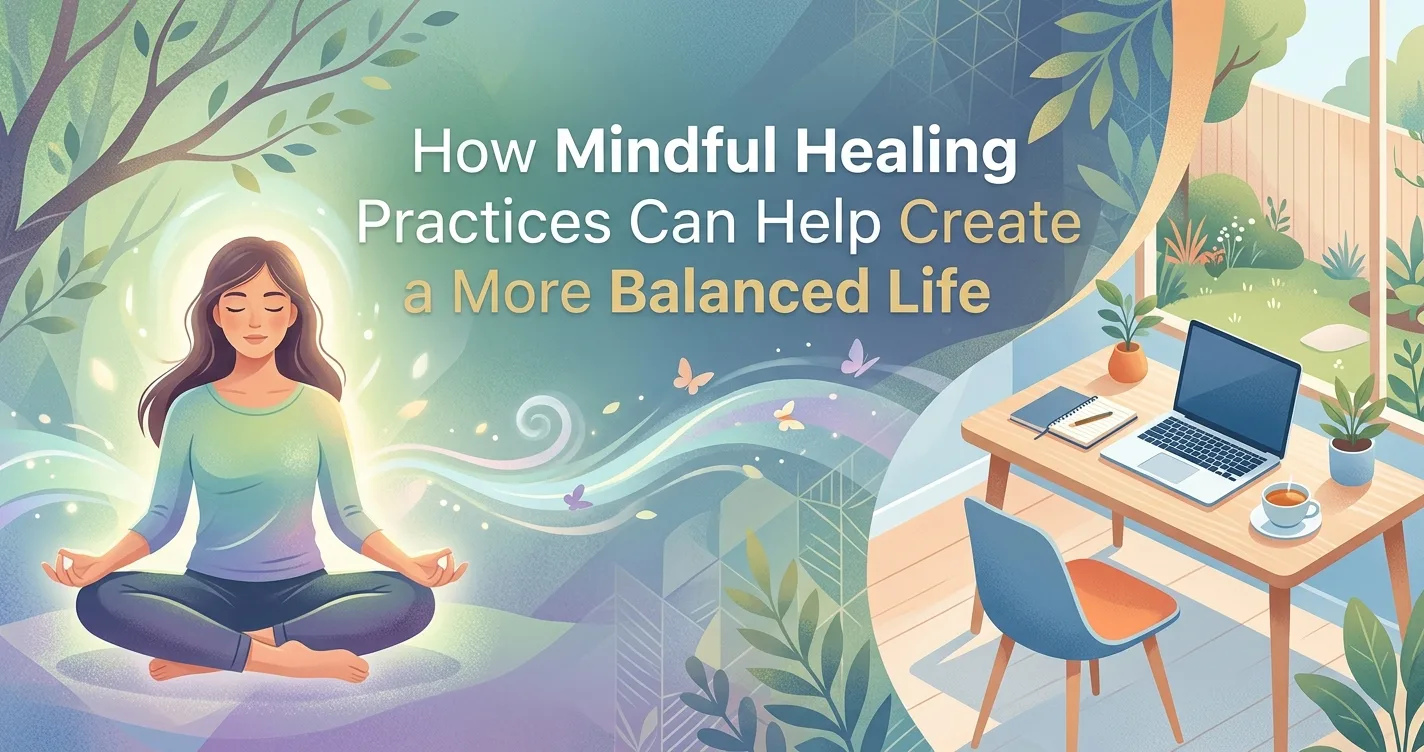
Finding balance in everyday life can be challenging. Many people spend their days moving between work, family responsibilities, social commitments, and personal obligations with very little time to pause. Even when life is going well, a demanding routine can leave the mind feeling crowded and the body feeling tense.
Wellness is not simply about taking time off when stress becomes overwhelming. It can also involve developing a regular practice of awareness—learning to notice physical sensations, emotional reactions, relationship patterns, and habits before they become difficult to manage.
This is where holistic and mindful healing practices can become valuable. By combining awareness, breathwork, movement, reflection, and connection, people can create opportunities to slow down and become more intentional about how they respond to everyday experiences.
For people interested in exploring these practices in Pasadena, Heart Center LA's healing classes and community practices provide several ways to engage with breathwork, Tao Calligraphy Light Wall practice, meditation, Qi Gong, relational connection, and other wellness-focused experiences.
Why Creating Space for Yourself Matters
Modern schedules often encourage constant productivity. There is always another email to answer, another task to complete, or another notification demanding attention.
Without intentional pauses, people may become accustomed to functioning on autopilot.
Creating space does not necessarily require an entire day away from responsibilities. Even a few minutes of intentional awareness can provide an opportunity to check in with yourself.
Ask:
- How does my body feel right now?
- Am I holding tension anywhere?
- What emotion am I experiencing?
- What has been occupying my thoughts?
- What do I need before moving on to the next task?
These questions can help shift attention from constant external stimulation toward internal awareness.
Understanding the Body-Mind Connection
The body and mind are closely connected in everyday experience. Emotional situations can influence physical sensations, while physical discomfort can affect mood and concentration.
For example, a stressful conversation might leave someone with a tight jaw or tense shoulders. A demanding workday might contribute to restlessness. A lack of rest might make ordinary frustrations feel more difficult.
Learning to recognize these signals does not mean assuming that every physical symptom is caused by emotions. Physical symptoms can have many causes and should be appropriately evaluated when necessary.
However, body awareness can still be a useful component of personal wellness.
Heart Center LA describes one part of its approach as Self Harmony, which focuses on alignment within the body, including areas such as the jaw, gut, and pelvis. The organization's framework also incorporates breathwork, reflection, movement, and guided attention.
Breathwork as a Daily Practice
Breathing is one of the simplest tools available to us because it is always present.
Although breathing happens automatically, intentionally paying attention to it can create a moment of pause. A person might sit comfortably, notice the movement of the breath, and allow distracting thoughts to come and go without immediately following them.
Breath-focused practices can be used at different points throughout the day.
A few minutes of awareness in the morning can provide a calmer beginning. A short breathing pause during a stressful workday can create separation between one task and another. Evening breathing practices can become part of a transition toward rest.
At Heart Center LA, breathwork is integrated into its broader Light Wall practice rather than being treated as an isolated activity. The five-day rhythm includes Yang chanting, Yin meditation, Qi Gong, Tao Light Massage, and Five Elements practice.
Exploring Tao Calligraphy Light Wall Practice
A distinctive part of Heart Center LA's offering is its Tao Calligraphy Light Wall classes.
The organization describes several class tiers, including Refresh, Reset, Restore, and Revitalize. Each option is intended to provide a different level of engagement and support.
The Refresh option is presented as a lighter form of Tao Calligraphy renewal involving tracing, breathing, and focused attention. Reset focuses on interrupting habitual patterns through the Light Wall, breath, and attention. Restore is described as a deeper practice, while Revitalize provides a monthly class structure.
For someone who is new to this type of practice, having different participation levels can make it easier to choose an approach that feels manageable.
Moving From Automatic Reactions to Conscious Choices
One of the most interesting aspects of mindfulness is the opportunity to create a pause between an experience and a reaction.
Imagine receiving unexpected criticism at work. The immediate response might be anger, defensiveness, or withdrawal.
A mindful approach does not require pretending that the criticism does not hurt. Instead, it encourages awareness of the reaction before deciding what to do next.
Heart Center LA calls this process ARC, describing it as a framework based on awareness, release, and choice. Its classes follow a rhythm of noticing what is happening, allowing the body to respond, and choosing what comes next.
This can be a useful concept beyond a wellness class. It can apply to conversations, work decisions, family situations, and personal habits.
The Role of Movement in Mindfulness
Mindfulness does not always require sitting still.
Movement can also become an opportunity to develop awareness. Walking, stretching, Qi Gong, and other gentle activities can encourage people to focus on physical sensations and breathing.
Instead of thinking about movement purely as exercise, someone can use it as a way to reconnect with the body.
Notice the movement of the arms.
Pay attention to the feet.
Observe the rhythm of breathing.
Recognize areas of tension.
This type of attention can make an ordinary activity feel more intentional.
Qi Gong is one of the practices included in Heart Center LA's five-day Light Wall rhythm.
Emotional Awareness Without Judgment
Emotional wellness does not mean eliminating difficult emotions.
Everyone experiences frustration, disappointment, sadness, fear, uncertainty, and anger. Attempting to suppress every uncomfortable feeling can make it harder to understand what is happening.
Instead, consider approaching emotions with curiosity.
Rather than saying, “I shouldn't feel this way,” try asking, “What is happening right now?”
You might notice that frustration appears whenever you feel unheard. You might discover that anxiety increases when you are uncertain about an outcome. You might realize that exhaustion makes you more reactive than usual.
Awareness does not instantly solve these issues, but it can make patterns easier to recognize.
Relationships and Personal Wellness
Another important part of holistic well-being is the quality of our relationships.
People influence one another constantly. Communication patterns, unresolved conflicts, boundaries, expectations, and emotional habits can all affect how individuals experience their daily lives.
Sometimes relationship problems follow predictable cycles.
One person becomes upset and withdraws. The other interprets that withdrawal as rejection and pushes harder for communication. The first person withdraws further, and the cycle continues.
Recognizing the pattern can be the first step toward responding differently.
Heart Center LA includes relationship-focused offerings such as Conscious Connections, described on its website as a Thursday night relational practice and conscious dating experience structured around breathwork and guided connection.
Its broader approach also includes Harmony with Other Humans, which focuses on recognizing relational patterns, practicing honest exchange, and remaining present with another person.
Why Community Can Be Part of Healing
Personal growth does not always have to happen alone.
Community can provide encouragement, consistency, and a sense of connection. For some people, participating in a group is more motivating than trying to establish a wellness routine independently.
Heart Center LA describes its work as a healing ecosystem with multiple entry points, including Light Wall classes, a Midweek Women's Circle, Conscious Connections, retreats, free healing sessions, workshops, and institutional facilitation.
Its Midweek Women's Circle, for example, is described as a Wednesday daytime gathering for women seeking peace, connection, healing, and community support, with in-person and Zoom participation available.
Community practices can make wellness feel less like another task and more like a shared experience.
Building a Practical Wellness Routine
You do not need to completely change your lifestyle to begin taking better care of your well-being.
Start small.
Morning
Before reaching for your phone, take a few quiet moments to notice your breathing and think about how you want to approach the day.
During work
Take brief breaks. Stand up, stretch, or simply look away from the screen for a moment.
During stressful situations
Before responding immediately, take a breath and notice your physical reaction.
After work
Create a transition between professional responsibilities and personal time. A short walk or quiet activity can help.
Before bed
Reduce unnecessary stimulation and give yourself time to settle.
Once a week
Participate in an activity that supports connection, reflection, movement, or relaxation.
The goal is not to create a complicated routine. It is to create habits that are realistic enough to continue.
Choosing the Right Level of Support
Different people need different forms of wellness support.
Some prefer independent practices. Others benefit from classes and instructors. Some enjoy group experiences, while others feel more comfortable with private sessions.
A structured environment can be particularly useful for beginners because it provides a consistent framework.
Heart Center LA offers several Light Wall class levels. Its website currently lists Refresh, Reset, Restore, and Revitalize options, allowing participants to choose according to their desired level of engagement.
When choosing any wellness program, consider whether the practice is appropriate for you, whether the environment feels comfortable, and whether the claims being made are realistic.
Wellness Should Complement Appropriate Healthcare
Holistic practices can be valuable components of a personal wellness routine, but they should not be treated as universal solutions for medical or psychological conditions.
If you have persistent physical symptoms, significant emotional distress, or a condition requiring professional care, speak with an appropriately qualified healthcare professional.
Complementary practices can sometimes be used alongside conventional healthcare, depending on the individual's circumstances.
Heart Center LA distinguishes its healing and educational classes from medical care and other professional services. Its website provides information about its approach and offerings so prospective participants can understand what the center provides.
This distinction is important because responsible wellness should encourage informed choices rather than unrealistic expectations.
A Gradual Approach Can Be More Sustainable
Many people start wellness routines with ambitious goals and then become discouraged when they cannot maintain them.
A better approach may be to begin with one manageable habit.
For example, spend five minutes practicing intentional breathing three times a week. Once that feels natural, add another practice.
You could also begin with a single class before deciding whether you want a more regular schedule.
The purpose is to discover what genuinely supports your well-being.
You do not need to become perfect at meditation.
You do not need to eliminate every stressful situation.
You do not need to transform your personality.
The goal can simply be greater awareness of how you experience and respond to life.
Final Thoughts
Holistic wellness is ultimately about creating a more conscious relationship with yourself and the world around you.
Breathing, movement, reflection, meditation, relational practices, and community experiences can all provide opportunities to slow down and pay attention.
The Heart Center LA approach combines several of these elements through its ARC framework, Tao Calligraphy Light Wall classes, community practices, and relationship-focused offerings. The center's Pasadena location provides a physical setting for people interested in exploring these practices in a structured environment.
For anyone considering this type of wellness journey, the best place to begin may be with one small step. Take a conscious breath. Notice how your body feels. Pay attention to a recurring pattern. Listen more carefully during your next conversation.
Well-being is rarely created by one dramatic decision. More often, it develops through small choices repeated consistently.
And sometimes, creating a little more space to pause, notice, and choose can be the beginning of a healthier relationship with yourself.