
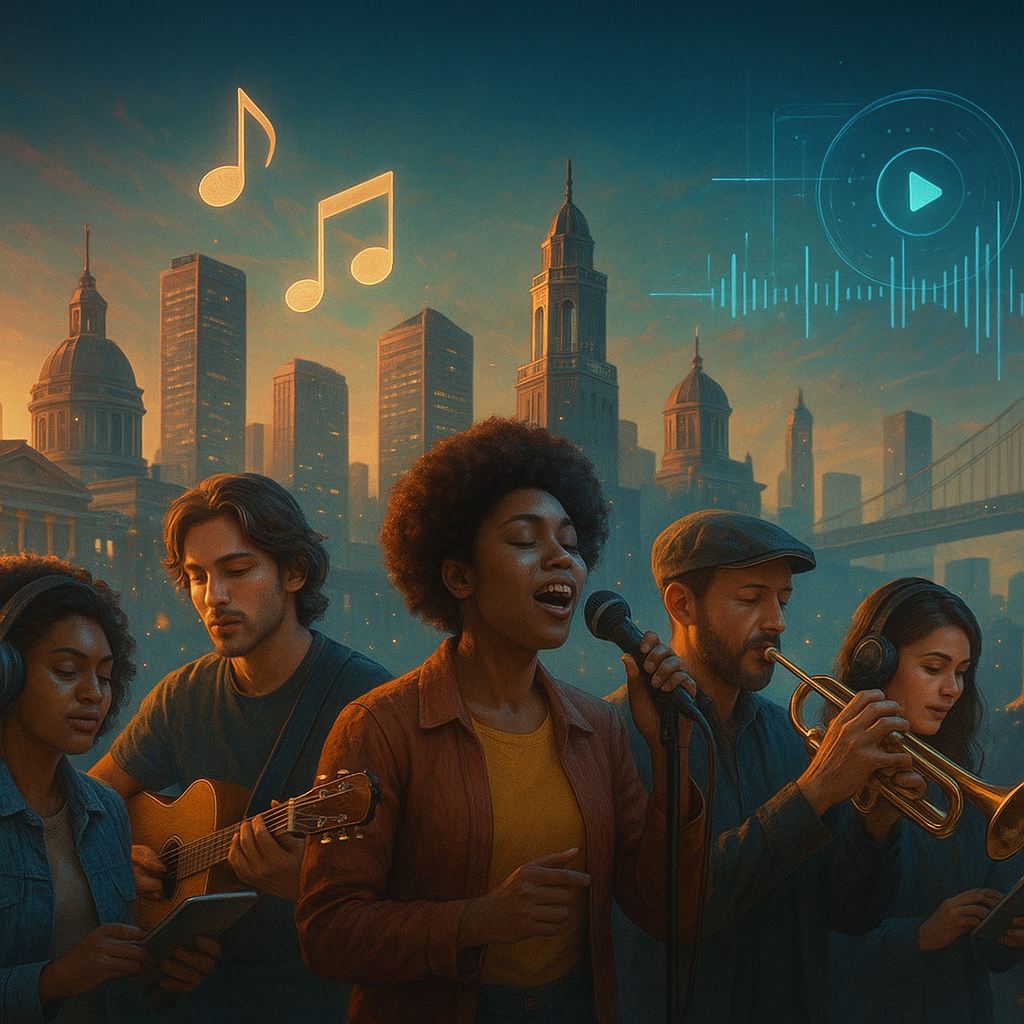
Setting the Stage: A Sonic Snapshot of 2026
Imagine a bustling urban plaza in mid-2026, where a diverse crowd gathers around a holographic street performer. The music emanates not just from speakers but through tactile sound waves felt by the audience, bridging physical and virtual worlds. This scene exemplifies music's evolving role — no longer confined to auditory experience but becoming a multi-sensory cultural force. According to industry estimates, the global music industry revenue surpassed $100 billion in 2025, fueled largely by immersive technologies and AI-driven creativity. This surge underscores music’s enduring power to innovate and connect.
The way we consume, create, and share music in 2026 reflects decades of transformation. From vinyl to streaming, live concerts to virtual festivals, music remains a vital cultural barometer. Yet, today’s landscape is uniquely defined by rapid technological integration, shifts in artist-audience dynamics, and evolving cultural narratives. As TheOmniBuzz recently explored, music remains humanity’s pulse, adapting while preserving its core essence.
“Music’s evolution is not just about sound but about how it shapes identity, community, and technology-driven experiences,” notes cultural analyst Dr. Maya Chen.
Tracing the Roots: From Analog Origins to Digital Renaissance
Understanding music in 2026 requires revisiting its transformative journey. The analog era, dominated by physical media and live performances, set foundational cultural norms. The late 20th century introduced digital formats like CDs and MP3s, upending traditional distribution and catalyzing widespread access. The 2010s and early 2020s accelerated this shift with streaming platforms, democratizing music discovery and consumption globally.
However, the digital renaissance was not merely about access but creativity. New tools enabled artists to produce and distribute music independently, fostering diverse genres and niche communities. This period also saw the rise of algorithmic curation, which both expanded listeners’ horizons and raised debates about homogenization.
By 2026, these trends matured into a hybrid ecosystem. Physical sales have stabilized among collectors and audiophiles, while streaming remains dominant. Yet, emerging technologies like AI composition, virtual reality concerts, and blockchain-based rights management are redefining music’s creation and ownership paradigms.
- 1970s–80s: Analog dominance, vinyl and cassettes
- 1990s–2000s: CDs, MP3s, and file sharing
- 2010s–2020s: Streaming platforms, social media impact
- 2020s–2026: AI, immersive experiences, decentralized rights
Music historian Julian Armitage explains, “Each technological leap has expanded music’s reach while challenging existing economic and cultural models.”
Analyzing the Current Landscape: Data-Driven Insights into 2026’s Music Industry
In 2026, the global music industry reflects a complex interplay of technology, economics, and culture. Statista data shows streaming accounts for 73% of global recorded music revenue, with immersive and interactive formats contributing a growing 12%. Physical formats, though diminished, maintain a niche 9%, primarily vinyl and premium formats. Meanwhile, live events rebounded robustly post-pandemic, generating 25% of industry revenues, bolstered by hybrid in-person and virtual attendance.
Artist income streams have diversified. Royalty models have adapted to blockchain verification, enhancing transparency and fairness. AI-assisted production tools are ubiquitous, enabling rapid content generation but raising questions on authorship. Moreover, fan engagement platforms integrating NFTs and direct artist-fan interactions have altered traditional marketing and monetization.
Comparing genres, electronic and hip-hop maintain dominance across streaming charts, yet cross-genre collaborations surged by 18% since 2023, reflecting audience appetite for fusion and experimentation. Regional markets like Africa and Southeast Asia are expanding rapidly, propelled by mobile access and localized content.
- Streaming: 73% of revenue, driven by subscriptions and ad-supported tiers
- Immersive formats: 12%, including VR concerts and 3D audio
- Physical sales: 9%, primarily vinyl collectors and audiophiles
- Live events: 25%, hybrid models dominate post-pandemic recovery
- AI-generated music: 15% of new releases, rapidly growing segment
Industry giants like Universal Music Group and Sony Music have invested heavily in AI research labs and metaverse platforms, while independent artists leverage decentralized networks to retain control. This duality illustrates the tension and synergy between corporate scale and grassroots innovation.
Voices from the Field: Expert Perspectives on Music’s Evolution and Impact
Leading voices in music production, technology, and culture emphasize music’s multidimensional role in 2026. Grammy-winning producer and AI music pioneer Lena Torres highlights, “AI tools free artists from technical constraints, allowing greater emotional and conceptual exploration.” Yet she cautions, “We must balance automation with human authenticity to preserve music’s soul.”
On the cultural front, ethnomusicologist Dr. Kwame Aboagye points to music’s role in identity and social movements. “Music remains a powerful vehicle for storytelling and resistance, especially in marginalized communities amplified by digital platforms.” His research underscores how music transcends language and geography to foster solidarity.
From the business perspective, music rights lawyer Anika Patel notes that blockchain-based smart contracts “have revolutionized royalty distribution, reducing disputes and ensuring timely payments, empowering creators economically.” Meanwhile, festival organizer Marco Bianchi discusses hybrid events' impact: “Virtual attendance has expanded audiences globally, but nothing can replace live, shared human experiences.”
- Lena Torres: AI as creative liberation with caution
- Dr. Kwame Aboagye: Music as cultural identity and activism
- Anika Patel: Blockchain enhancing artist rights and payments
- Marco Bianchi: Hybrid concerts redefining live music economies
“Music is the connective tissue between technology, culture, and emotion,” summarizes Torres.
Looking Ahead: What the Future Holds for Music’s Next Chapters
Anticipating music’s trajectory beyond 2026 involves considering emerging technologies and shifting societal trends. Experts forecast several key directions:
- Deeper AI integration: Beyond composition, AI will enhance personalized listening experiences and adaptive live performances.
- Expanded immersive experiences: Haptic feedback, multisensory concerts, and metaverse venues will become standard.
- Increased decentralization: Blockchain and Web3 platforms will empower artists and fans to co-create and share value without intermediaries.
- Cross-disciplinary fusion: Music will increasingly blend with gaming, education, and wellness industries.
- Sustainability focus: Environmental concerns will drive innovations in event production and physical media.
For artists, mastering new tools and platforms will be critical. Readers interested in honing their craft can find valuable insights in Mastering Music: Essential Expert Tips to Elevate Your Sound. Additionally, exploring genre-defining tracks offers inspiration, as detailed in 8 Tracks That Define Modern Music’s Boldest Moments.
Music futurist Elena Marquez predicts, “The next decade will see music as an immersive, shared experience that transcends traditional boundaries of time, space, and even human perception.”
Ultimately, music’s enduring power lies in its ability to adapt while nurturing human connection. As technology transforms the medium, the essence of music as an expression of emotion, culture, and community remains steadfast.