The Sonic Tapestry: Unlocking Music’s Universal Power
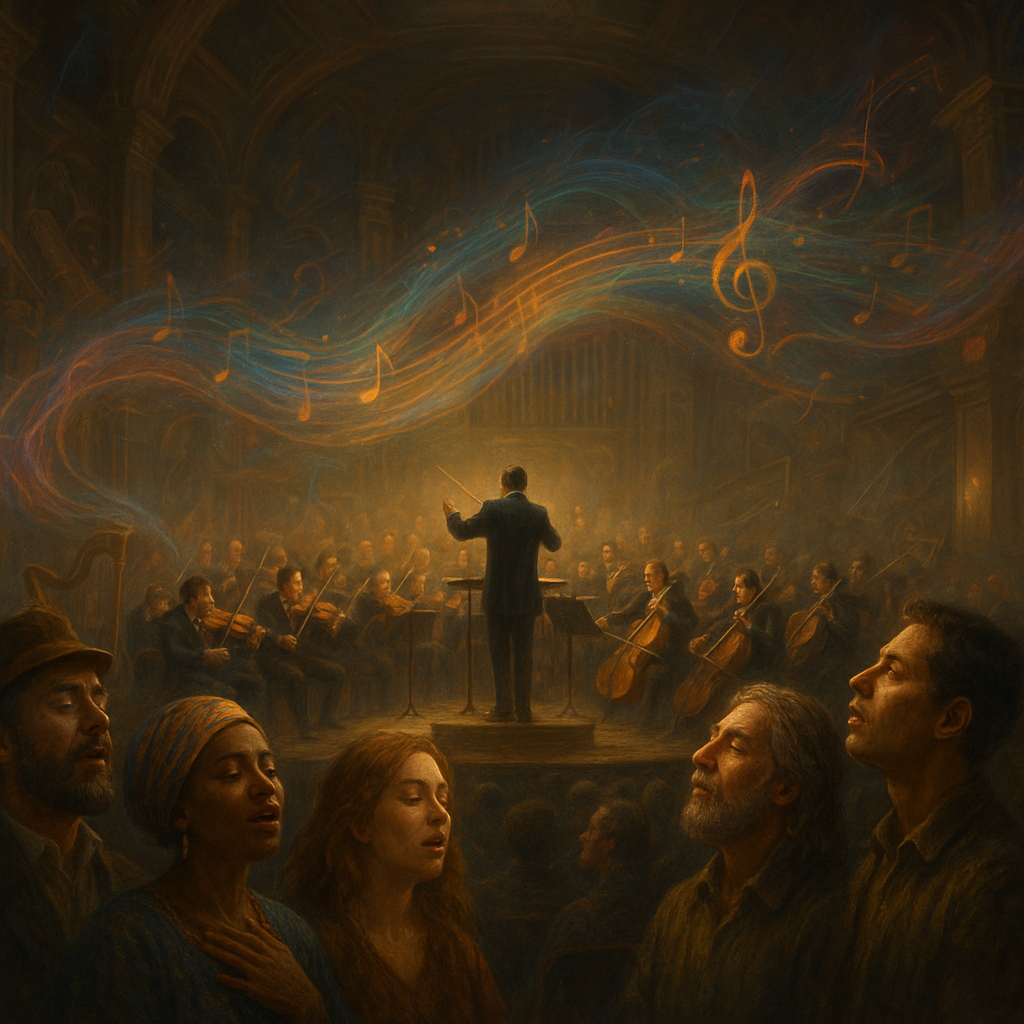
Imagine standing in the middle of a packed amphitheater in 2026, where immersive spatial audio surrounds you like a living entity. The crowd pulses with energy, yet every individual experiences a uniquely tailored soundscape. This is not a scene from a sci-fi movie but a reality enabled by advancements in music technology and culture. Music, an ancient human invention, continues to evolve in profound ways, shaping not only our emotions but also social structures, technology, and even neuroscience.
From the earliest drum beats echoing through prehistoric caves to AI-generated symphonies that adapt to listeners' moods in real time, music remains a compelling force. According to the International Music Council, over 90% of humanity engages with music in some form daily, underscoring its pervasive influence. This guide will dissect music’s multifaceted dimensions as of 2026, tracing its history, analyzing current trends, and forecasting future developments.
“Music is the language of the spirit. It opens the secret of life bringing peace, abolishing strife.” – Kahlil Gibran
Tracing the Evolution: From Oral Tradition to Digital Renaissance
Music’s journey began as a communal oral tradition, where melodies and rhythms passed from generation to generation without written notation. Early civilizations such as the Sumerians and Egyptians used music ceremonially, embedding it into religious rites and storytelling. With the advent of written notation in medieval Europe, music entered a new phase of preservation and complexity.
The 20th century introduced revolutionary shifts: recorded music, radio broadcast, and later, digital formats. The late 1990s and early 2000s marked a disruptive phase with the rise of MP3s and file sharing, challenging traditional distribution models. Streaming platforms emerged in the 2010s, fundamentally reshaping how music was consumed and monetized. By 2026, streaming dominates the industry, accounting for over 82% of global music revenue, according to IFPI data.
This digital renaissance has democratized music creation and access. Home studios are ubiquitous, and AI tools assist composers and producers, expanding creative horizons. TheOmniBuzz’s article How Music’s Digital Renaissance Is Reshaping Creativity and Culture explores these shifts in depth, highlighting how technology influences cultural trends.
Decoding Music’s Anatomy: The Science Behind the Sound
At its core, music is organized sound, defined by pitch, rhythm, dynamics, timbre, and form. Scientific advances have allowed us to analyze these components quantitatively. For instance, digital audio workstations (DAWs) enable manipulation of frequency spectra and amplitude envelopes with precision. In 2026, software powered by machine learning can mimic acoustic characteristics of vintage instruments, blurring lines between analog warmth and digital clarity.
Psychologically, music activates multiple brain regions including the auditory cortex, limbic system, and motor areas, explaining its ability to evoke emotions and induce movement. Studies published by the Journal of Neuroscience reveal that music enhances neuroplasticity, benefiting learning and memory. This insight has propelled music therapy into mainstream healthcare, aiding conditions like Alzheimer’s and PTSD.
Comparative analysis of global music styles reveals distinct rhythmic patterns and scales, reflecting cultural identities. For example, West African polyrhythms contrast with the pentatonic scales of East Asian melodies. The fusion of such elements in contemporary genres exemplifies globalization’s imprint on music.
“Music is a world within itself; it is a language we all understand.” – Stevie Wonder
2026 Soundscape: Innovations and Industry Shifts
Today’s music industry navigates complexity shaped by technology, consumer behavior, and regulatory challenges. The rise of immersive audio formats such as Dolby Atmos Music and Sony 360 Reality Audio has revolutionized listening experiences. Leading streaming platforms report that tracks mixed in 3D audio see 25% higher engagement and listener retention.
Artificial intelligence now plays a dual role: as a creative partner and as a tool for rights management. Algorithms analyze streaming data to predict hits and optimize playlists. However, ethical concerns over AI-generated compositions and copyright persist, prompting industry-wide debates and policy reconsiderations.
Live music, rebounding strongly post-pandemic, integrates augmented reality (AR) to offer hybrid concerts. Fans can attend virtually with customizable vantage points, enhancing accessibility. TheOmniBuzz coverage on Six Defining Sounds Shaping Music’s Future Today provides a granular look at these technological trends and their cultural implications.
- Top 3 streaming platforms in 2026: Streamify, AudioWave, and BeatFlow, collectively hold over 70% market share.
- Revenue split: Streaming 82%, live events 12%, physical formats 4%, synchronization/licensing 2%.
- AI-generated music: Estimated to constitute 15% of new releases globally.
Voices from the Field: Industry Experts Weigh In
Leading producers, artists, and executives offer insights into music’s trajectory. Alicia Chen, CEO of Streamify, emphasizes the importance of balancing technology with artistry: “While AI accelerates creation, the human touch remains irreplaceable. Authenticity drives lasting connection.”
Veteran producer Marcus Alvarez notes the evolving role of mastering: “Mastering now integrates psychoacoustic modeling to tailor tracks for diverse listening environments, from earbuds to concert halls. This is crucial for delivering emotional impact.” His expert tips align with recommendations in TheOmniBuzz’s Mastering Music: Essential Expert Tips to Elevate Your Sound.
Music therapists highlight its healing potential. Dr. Lila Hassan explains, “Personalized soundscapes crafted through AI help patients regulate mood and cognition, marking a new era in therapeutic interventions.”
“Technology enhances possibilities, but music’s soul lives in human experience.” – Alicia Chen
Future Frequencies: Trends and Takeaways for 2026 and Beyond
Looking ahead, several key trends promise to shape music’s future. Expect deeper integration of AI in composition and live performance, expanding creative boundaries while raising questions about originality. Blockchain technology is gaining traction for transparent royalty distribution, potentially resolving long-standing disputes in the industry.
Environmental sustainability is becoming a priority. Music festivals and production companies increasingly adopt green practices, responding to fans’ growing eco-consciousness. Additionally, the fusion of music with other digital arts such as virtual reality (VR) and gaming creates immersive cultural experiences inviting new audience demographics.
For artists and professionals, adaptability remains crucial. Embracing new technologies, understanding data analytics, and engaging audiences authentically will define success. As TheOmniBuzz’s article Why Music Remains the Pulse of Human Connection and Innovation argues, music will continue to be a vital human connector and catalyst for innovation.
- Embrace AI tools cautiously to enhance creativity without compromising authenticity.
- Leverage immersive audio formats to engage audiences in novel ways.
- Prioritize sustainability in production and touring practices.
- Utilize data analytics to understand listener behavior and craft targeted experiences.
- Collaborate across genres and mediums to remain culturally relevant.