
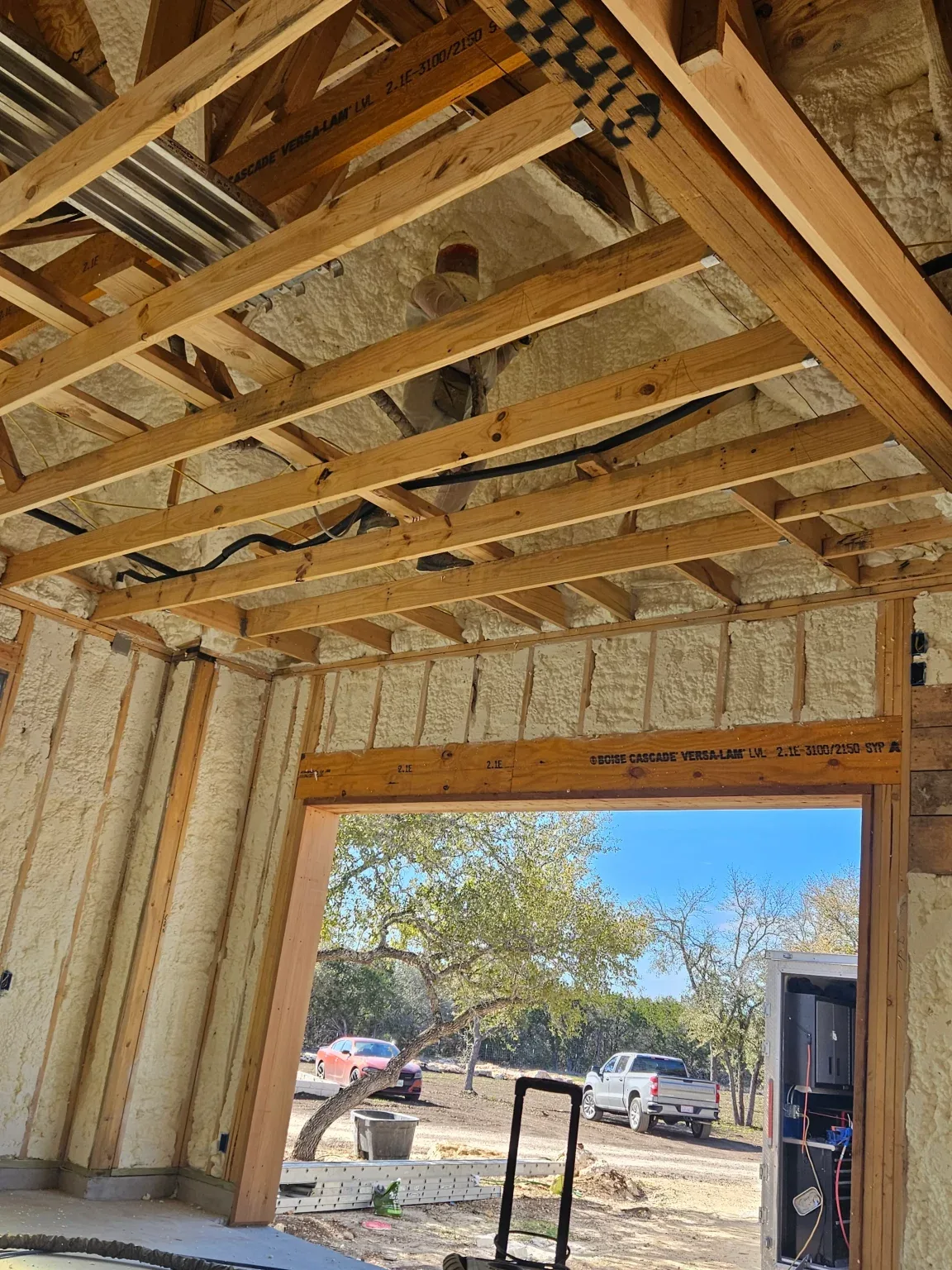
Uncontrolled airflow inside stud walls and ceiling joists accounts for substantial thermal loss in residential and commercial buildings. Selecting a professional Open-Cell Spray Foam Service stops this problem by creating an airtight physical seal within wall, floor, and attic cavities. Unlike fibrous materials that let air filter through open fibers, open-cell foam expands rapidly to fill microscopic cracks, wiring penetrations, and uneven framing seams.
Building science demonstrates that managing air infiltration is just as important as the thermal resistance rating of the material itself. Field experience in modern building envelopes shows that blocking drafts at the framing boundary maintains consistent indoor temperatures and reduces mechanical equipment workload.
How Expanding Foam Stops Air Leakage in Wall and Roof Cavities
Air moves through building cavities because of pressure differences caused by wind, indoor mechanical ventilation, and the natural stack effect. Warm air rises and escapes through upper ceiling gaps, drawing cold outdoor air through floor plates and electrical outlets.
A qualified Open-Cell Spray Foam Service addresses these paths directly. When technicians apply liquid polyurethane into a cavity, the chemical mixture expands up to one hundred times its original liquid volume within seconds. This rapid expansion fills every crack between studs, around junction boxes, and along plumbing stacks.
Data from the U.S. Department of Energy indicates that air infiltration accounts for roughly thirty to forty percent of the energy used to heat and cool a typical home. Traditional batt products leave gaps along irregular framing, creating hidden channels where air circulates freely. Open-cell material adheres to wood and steel framing, creating a custom fit that prevents air from bypassing the insulation layer.
- Expanding foam fills odd angles and irregular structural framing spaces
- The tight seal blocks convective loops inside exterior wall cavities
- Mechanical penetrations receive an airtight barrier without separate tape or caulk
- Acoustic dampening occurs simultaneously due to the flexible cell structure
Air Barrier Performance Across Standard Insulation Types
The following comparison details how different cavity insulation materials perform regarding air filtration, coverage consistency, and thermal characteristics.
Insulation MaterialAir PermeabilityExpansion RateApproximate R-Value Per InchCavity Void Filling AbilityOpen-Cell Spray FoamAir-impermeable at standard cavity depth100x liquid volumeR-3.5 to R-3.8Complete seal around all shapesFiberglass BattsHigh air permeabilityNone (friction fit)R-3.1 to R-3.4Leaves gaps at corners and wiresBlown CelluloseModerate air permeabilitySettles over timeR-3.2 to R-3.7Fills voids but allows air driftClosed-Cell Spray FoamCompletely impermeable30x to 40x volumeR-6.0 to R-7.0Rigid fill with vapor barrier
While fibrous insulations slow heat conduction, they do not stop air movement unless paired with extensive manual caulking and exterior membrane sealing. In contrast, open-cell foam insulation provides both thermal resistance and cavity sealing in one application.
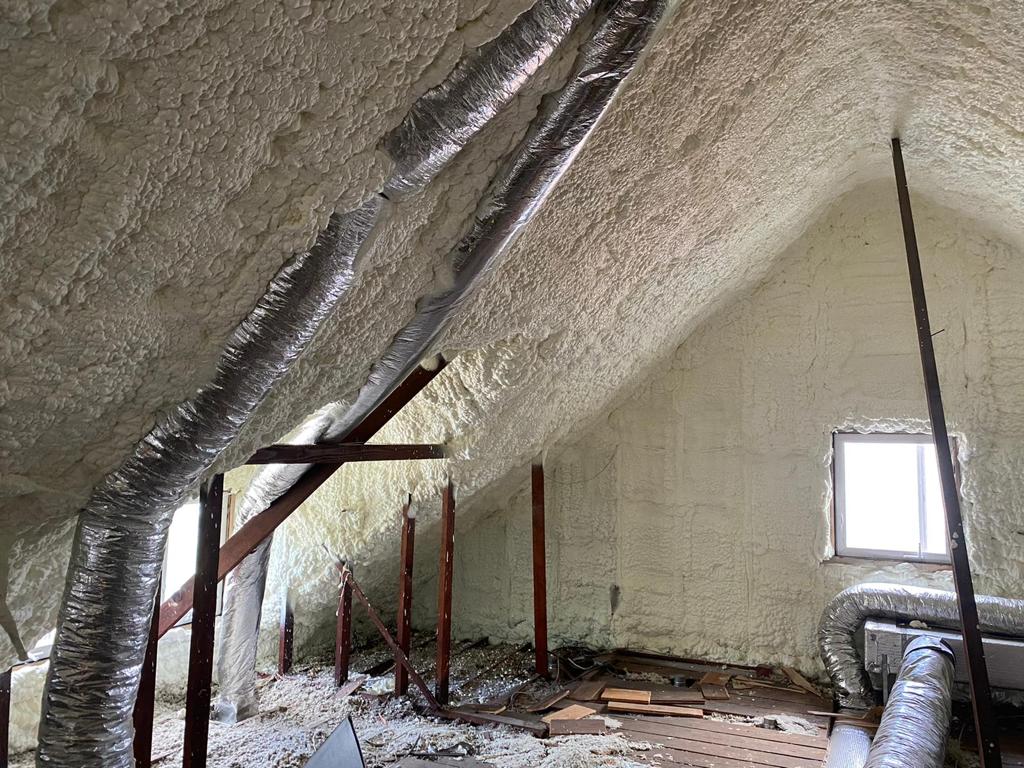
Why Does Air Movement Inside Wall Cavities Cause High Utility Bills?
Air movement inside building cavities degrades total thermal performance through convective looping. Cold air enters the bottom of an exterior wall cavity, warms up against the interior drywall, and rises toward the top plate. This cycle constantly pulls conditioned heat out of the living space.
Outdoor Air Leak→Bottom Wall Plate ↓Warmed by DrywallCooled Air Drops←Attic Depressurization ← Rises to TopWhen you seal these spaces using Open-Cell Insulation Services, you break the convective cycle. Heating and cooling systems run shorter cycles because conditioned air stays trapped inside the occupied areas of the structure.
Bonus Tip: Check the rim joists and band joists in basements and crawlspaces. These perimeter framing areas often leak more air into exterior wall cavities than the wall faces themselves.
Climate Considerations for Open-Cell Applications
Climate zones dictate how building assemblies handle moisture and air control. In mixed-humid and hot-humid regions, outdoor air carries high levels of humidity. When humid air leaks into an air-conditioned wall cavity, it hits cool interior drywall and condenses, leading to hidden rot.
Applying an Open-Cell Spray Foam Service on the interior side of roof decks or exterior walls stops moisture-laden outdoor air from entering the cavity. In colder northern zones, building codes often require an interior vapor retarder over open-cell installations to prevent warm indoor moisture from migrating outward toward cold roof sheathing.
Proper ventilation planning must accompany complete air sealing. Because open-cell foam creates a tight envelope, buildings often require balanced mechanical ventilation systems like heat recovery ventilators to supply fresh outdoor air without wasting energy.

Factors to Evaluate Before Hiring an Insulation Provider
Investing in building envelope upgrades requires careful planning and contractor vetting. Spray application requires precise chemical ratios, ambient temperature control, and proper substrate moisture levels.
- Verify that your chosen Open-Cell Spray Foam Contractor maintains active certification, carries liability insurance, and follows manufacturer safety protocols.
- Ensure framing moisture readings sit below eighteen percent before application to avoid trapping water against structural wood.
- Discuss workspace clearance and job site safety steps, including required evacuation periods while the chemical compounds cure.
- Review mechanical ventilation needs with your builder to ensure your heating and cooling equipment matches the reduced air leakage rates.
Bonus Tip: Schedule mechanical, electrical, and plumbing rough-ins before scheduling spray foam. Installing wires or pipes after foam application requires cutting away cured material and patching the seal later.
Key Steps to Achieve Long-Term Energy Efficiency
Controlling air movement through building cavities provides a direct path toward lower energy consumption, better indoor air quality, and consistent indoor comfort. Open-cell foam expands into every gap, creating an effective barrier against drafts, dust, and outdoor allergens. Review your building plans, assess your climate requirements, and work with experienced professionals to establish an air barrier that supports your property goals over the long haul.
Connect with Spray Foam Tech for Reliable Insulation and Air Sealing Solutions
If you want to reduce energy bills and stop drafts in your residential or commercial building, working with an experienced team ensures quality results. Spray Foam Tech provides dependable insulation services tailored to your building requirements. You can reach out by email at [email protected]. Call (737) 777-9590 to speak with a representative and get a free quote for your next build or renovation.
Common Questions About Foam Air Sealing and Cavity Insulation
How thick does open-cell foam need to be to stop airflow?
Open-cell foam typically acts as an effective air barrier when installed at a minimum thickness of 3.5 to 5 inches. This depth fills standard framing cavities and creates continuous contact with framing members to stop air leakage.
Does open-cell foam hold water if a roof leaks?
Open-cell foam features an interconnected cellular structure that allows water to drain through rather than trapping it against wood sheathing. This property makes roof leaks easier to detect quickly before structural rot develops.
Can open-cell foam be sprayed directly against roof sheathing?
Yes, technicians frequently apply open-cell foam directly to the underside of roof sheathing to create unvented, conditioned attic spaces. This practice brings ductwork into conditioned space and lowers attic temperatures.
How does open-cell foam compare in cost to closed-cell alternatives?
Open-cell foam generally costs less per board foot than closed-cell foam because its high expansion rate requires less chemical raw material to fill an identical wall or ceiling volume.
Does open-cell spray foam break down or shrink over time?
When applied to dry substrates under correct temperature and mixing conditions, open-cell foam remains dimensionally stable. It maintains its adhesion and flexibility without sagging, settling, or shrinking over the life of the building.