How Sportswear Manufacturers Use Sublimation, Embroidery, Screen Printing and DTF
Custom sportswear is not only about choosing a good design. The printing and branding method can have a major effect on how the finished garment looks, feels, and performs.
A logo that looks excellent on a cotton T-shirt may not be the right choice for a stretchy performance garment. Similarly, an all-over jersey design may require a completely different production method from a small embroidered logo on a jacket.
For fitness brands, sports teams, clothing businesses, and private-label apparel companies, understanding the differences between sublimation, embroidery, screen printing, and DTF printing can make the product development process much easier.
The right method depends on several factors, including the fabric, design complexity, order quantity, garment type, budget, and required durability.
Quick Comparison of Sportswear Decoration Methods
MethodBest ForMain AdvantageImportant ConsiderationSublimationJerseys, performance wear, all-over designsDetailed designs and vibrant coverageWorks best with suitable polyester fabricsScreen PrintingLogos, text, simple graphicsPractical for larger quantitiesLess suitable for complex all-over designsEmbroideryPolos, jackets, caps, structured garmentsPremium stitched appearanceCan be unsuitable for very thin or highly stretchy fabricsDTF PrintingDetailed logos and custom graphicsHandles detailed artwork and smaller runsHand-feel and durability depend on material and applicationThere is no single method that is best for every sportswear product. The correct choice starts with understanding how each process works.
What Is Sublimation Printing?
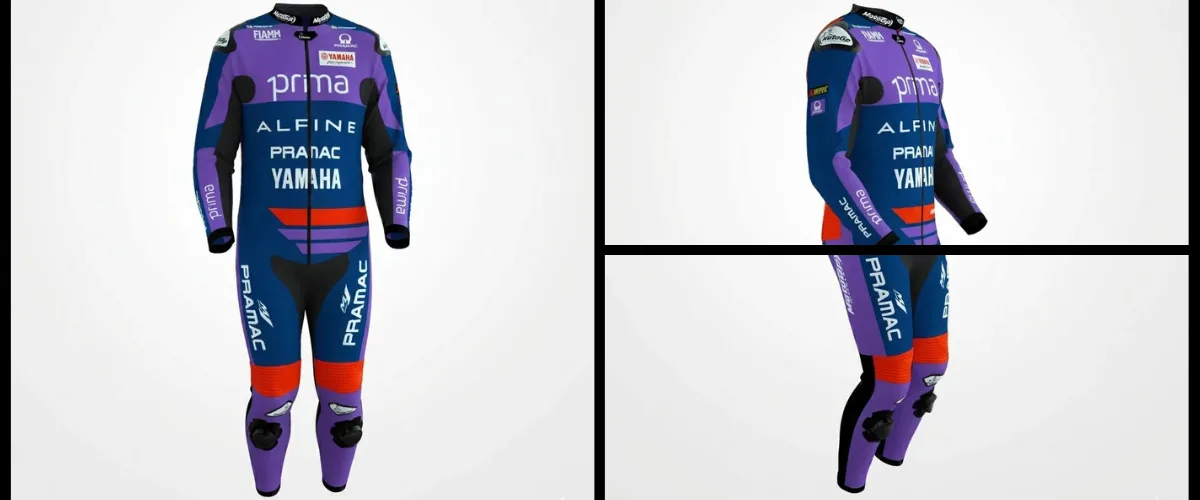
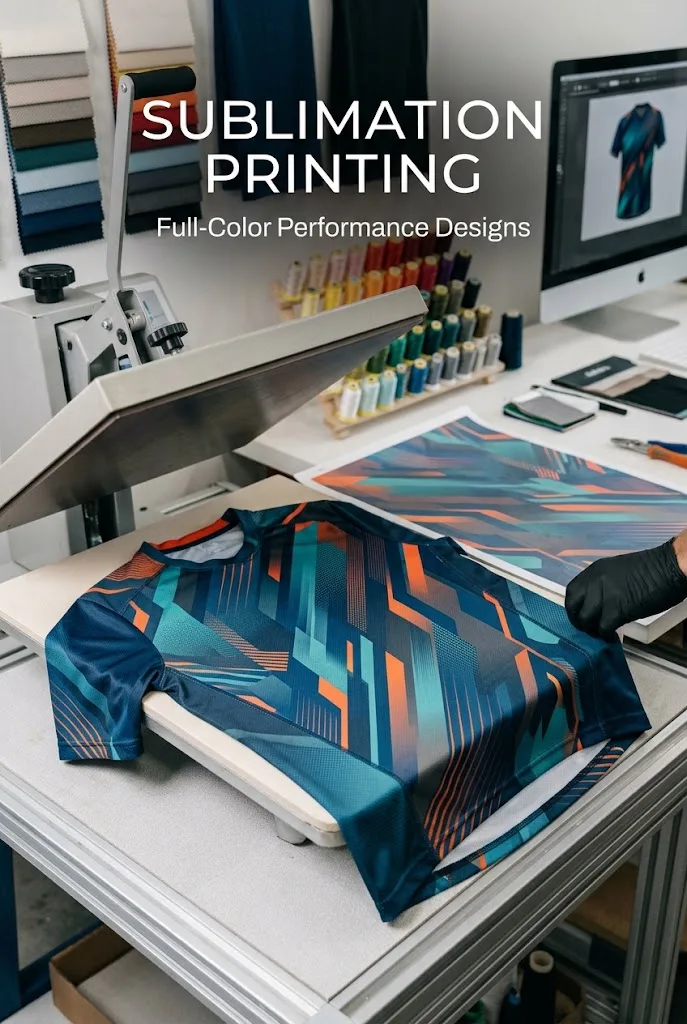
Sublimation is widely used for sports jerseys and performance apparel, particularly when a design needs to cover a large part of the garment.
During sublimation, specially prepared ink is transferred into the fabric using heat. Rather than creating a thick layer sitting on top of the material, the design becomes integrated with the fabric.
This makes sublimation particularly useful for sportswear where lightweight construction and flexibility are important.
When Is Sublimation a Good Choice?
Sublimation can be suitable for:
- Sports jerseys
- Cycling apparel
- Team uniforms
- Running shirts
- Performance tops
- All-over patterns
- Gradient designs
- Detailed artwork
- Multi-color graphics
One major advantage is design freedom. A manufacturer can create complex patterns, multiple colors, gradients, names, numbers, and other visual elements without needing separate physical patches for each part of the artwork.
What Should Brands Consider?
Sublimation is not equally suitable for every fabric.
It is generally associated with polyester-based materials because the printing process depends on how the dye interacts with the synthetic fibers.
Before choosing sublimation, confirm the fabric composition with your manufacturer.
Brands should also request a sample to check:
- Color appearance
- Design accuracy
- Fabric feel
- Sizing
- Placement
- Overall finish
What Is Screen Printing?
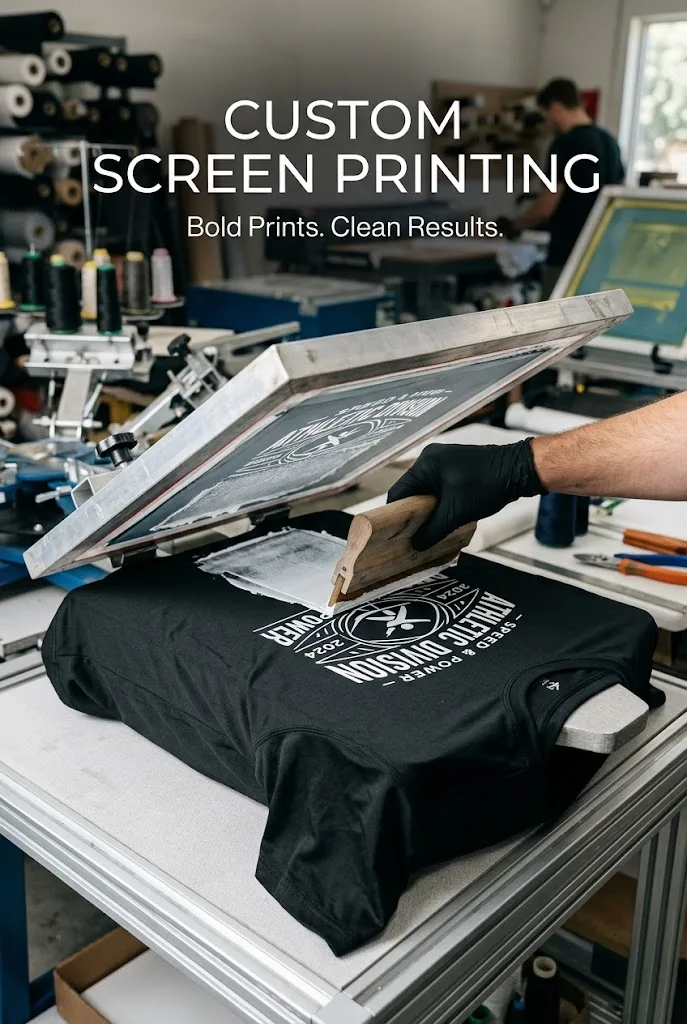
Screen printing is one of the most established methods for putting graphics onto garments.
The process uses a screen to transfer ink onto the fabric. Different screens can be used for different colors in a design.
Screen printing is commonly used for logos, text, numbers, and relatively simple graphics.
When Is Screen Printing a Good Choice?
It can work well for:
- Team shirts
- Training T-shirts
- Gym apparel
- Hoodies
- Simple logos
- Promotional sportswear
- Larger production runs
One of its main advantages is that it can be practical for larger quantities when the same design is being produced repeatedly.
For example, a fitness company ordering several hundred training T-shirts with a simple one-color logo may find screen printing a suitable option.
Limitations of Screen Printing
Screen printing may not be the best choice for every design.
Complex photographic artwork, highly detailed gradients, and all-over designs may require other printing technologies.
The number of colors can also affect production complexity and cost.
For this reason, brands should provide their artwork to the manufacturer before deciding which printing process to use.
What Is Embroidery?
Embroidery creates a design by stitching thread directly into the garment.
Unlike printing methods that apply ink or transfer material, embroidery gives the logo a raised, textured appearance.
It is often associated with premium or professional apparel.
When Is Embroidery Suitable?
Embroidery can be a strong choice for:
- Polo shirts
- Jackets
- Hoodies
- Caps
- Team apparel
- Corporate sportswear
- Structured garments
For example, a small company logo embroidered on a polo shirt can create a clean and professional appearance.
What Are the Limitations?
Embroidery adds weight and structure to the area where the design is applied.
This means it may not be suitable for every lightweight sportswear fabric.
A very large embroidered design can also affect the flexibility and comfort of a garment.
For highly stretchy performance fabrics, it is important to discuss the design with the manufacturer before approving embroidery.
A sample is particularly useful because it allows the brand to see how the fabric behaves around the embroidered area.
What Is DTF Printing?
DTF stands for Direct-to-Film printing.
With this method, artwork is printed onto a special film and then transferred onto the garment using heat.
DTF can be useful for detailed graphics and designs containing multiple colors.
When Is DTF a Good Choice?
DTF can be considered for:
- Custom logos
- Detailed graphics
- Small production runs
- Personalized sportswear
- T-shirts
- Hoodies
- Promotional apparel
- Complex artwork
One advantage is that it can handle artwork with considerable detail without requiring the same screen setup associated with traditional screen printing.
This can make it useful when a brand wants to test a design with a smaller quantity.
However, the final feel and durability can vary depending on the transfer material, garment fabric, application process, and washing conditions.
Testing a sample is therefore important.
Sublimation vs Screen Printing
These two methods are often compared because both are widely used in sportswear.
Sublimation
Choose sublimation when you need:
- All-over designs
- Detailed patterns
- Multiple colors
- Gradients
- Sports jerseys
- Performance garments
The design can cover large areas of the garment without creating a heavy printed layer.
Screen Printing
Screen printing can be preferable when you need:
- Simple logos
- Text
- Limited-color artwork
- Larger quantities
- Traditional garment graphics
For example, a football jersey with a complex full-front design may be better suited to sublimation, while a basic gym T-shirt with a small one-color logo may be well suited to screen printing.
Embroidery vs Printing
Embroidery and printing create very different visual results.
Embroidery provides a stitched, textured appearance, while printing produces a flat graphic.
A premium polo shirt with a small company logo may look better with embroidery. A lightweight running shirt with a large detailed graphic may be more appropriate for a printing method.
The garment itself should always influence the decision.
DTF vs Screen Printing
DTF and screen printing can both be used for logos and graphics, but they have different strengths.
DTF can be useful for detailed, multi-color artwork and smaller orders.
Screen printing can be particularly practical for larger quantities with relatively simple designs.
For example, a startup testing a new graphic on 50 or 100 garments may consider DTF, while an established brand producing hundreds or thousands of garments with the same simple logo may consider screen printing.
The actual cost depends on the manufacturer, artwork, garment, quantity, and production setup.
How Fabric Affects the Printing Method
Fabric is one of the most important factors to consider.
A printing method that works well on one material may not produce the same result on another.
For example:
- Polyester performance fabric may be suitable for sublimation.
- Cotton T-shirts are commonly used with screen printing or other transfer methods.
- Structured garments such as polos and jackets can be suitable for embroidery.
- Stretch fabrics require careful consideration because the decoration needs to move with the garment.
Before approving production, tell your manufacturer exactly which fabric you plan to use.
If you are still selecting materials, ask the manufacturer to recommend a decoration method based on the fabric and intended use.
Design Complexity Matters
The more complicated the artwork, the more important the printing method becomes.
Consider a simple logo consisting of one color.
Screen printing may be a practical choice.
Now imagine an artwork containing:
- Multiple colors
- Fine details
- Photographic elements
- Gradients
- Small text
- Complex patterns
In that situation, another method may provide a better result.
For all-over sportswear designs, sublimation can provide much greater design coverage than traditional logo printing.
Order Quantity Can Affect Your Decision
Order quantity should also be part of the decision.
Some methods become more practical when production quantities increase because setup costs can be distributed across more garments.
For a small test order, a method with less setup complexity may make more sense.
For a large repeat order, a different process may provide better production efficiency.
However, there is no universal quantity at which one method automatically becomes better. Manufacturers should evaluate the actual artwork, garment, and production requirements.
Durability and Washing Should Be Considered
Sportswear is frequently washed and exposed to sweat, stretching, friction, and regular movement.
That makes durability an important consideration.
Before approving a production method, ask:
- How does the decoration handle repeated washing?
- Does it stretch with the fabric?
- Is there a recommended washing method?
- Does the design crack or peel?
- Does embroidery affect garment flexibility?
- Has the manufacturer tested the finished product?
A sample can help you evaluate the decoration before placing a larger order.
For brands selling performance apparel, testing the finished product under realistic use conditions can provide valuable information.
Why Sampling Is Important
A digital design file cannot show you everything about a finished garment.
A sample allows you to see how the decoration interacts with the actual fabric.
During sampling, inspect:
- Logo size
- Logo position
- Color accuracy
- Print sharpness
- Fabric feel
- Stretch
- Stitching
- Embroidery density
- Overall appearance
If the design does not look right on the sample, make adjustments before bulk production.
This can prevent costly mistakes and reduce the risk of receiving a large order that does not meet your expectations.
How to Choose the Right Method for Your Brand
A simple decision process can help.
Choose Sublimation When:
You need an all-over design, detailed artwork, multiple colors, gradients, or performance jerseys made from suitable fabric.
Choose Screen Printing When:
You need relatively simple graphics, logos, or text, particularly for larger quantities.
Choose Embroidery When:
You want a premium stitched logo on suitable garments such as polos, jackets, hoodies, or caps.
Choose DTF When:
You need detailed custom graphics, multiple colors, or are testing designs in smaller quantities.
These are general guidelines. Your manufacturer should confirm the best method after reviewing the actual garment, artwork, fabric, and quantity.
Working With a Custom Sportswear Manufacturer
When developing a custom collection, it is useful to work with a manufacturer that understands both garment construction and decoration methods.
A capable custom sportswear manufacturing partner can help evaluate your product requirements and determine which production and branding approach is appropriate for the garment.
Instead of asking only, "Which printing method is cheapest?", ask a more useful question:
"Which method will give this garment the appearance, comfort, and durability my customers expect?"
That change in approach can lead to better product decisions.
Questions to Ask Your Sportswear Manufacturer
Before starting production, consider asking:
- Which decoration method is best for my fabric?
- Will the design stretch with the garment?
- What happens after repeated washing?
- Can you provide a sample before bulk production?
- What artwork format do you require?
- Is there a setup cost?
- Does the price change with different quantities?
- Can you match specific brand colors?
- Can you produce names and numbers individually?
- What quality checks are performed before shipment?
Clear questions at the beginning can prevent misunderstandings later.
Final Thoughts
Sublimation, screen printing, embroidery, and DTF each have a place in sportswear manufacturing.
The right choice depends on the product rather than simply the popularity of the printing method.
Before making a decision, consider four key factors: fabric, design complexity, order quantity, and durability.
For example, a polyester team jersey with an all-over graphic may benefit from sublimation, while a simple logo on a training T-shirt may be better suited to screen printing. A professional polo may work well with embroidery, while detailed artwork on a smaller custom order may be suitable for DTF.
Most importantly, request a sample before committing to bulk production. Seeing and testing the actual garment is one of the easiest ways to make sure your chosen decoration method meets your brand's expectations.