Summary - Startups in India can scale faster using the WhatsApp API by automating customer conversations, improving lead conversion rates, and reducing operational costs through real-time engagement. With hundreds of millions of active users across India, WhatsApp allows startups to unify marketing, sales, and support into one conversational channel. By integrating with CRM systems, deploying AI chatbots, and using personalized messaging, startups can grow revenue without proportionally increasing team size.
Scaling a startup in India comes with a unique set of challenges—rising customer acquisition costs, intense competition across metro and Tier-2 cities, and increasing expectations for instant communication. Whether you're operating in Mumbai, Pune, Bangalore, or expanding into emerging markets like Indore or Jaipur, one thing is clear: speed and engagement directly impact growth.
Traditional channels like email and cold calls are losing effectiveness, especially among mobile-first Indian consumers. Today’s users expect quick responses, personalized interactions, and seamless communication—all within the apps they already use daily.
This is where WhatsApp becomes a strategic advantage.
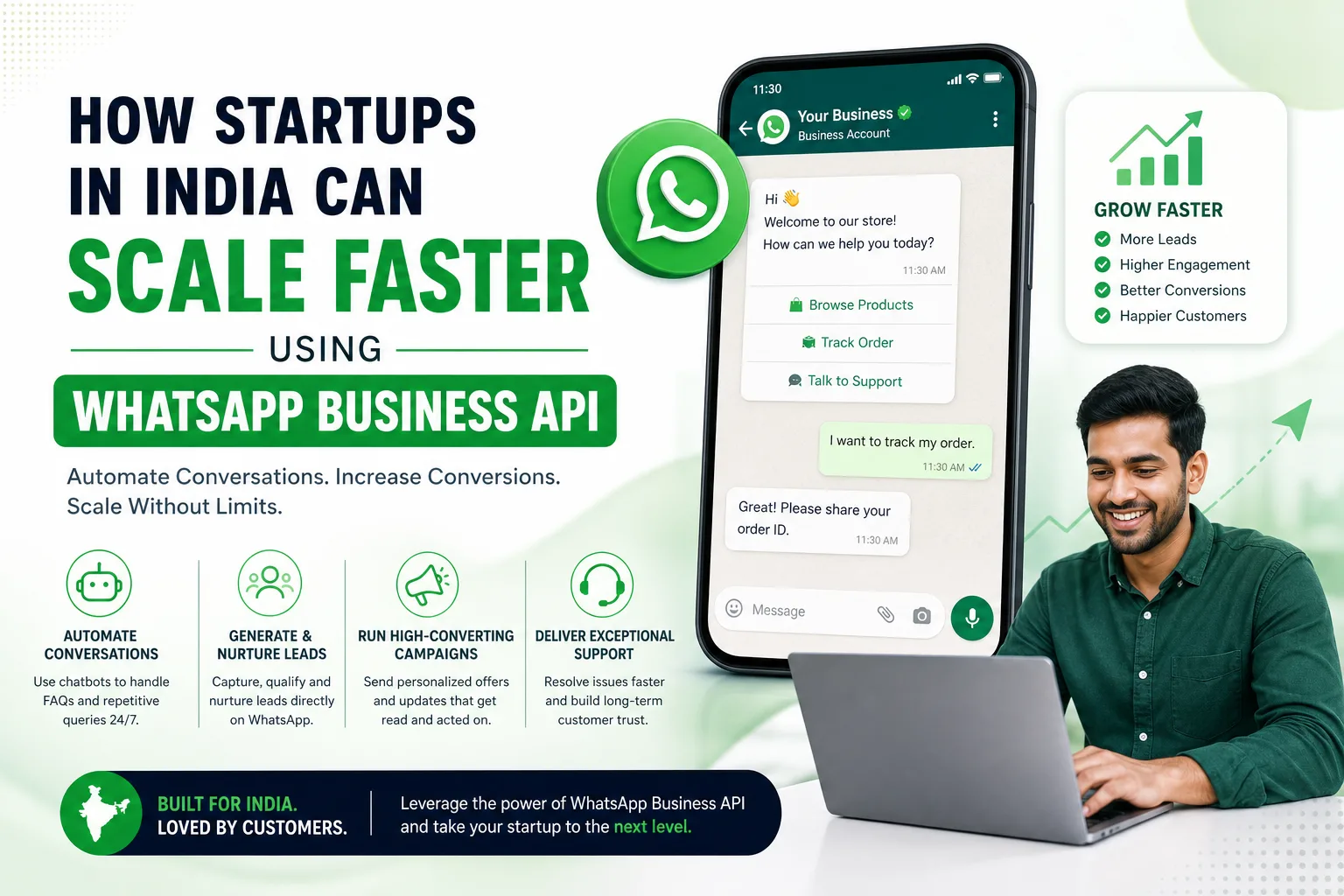
With its massive adoption across India, WhatsApp is no longer just a messaging app—it’s a powerful business growth tool. The WhatsApp API allows startups to automate conversations, manage customer interactions at scale, and convert leads faster without significantly increasing team size.
For startups aiming to grow efficiently while maintaining strong customer relationships, WhatsApp API is not just an option—it’s a high-impact growth engine.
What is WhatsApp API and How Does It Work?
The WhatsApp API—officially known as the WhatsApp Business Platform—is a scalable communication solution that enables businesses to interact with customers programmatically.
Unlike the basic WhatsApp Business app, the API allows:
- Automated workflows through chatbots
- Integration with CRM, ERP, and marketing platforms
- Multi-user access for teams
- Broadcast messaging with personalization
- Advanced analytics and tracking
Startups in India access this via authorized Business Solution Providers approved by Meta Platforms.
In simple terms:
It connects your backend systems to WhatsApp so you can manage thousands of conversations efficiently, without manual effort.
Why is WhatsApp API a Growth Engine for Indian Startups?
India’s Massive WhatsApp User Base
India has the largest WhatsApp audience globally. Whether your customers are in Mumbai, Pune, Bangalore, or Tier-2 cities like Jaipur and Lucknow, WhatsApp is already their primary communication tool.
This eliminates friction—startups don’t need to “bring users” to a new platform.
Higher Engagement Compared to Traditional Channels
WhatsApp messages are opened and read almost instantly.
- WhatsApp open rates: up to 98%
- Email: often below 25%
- SMS: declining engagement in promotional campaigns
This makes WhatsApp significantly more effective for time-sensitive communication.
Lower Customer Acquisition Cost (CAC)
Click-to-WhatsApp ads remove the need for landing pages, forms, and multi-step funnels.
Practical insight:
Startups in India using WhatsApp funnels often report:
- 30–50% reduction in cost per lead
- Higher qualified lead ratios
Real-Time Conversations Drive Faster Conversions
Indian consumers prefer immediate responses. A delay of even 10–15 minutes can lead to drop-offs.
WhatsApp API ensures:
- Instant replies
- Automated follow-ups
- Continuous engagement
How Can Startups Use WhatsApp API for Growth?
1. Lead Generation & Qualification
Startups can run ads on Facebook and Instagram that open directly into WhatsApp chats.
Once the user enters the chat:
- Chatbots ask qualifying questions
- Data is captured automatically
- Leads are routed to sales teams
Real-world scenario:
A Mumbai-based edtech startup replaced landing page forms with WhatsApp lead capture and saw a 40% increase in completed inquiries.
2. Sales Automation That Increases Conversion Rates
Sales teams often lose leads due to delayed follow-ups.
With WhatsApp API:
- Instant product recommendations can be sent
- Automated reminders keep prospects engaged
- Payment links can be shared directly
Actionable strategy:
Set up a 3-step follow-up automation:
- Immediate response
- Reminder after 1 hour
- Offer or incentive after 24 hours
3. Customer Support Without Expanding Teams
Handling high support volume is a major challenge for startups.
WhatsApp chatbots can:
- Answer FAQs
- Provide order status
- Resolve common queries
This reduces dependency on large support teams.
Industry example:
An eCommerce startup in Pune automated 70% of support queries using WhatsApp bots, significantly reducing operational costs.
4. Automated Notifications Build Trust
Transactional messaging improves transparency and customer satisfaction.
Use cases include:
- Order confirmations
- Delivery updates
- Payment reminders
- Appointment confirmations
Customers trust brands that keep them informed.
5. High-Converting Marketing Campaigns
WhatsApp marketing works because messages feel personal.
Startups can:
- Segment audiences
- Send tailored offers
- Re-engage inactive users
Practical insight:
Personalized WhatsApp campaigns can generate 2–3x higher ROI compared to email marketing.
How Exactly Does WhatsApp API Help Startups Scale Faster?
Automation Reduces Costs While Scaling Output
Instead of hiring more agents, startups can handle thousands of conversations with automation.
Faster Lead Conversion Cycles
Speed matters. The faster you respond, the higher your chances of closing.
Improved Customer Experience (CX)
Customers prefer chatting over:
- Filling long forms
- Waiting on calls
- Downloading apps
Seamless Integration With Business Tools
WhatsApp API can connect with:
- CRM platforms
- Payment gateways
- Marketing tools
This creates a unified customer journey.
Data-Driven Decision Making
Startups can track:
- Message open rates
- Click-through rates
- Conversion metrics
This helps optimize campaigns continuously.
Industry-Specific Use Cases in India
E-commerce & D2C Brands
- Abandoned cart recovery
- COD confirmation messages
- Upselling and cross-selling
Example:
A D2C fashion brand increased repeat purchases by 25% using WhatsApp retargeting.
EdTech Startups
- Demo reminders
- Course enrollment nudges
- Student engagement workflows
FinTech Companies
- Loan reminders
- KYC updates
- Transaction alerts
Healthcare & Clinics
- Appointment scheduling
- Follow-up reminders
- Patient communication
Step-by-Step: How to Get Started with WhatsApp API in India
Step 1: Choose a Verified Provider
Work with an official BSP authorized by Meta Platforms.
Step 2: Complete Business Verification
You’ll need to verify your business through Facebook Business Manager.
Step 3: Apply for WhatsApp API Access
Once approved, you can start setting up your account.
Step 4: Create Message Templates
Templates are required for sending outbound notifications.
Step 5: Integrate With Your Systems
Connect with CRM, website, or mobile apps.
Step 6: Launch and Optimize Campaigns
Start small, analyze performance, and scale gradually.
Best Practices for Scaling Using WhatsApp API
Personalization is Key
Use customer data to tailor messages.
Focus on Opt-In and Compliance
Always get user consent before messaging.
Combine Automation with Human Support
Chatbots should handle initial queries, but humans should step in when needed.
Segment Your Audience
Different customer groups require different messaging strategies.
Monitor Performance Metrics
Track and optimize regularly.
Common Mistakes Startups Should Avoid
- Sending irrelevant bulk messages
- Ignoring customer consent
- Over-automating conversations
- Delayed responses
- Not analyzing campaign data
WhatsApp API Pricing in India Explained
Pricing depends on:
- Conversation type (marketing, service, utility)
- Volume of messages
- BSP charges
While it’s not free, the ROI is often higher than traditional channels due to better engagement and conversions.
WhatsApp API vs Other Communication Channels
ChannelEngagementCostConversionWhatsAppVery HighModerateFastEmailMediumLowSlowSMSMediumModerateModerateAppsLowHighSlow
What Does the Future Look Like for WhatsApp API in India?
- AI-driven conversations will become standard
- More startups will adopt conversational commerce
- Integration with omnichannel platforms will increase
- Customer expectations for instant communication will grow
Startups that adopt early will gain a strong competitive advantage.
Frequently Asked Questions
What is WhatsApp API used for?
It is used to automate customer communication across marketing, sales, and support.
Is WhatsApp API free in India?
No, it follows a conversation-based pricing model depending on usage.
How can startups use WhatsApp API effectively?
By automating lead capture, running personalized campaigns, and providing instant support.
What is the difference between WhatsApp Business and WhatsApp API?
The Business app is for small-scale use, while the API is designed for automation and scaling.
How long does it take to get WhatsApp API access?
Typically a few days to a couple of weeks, depending on verification and provider.
Ready to Turn Conversations Into Conversions?
If your startup is still relying on forms, emails, or delayed responses, you're leaving revenue on the table.
👉 Map your current customer journey and identify drop-off points
👉 Replace slow touchpoints with WhatsApp automation
👉 Launch your first campaign focused on high-intent users
By implementing the WhatsApp Business API, you can automate engagement, accelerate conversions, and scale your startup without increasing operational complexity.
If you want a custom WhatsApp Business API setup, automation strategy, or campaign plan tailored for startups in India, now is the right time to act—before your competitors dominate this channel.