
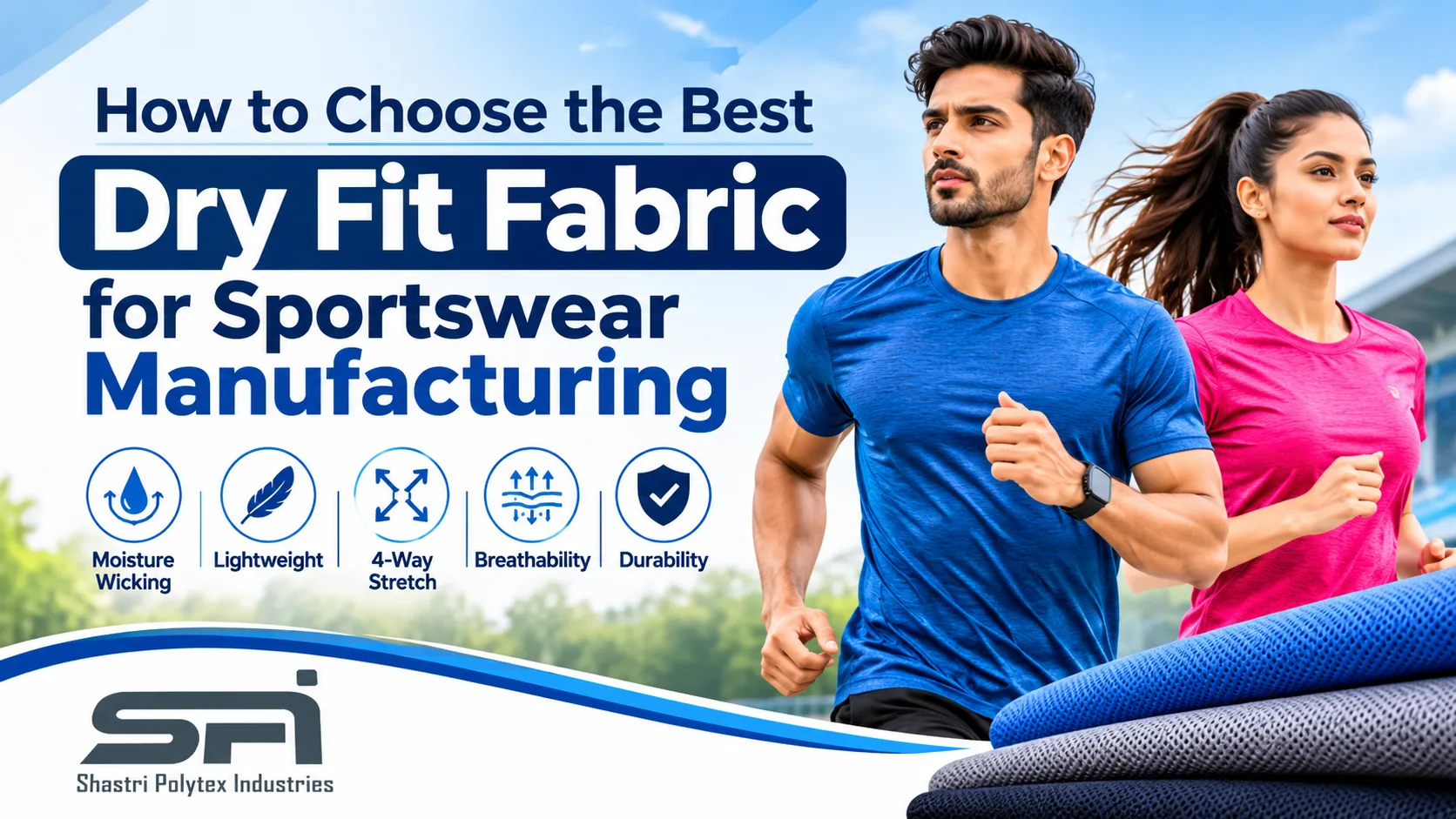
The sportswear industry has evolved significantly with increasing demand for comfortable, lightweight and performance-oriented clothing. From gym wear and running apparel to fitness T-shirts and professional sports uniforms, fabric selection plays an important role in garment quality and performance.
Among the different materials available today, Dry Fit fabric has become a popular choice for sportswear manufacturing because of its lightweight construction, breathability and moisture-management properties.
However, choosing the right sportswear fabric involves more than selecting a material that feels comfortable. Manufacturers must consider factors such as fabric composition, GSM, knitting structure, moisture-wicking performance, durability and stretchability.
In this guide, we explore the important factors to consider when selecting the best Dry Fit fabric for sportswear manufacturing.
1. Understand the Fabric Composition
Fabric composition is one of the first things to evaluate when choosing material for sportswear production.
Polyester is widely used in Dry Fit fabric manufacturing because it offers several useful properties, including:
- Lightweight construction
- Good dimensional stability
- Quick-drying performance
- Durability and colour retention
- Easy maintenance
- Resistance to frequent washing
Polyester sportswear fabric is suitable for gym T-shirts, running apparel, training wear and sports uniforms.
Some manufacturers also use polyester blends with elastane or Lycra to improve stretchability and flexibility. These blends are particularly useful for activewear, leggings and fitted sportswear.
2. Check Moisture-Wicking Properties
Moisture management is one of the most important features of high-quality Dry Fit fabric.
During physical activities, the human body produces sweat. A good moisture-wicking fabric helps move moisture away from the skin towards the outer surface, where it can spread and evaporate more easily.
This helps improve wearing comfort during workouts, running, cycling and other sports activities.
When selecting moisture-wicking fabric, manufacturers should evaluate:
- Moisture absorption and transfer
- Drying speed
- Fabric breathability
- Surface construction
- Performance after repeated washing
Choosing the right quick-dry fabric can improve the overall functionality of sportswear garments.
3. Select the Right GSM for Sportswear
GSM, or grams per square metre, refers to the weight of a fabric. It is an important factor when choosing material for different sportswear applications.
Different GSM ranges are suitable for different garment requirements.
| Fabric application | Indicative GSM range |
| Lightweight sports T-shirts | 120–150 GSM |
| Regular gym T-shirts | 140–180 GSM |
| Training and activewear | 160–200 GSM |
| Heavier sportswear applications | 180–220 GSM |
These are indicative ranges, not fixed industry standards. The ideal GSM depends on fabric construction, fibre composition, end use and desired garment performance.
Manufacturers should select GSM according to the intended application rather than assuming that heavier fabric always means better quality.
4. Evaluate Breathability and Air Circulation
Breathability is another important consideration in sportswear fabric selection.
A breathable sports fabric allows air to circulate through its construction, helping regulate body temperature and improve comfort.
Knitted fabrics are commonly used in sportswear because their loop-based construction can provide flexibility, comfort and suitable air permeability.
Popular fabric structures include:
- Single Jersey
- Polyester Interlock
- Mesh Fabric
- Pique Knit
- Textured Knitted Fabric
Mesh and specially engineered knitted structures are particularly useful when better ventilation is required.
5. Consider Stretchability and Fabric Recovery
Sportswear garments must allow users to move comfortably during physical activities.
For this reason, stretchability is an important feature when selecting performance fabric.
Polyester and elastane blends are often used in activewear because they combine polyester's durability with elastane's stretch properties.
Before selecting a stretch fabric, manufacturers should evaluate:
- Two-way or four-way stretch
- Elastic recovery
- Shape retention
- Comfort during movement
- Resistance to deformation
Good fabric recovery helps garments maintain their original shape after repeated stretching and washing.
6. Check Durability and Colour Fastness
Sportswear garments are frequently exposed to sweat, friction, sunlight and repeated washing.
Therefore, durability and colour fastness should be considered before finalising a fabric supplier.
Important quality parameters include:
- Colour fastness to washing
- Colour fastness to perspiration
- Pilling resistance
- Abrasion resistance
- Dimensional stability
- Seam performance
Testing these properties helps manufacturers maintain consistent garment quality and reduce customer complaints.
7. Choose the Right Knitted Fabric Structure
The knitting structure influences the appearance, flexibility, texture and performance of sportswear material.
Different knitted fabric constructions serve different purposes.
For example:
- Single Jersey: Suitable for lightweight sports T-shirts and casual activewear.
- Interlock: Offers a smooth surface and a more substantial construction.
- Mesh Knit: Suitable for sportswear requiring enhanced ventilation.
- Pique Knit: Often used in sports polo shirts and uniforms.
- Lycra Blends: Useful for stretch-oriented activewear applications.
Selecting the correct knitted fabric structure helps manufacturers achieve the desired balance between comfort, durability and functionality.
8. Work with a Reliable Dry Fit Fabric Manufacturer
Finding a dependable fabric manufacturer or supplier is essential for consistent sportswear production.
A reliable supplier should offer product consistency, suitable fabric specifications and dependable quality control.
Before choosing a sportswear fabric supplier, consider:
- Available fabric compositions
- GSM and width specifications
- Knitting quality
- Colour consistency
- Customisation options
- Production capacity
- Quality testing facilities
- Delivery reliability
Manufacturers should also request fabric samples and conduct garment trials before placing large production orders.
9. Why the Right Dry Fit Fabric Matters for Sportswear Brands
The right fabric directly influences the performance, comfort and durability of sportswear products.
Whether manufacturing gym T-shirts, running apparel, sports uniforms or activewear collections, selecting suitable performance fabric can help brands deliver better products to their customers.
As demand for functional and comfortable clothing continues to grow, Dry Fit fabric, polyester knitted fabric and moisture-wicking textiles remain important materials in modern sportswear manufacturing.
Conclusion
Choosing the best Dry Fit fabric for sportswear manufacturing requires careful consideration of fabric composition, GSM, moisture management, breathability, stretchability and durability.
By understanding these factors and working with an experienced fabric manufacturer, sportswear brands can make informed sourcing decisions and maintain consistent product quality.
Shastri Polytex Industries focuses on knitted fabric solutions for various textile and garment applications. Exploring suitable fabric specifications and product options can help manufacturers identify materials that match their sportswear production requirements.