In today’s digital-first business environment, a mobile app can become a powerful channel for attracting customers, improving operational efficiency, increasing revenue, and building long-term brand loyalty. However, developing a successful app requires more than hiring a team that can write code. You need an app development company that understands your business goals, target audience, technology requirements, budget, security needs, and long-term growth plans.
With hundreds of development agencies and technology companies available, choosing the right partner can feel overwhelming. The wrong decision can lead to missed deadlines, unexpected costs, poor app performance, security vulnerabilities, and an application that fails to meet customer expectations.
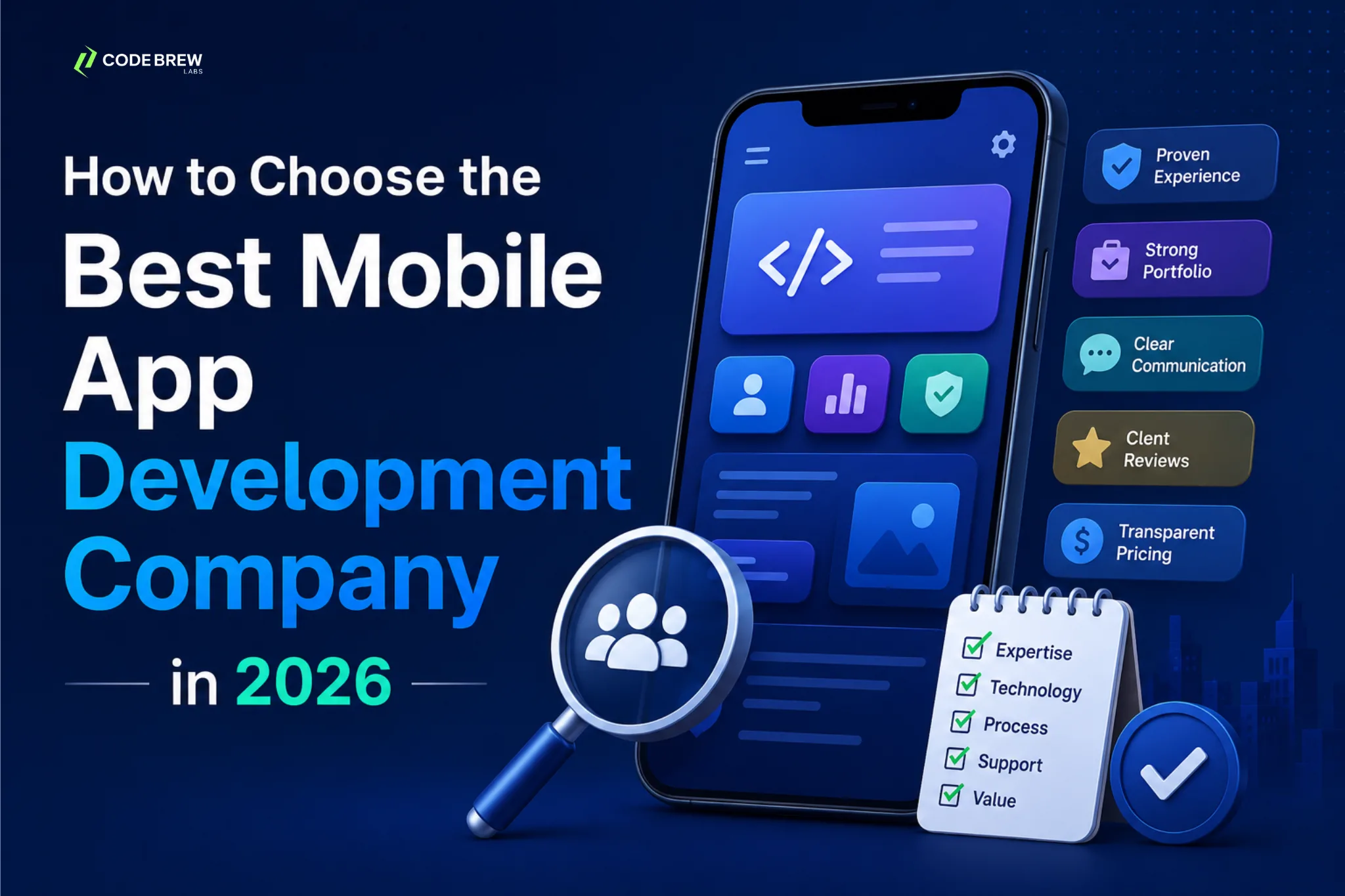
This guide explains the key factors businesses should consider when choosing the best app development company for their next digital product.
1. Start With Your Business Goals
Before approaching an app development company, clearly define what you want your application to accomplish.
Ask yourself:
- What business problem will the app solve?
- Who are the target users?
- What customer experience should the app provide?
- How will the application generate revenue or business value?
- What features are essential for launch?
- What should the app achieve within the first year?
For example, an e-commerce business may need product discovery, shopping carts, secure payments, order tracking, and personalized recommendations. A healthcare company may require appointment booking, telemedicine, patient records, and secure communication.
A good development partner should connect technology decisions with these business objectives rather than simply building a list of requested features.
2. Look for Relevant Industry Experience
Industry experience can significantly influence the quality of your final product. An app development company that has worked on similar projects will typically understand common user expectations, technical challenges, integrations, and compliance requirements.
For example, fintech applications may require secure payment infrastructure and fraud prevention, while healthcare applications may require strong privacy controls and integration with healthcare systems.
Ask potential development partners:
- Have you developed similar applications?
- Can you provide relevant case studies?
- What challenges did you solve?
- What technologies were used?
- What results did the client achieve?
Relevant experience doesn't mean a company must have built the same app. More importantly, it should demonstrate an understanding of your industry's technical and business requirements.
3. Evaluate Their Technical Expertise
Technology choices can affect your app’s performance, scalability, security, and maintenance costs.
A professional app development company should have expertise across relevant technologies, such as:
- Native iOS and Android development
- Flutter
- React Native
- Backend development
- Cloud computing
- APIs and third-party integrations
- Artificial intelligence
- Machine learning
- Database architecture
- Cybersecurity
- DevOps and CI/CD
- Analytics and monitoring
The right technology stack depends on your specific requirements. Avoid companies that recommend a particular technology simply because it is their preferred development framework. Instead, ask why a specific architecture or technology is suitable for your business.
4. Check Their Portfolio and Case Studies
A portfolio can provide valuable insight into a company's capabilities. Don't just look at screenshots. Examine the types of applications they have built, the industries they serve, the complexity of their projects, and the functionality they have implemented.
Strong case studies should explain:
- The client's original challenge
- The solution developed
- Technologies used
- Key features
- Development challenges
- Business outcomes
A company that can demonstrate successful real-world implementations is generally more valuable than one that only presents attractive designs.
5. Assess Their UI/UX Design Capabilities
A technically advanced application can still fail if users find it difficult to navigate. User experience should be considered from the earliest stages of development. Your development partner should be able to create intuitive navigation, clear user journeys, accessible interfaces, responsive layouts, and consistent visual design.
The typical design process may include:
- User research
- User personas
- Information architecture
- Wireframes
- Interactive prototypes
- UI design
- Usability testing
- Design refinement
Ask to see examples of previous UI/UX projects and understand how the company incorporates user feedback into its design process.
6. Understand Their Development Process
A reliable development company should have a clearly defined process.
A typical project may move through the following stages:
Discovery → Planning → UX/UI Design → Development → Testing → Deployment → Maintenance
Agile development is commonly used because it allows teams to work in iterations and receive feedback throughout the project.
Ask potential partners how they handle:
- Project planning
- Sprint management
- Client communication
- Feature prioritization
- Testing
- Change requests
- Progress reporting
- Deployment
A transparent process reduces uncertainty and helps prevent misunderstandings during development.
7. Prioritize Security From the Beginning
Security should not be treated as an optional feature. Mobile applications can handle sensitive information such as personal details, payment data, business records, location information, and authentication credentials.
Your development partner should consider security throughout the application lifecycle.
Important areas include:
- Secure authentication
- Data encryption
- API security
- Secure payment processing
- Access control
- Secure cloud infrastructure
- Vulnerability testing
- Data privacy
- Regular security updates
Ask the development company how it identifies and addresses security risks before launch.
8. Consider Scalability
Your application may start with a few thousand users but could eventually serve millions. Choosing an architecture that can scale is therefore critical.
A scalable application should be capable of handling increases in:
- Users
- Transactions
- Data
- API requests
- Geographic expansion
- Third-party integrations
Cloud infrastructure, scalable databases, efficient APIs, caching, monitoring, and modular architecture can help applications grow without requiring a complete rebuild.
When evaluating an app development company, ask how it designs applications for future growth rather than just the initial launch.
9. Ask About Testing and Quality Assurance
Testing is one of the most important stages of app development.
A professional development company should use multiple testing methods, including:
- Functional testing
- UI testing
- Performance testing
- Security testing
- Compatibility testing
- Usability testing
- API testing
- Regression testing
- Device testing
Testing should take place throughout development rather than only immediately before launch. You should also understand how bugs are documented, prioritized, resolved, and retested.
10. Evaluate Communication and Project Management
Even an experienced technical team can become difficult to work with if communication is poor.
Before signing a contract, establish:
- Who will manage your project?
- How frequently will you receive updates?
- Which communication tools will be used?
- Who will approve designs and features?
- How will technical decisions be communicated?
- What happens if requirements change?
A dedicated project manager can make communication considerably easier by coordinating designers, developers, testers, and business stakeholders.
11. Compare Pricing Carefully
Cost is important, but the cheapest proposal isn't necessarily the best choice.
App development costs depend on factors such as:
- Number of platforms
- App complexity
- Design requirements
- Backend infrastructure
- Third-party integrations
- AI functionality
- Security requirements
- Testing
- Maintenance
- Development location
- Development timeline
Instead of comparing only the total price, compare what is included in each proposal.
A low-cost development project can become expensive later if it results in poor architecture, technical debt, security problems, or repeated redevelopment.
Focus on total value and long-term return on investment, not just initial development cost.
12. Understand Ownership and Intellectual Property
Before starting development, clarify who owns the application's source code, designs, databases, documentation, and other project assets.
Your agreement should clearly address:
- Source code ownership
- Intellectual property rights
- Third-party licenses
- Design ownership
- Repository access
- Confidentiality
- Data ownership
Clear ownership terms can prevent major problems if you later change development partners or bring development in-house.
13. Check Post-Launch Support
App development doesn't end when your application reaches the App Store or Google Play.
After launch, you may need:
- Bug fixes
- Performance optimization
- Security updates
- OS compatibility updates
- New features
- Analytics
- Cloud management
- Technical support
Ask whether the company provides ongoing maintenance and what its support plans include. A long-term technology partner can help your application evolve as your customers, market, and business requirements change.
14. Look for AI and Emerging Technology Expertise
Modern applications increasingly use artificial intelligence to improve personalization, automation, search, customer support, analytics, and decision-making.
Depending on your business, AI capabilities may include:
- AI-powered chatbots
- Generative AI
- Recommendation engines
- Predictive analytics
- Computer vision
- Intelligent automation
- Natural language processing
- Personalized user experiences
However, AI should be implemented because it creates measurable business value, not simply because it is a current trend. The right development partner should help you determine where AI can genuinely improve your application.
Conclusion
Choosing the best app development company is ultimately about finding a technology partner that understands both your business and your users.
Don't make your decision based solely on price, portfolio size, or promises. Evaluate technical expertise, industry experience, UI/UX capabilities, security, scalability, development processes, communication, testing, ownership, and post-launch support.
The right partner should be able to transform your business idea into a secure, scalable, user-friendly application while continuing to support its growth after launch.
Whether you're building a startup product, an enterprise platform, an e-commerce application, or an AI-powered mobile solution, selecting the right development company can have a direct impact on your project's success.
Take time to evaluate potential partners, ask detailed questions, compare proposals, and choose a company that is prepared to build not just an app, but a sustainable digital product that can grow with your business.