
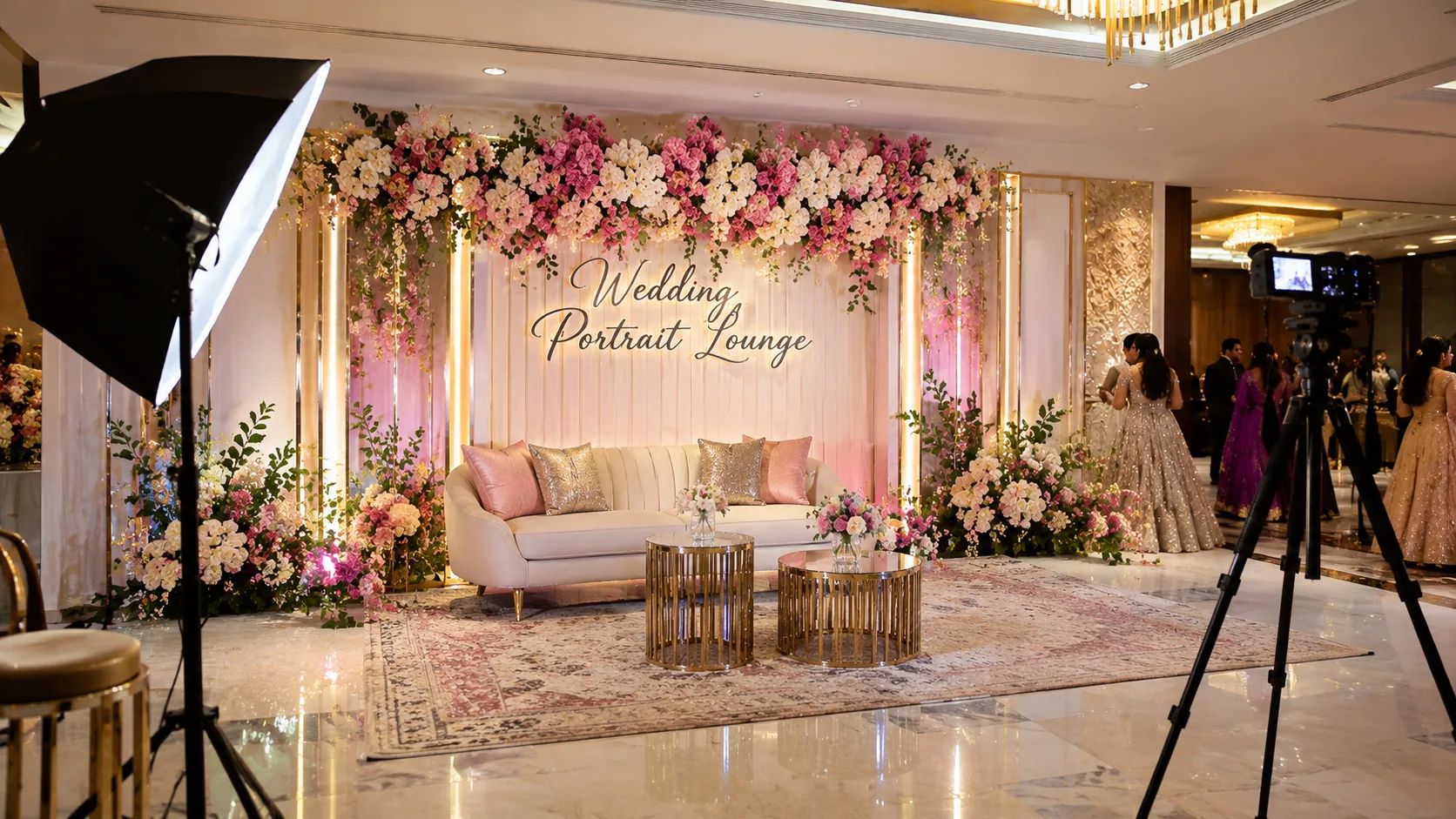
A destination wedding in Dubai brings together relatives, friends and guests from different cities and countries. While the main wedding photographer captures the ceremony and celebrations, many guests also want professional photographs with their families, friends and the newly married couple.
However, arranging individual photographs during the reception can become difficult. Guests may need to wait for the photographer, move between different locations or interrupt important wedding moments to request pictures.
A dedicated wedding portrait lounge solves this problem by creating a separate, beautifully designed space where guests can enjoy professional photography throughout the celebration.
Unlike a traditional photo booth, a portrait lounge focuses on elegant photographs, comfortable seating, coordinated lighting and family portraits that guests can preserve as wedding memories.
Here are practical ways to create a beautiful wedding portrait lounge for family and guests at a Dubai wedding.
1. Choose a Suitable Location for the Portrait Lounge
The location is one of the most important decisions when designing a wedding portrait lounge.
The space should be easy for guests to find without interfering with the main ceremony, dining area or dance floor.
Consider these locations:
Near the reception entrance: Guests can take photographs shortly after arriving, before the main celebrations begin.
Beside the ballroom: A separate corner near the reception area allows guests to access the lounge without leaving the event.
Inside a private adjoining room: This option works well for couples who want a quieter photography environment with controlled lighting.
Near the lounge or pre-function area: A nearby hospitality area can provide enough space for seating, photography equipment and guest movement.
Before finalising the location, discuss its dimensions, accessibility, lighting conditions and photography arrangements with the venue's event team.
Avoid placing the portrait lounge near loud speakers, crowded food counters or narrow walkways.
2. Design a Backdrop That Matches the Wedding Theme
The backdrop creates the visual identity of the portrait lounge.
It should complement the wedding's overall décor while allowing guests to stand out in photographs.
Some attractive backdrop ideas include:
Elegant floral backdrop: Use fresh flowers, greenery and subtle decorative structures for a romantic appearance.
Minimal luxury backdrop: Combine neutral fabrics, elegant lighting and metallic details for a sophisticated photography setting.
Traditional Indian backdrop: Introduce decorative patterns, embroidered fabrics and colours inspired by Indian wedding traditions.
Modern architectural backdrop: Use clean shapes, textured panels and coordinated materials for a contemporary look.
Personalised couple backdrop: Include the couple's initials, wedding date or a subtle monogram.
For a luxury Dubai wedding, consider the venue's existing architecture and interiors before choosing the backdrop.
Avoid excessive decorations that distract from the people being photographed.
3. Select Comfortable Seating for Family Portraits
A portrait lounge should accommodate more than individual photographs.
Families often want photographs with parents, grandparents, siblings, cousins and children. Comfortable seating makes these arrangements easier.
Consider including:
- An elegant sofa for family portraits.
- Individual chairs for elderly relatives.
- Small stools for children, where appropriate.
- A comfortable bench for group photographs.
- A few decorative cushions matching the wedding theme.
Choose furniture that allows people to sit naturally without feeling crowded.
Also make sure the seating is stable and provides enough space for the photographer to capture different group combinations.
For larger Indian weddings, arrange furniture that can accommodate both small family groups and larger extended-family portraits.
4. Arrange Professional Lighting for Natural-Looking Photographs
Lighting has a significant influence on portrait quality.
Even a beautifully decorated lounge may produce disappointing photographs if the faces are too dark, shadows are harsh or lighting colours affect skin tones.
Coordinate with the photographer or lighting specialist to create a consistent setup.
Consider:
Soft front lighting: Helps illuminate faces evenly and reduces harsh shadows.
Balanced background lighting: Keeps the backdrop visible without making it brighter than the people being photographed.
Warm ambient lighting: Can create a welcoming atmosphere when balanced with appropriate portrait lighting.
Adjustable lighting: Allows the photographer to accommodate different group sizes and seating arrangements.
Avoid relying only on decorative chandeliers or coloured event lights.
Before the wedding, ask the photographer to test the lighting using the actual backdrop and seating arrangement.
This helps ensure that the finished photographs look consistent throughout the event.
5. Provide Different Portrait Styles for Guests
Not every guest wants the same type of photograph.
Some may prefer a traditional family portrait, while others want relaxed photographs with friends or individual portraits.
Offer a few simple photography options.
Individual portraits: Suitable for guests who want a professional photograph of themselves.
Couple portraits: Allow wedding guests to take photographs with their partners.
Family portraits: Capture parents, children, grandparents and extended family members together.
Friends' group photographs: Provide an opportunity for college friends, childhood friends and other groups to create memories.
Traditional portraits: Create a more formal photography style for families who prefer classic poses.
Discuss the available photography styles with the photographer before the event.
A small selection of options is usually easier to manage than a complicated photography menu.
6. Create a Separate Photography Experience for Elderly Guests
Some elderly relatives may find it difficult to stand for long periods or move through crowded reception spaces.
A dedicated portrait lounge can make professional photography more comfortable for them.
Consider:
- Providing chairs with suitable back support.
- Keeping the photography area easy to access.
- Avoiding steps or uneven flooring where possible.
- Allowing elderly guests to remain seated during portraits.
- Scheduling photographs at a convenient time.
- Assigning a family representative to assist them.
If grandparents are attending the wedding, reserve time for their photographs with the bride, groom and close family members.
These portraits can become especially meaningful memories for the couple and their families.
7. Personalise the Portrait Lounge With Wedding Details
A portrait lounge should feel connected to the couple's celebration rather than looking like a generic photography studio.
Introduce a few meaningful details that represent the wedding.
Some ideas include:
- The couple's initials.
- Their wedding date.
- A personalised monogram.
- Selected engagement photographs.
- Decorative elements matching the main reception.
- Flowers associated with the wedding theme.
- A personalised welcome message.
For example, a couple who prefers a champagne and ivory reception theme can use the same colours in the lounge backdrop, furniture and decorative accessories.
Keep personalisation subtle so that guests and their expressions remain the main focus of the photographs.
8. Coordinate the Photographer and Portrait Lounge Team
A dedicated portrait lounge works best when the photographer has a clear understanding of how the space will be used.
Discuss the responsibilities and arrangements before the wedding.
The photography team should know:
- The portrait lounge location.
- The agreed photography style.
- The lighting arrangement.
- The expected guest groups.
- The time available for portraits.
- The equipment and backdrop setup.
- The process for handling guest requests.
- The delivery method for finished photographs.
Consider appointing one person to manage the photography queue and guide guests towards the lounge.
This prevents the photographer from having to organise guest movement while also managing the camera and lighting.
Also clarify whether the portrait photographer will work separately from the main wedding photography team.
9. Manage Guest Queues Without Creating Long Waiting Times
A popular portrait lounge may attract many guests, particularly during a large Indian wedding reception.
Without a simple arrangement, guests may have to wait too long for their photographs.
Consider these practical steps:
Create a visible waiting area: Arrange comfortable seating for guests waiting for their turn.
Manage group sizes: Photograph small groups efficiently before moving to larger family portraits.
Prioritise important family portraits: Allocate suitable time for grandparents, parents and other close relatives.
Use a photography coordinator: Assign someone to guide guests and communicate with the photographer.
Avoid unnecessary changes: Keep the backdrop and lighting consistent to reduce delays between photographs.
The aim is to make the experience convenient without turning the lounge into another crowded event area.
10. Add Small Details to Improve Guest Comfort
A well-designed portrait lounge should provide a comfortable experience beyond photography.
Consider adding:
- A small waiting area.
- A mirror for quick appearance checks.
- Tissue and basic grooming supplies.
- A nearby table for personal belongings.
- Clear directions to the lounge.
- Suitable space for handbags and accessories.
- Assistance for guests who need help accessing the area.
For a multi-day wedding, coordinate the lounge opening times with the reception schedule.
If the space will be used for several functions, check whether the backdrop, seating and lighting need adjustments between events.
11. Plan How Guests Will Receive Their Photographs
The portrait experience should not end when the camera captures the photograph.
Decide how guests will receive their pictures and communicate the process clearly.
Possible options include:
Digital photo gallery: Share selected images through a private online gallery after the wedding.
Personalised photograph links: Provide guests with a method to access their own portraits.
Printed photographs: Arrange selected prints for guests who prefer physical keepsakes.
Family portrait collections: Create separate collections for close family groups.
Private digital delivery: Send photographs through an appropriate private sharing method.
Discuss editing time, delivery expectations and image-sharing permissions with the photography team.
If photographs include children or other guests, respect the relevant parents' or participants' preferences before sharing or publishing them.
12. Maintain Privacy and Guest Consent
Some wedding guests may not want their portraits shared publicly or uploaded to social media.
A dedicated photography area should respect those preferences.
Before the wedding, decide how photographs will be stored, shared and used.
Consider:
- Informing guests about the photography arrangement.
- Asking permission before posting photographs publicly.
- Using private galleries for guest access.
- Restricting unauthorised image sharing where requested.
- Confirming how long photographs will be stored.
- Providing a contact person for photography-related questions.
The couple should also communicate any photography restrictions to the wedding photographer and venue team.
This helps guests enjoy the experience while maintaining appropriate privacy.
13. Coordinate the Portrait Lounge With the Main Wedding Schedule
The portrait lounge should complement the wedding reception rather than interrupt important activities.
Prepare a simple schedule with the wedding planner.
Consider:
- When the portrait lounge will open.
- When the photographer will be available.
- When close-family portraits will take place.
- When guests can visit the lounge.
- Whether the lounge will remain open during dinner.
- When the final photography session will conclude.
- When photographs will be delivered.
If the bride and groom plan to take photographs with guests, reserve a specific time for their appearance in the lounge.
This prevents guests from waiting unnecessarily and allows the couple to enjoy the rest of the reception.
Wedding Portrait Lounge Planning Checklist
Before approving the final setup, confirm the following:
- Portrait lounge location selected.
- Backdrop design approved.
- Seating arrangement finalised.
- Professional lighting tested.
- Individual and group portrait options selected.
- Elderly guest accessibility considered.
- Personalised wedding details added.
- Photographer and coordinator assigned.
- Guest queue arrangements prepared.
- Waiting area and comfort facilities organised.
- Photograph delivery method confirmed.
- Privacy and sharing preferences communicated.
- Portrait lounge timings included in the wedding schedule.
Frequently Asked Questions
1. What is a wedding portrait lounge?
A wedding portrait lounge is a dedicated photography space at a wedding where guests and family members can take professional portraits using a coordinated backdrop, suitable lighting and comfortable seating.
2. How is a portrait lounge different from a traditional photo booth?
A photo booth often focuses on casual photographs and props, while a portrait lounge is designed for more formal and professionally styled portraits of individuals, couples and families.
3. Where should couples set up a portrait lounge at a Dubai wedding?
Suitable locations include a reception entrance area, an adjoining private room, a ballroom corner or a nearby pre-function space, depending on the venue layout.
4. What should a wedding portrait lounge include?
It can include a decorative backdrop, professional lighting, comfortable seating, a photographer, a waiting area and personalised wedding details.
5. How can elderly family members be included in portrait photography?
Provide accessible seating, convenient entry, suitable assistance and enough time for comfortable family photographs.
6. Should couples hire a separate photographer for the portrait lounge?
A separate portrait photographer can help manage guest portraits while the main photographer continues capturing the ceremony and reception. The decision depends on the guest count and photography requirements.
7. How can couples manage long queues at the portrait lounge?
Use a dedicated coordinator, comfortable waiting seats, organised group photography and a clear schedule for important family portraits.
8. How should wedding guests receive their portrait photographs?
Couples can arrange a private digital gallery, personalised photograph links or selected printed photographs, depending on the photography team's delivery arrangements.
Final Thoughts
A dedicated wedding portrait lounge gives families and guests an opportunity to create professional photographs without interrupting the main wedding celebrations.
Whether it is a formal family portrait, a photograph with grandparents or a relaxed picture with close friends, the portrait lounge can become a meaningful part of the wedding experience.
The most successful setup is not necessarily the most elaborate one. It is a space where every guest feels comfortable, welcomed and able to preserve a special memory of the celebration.