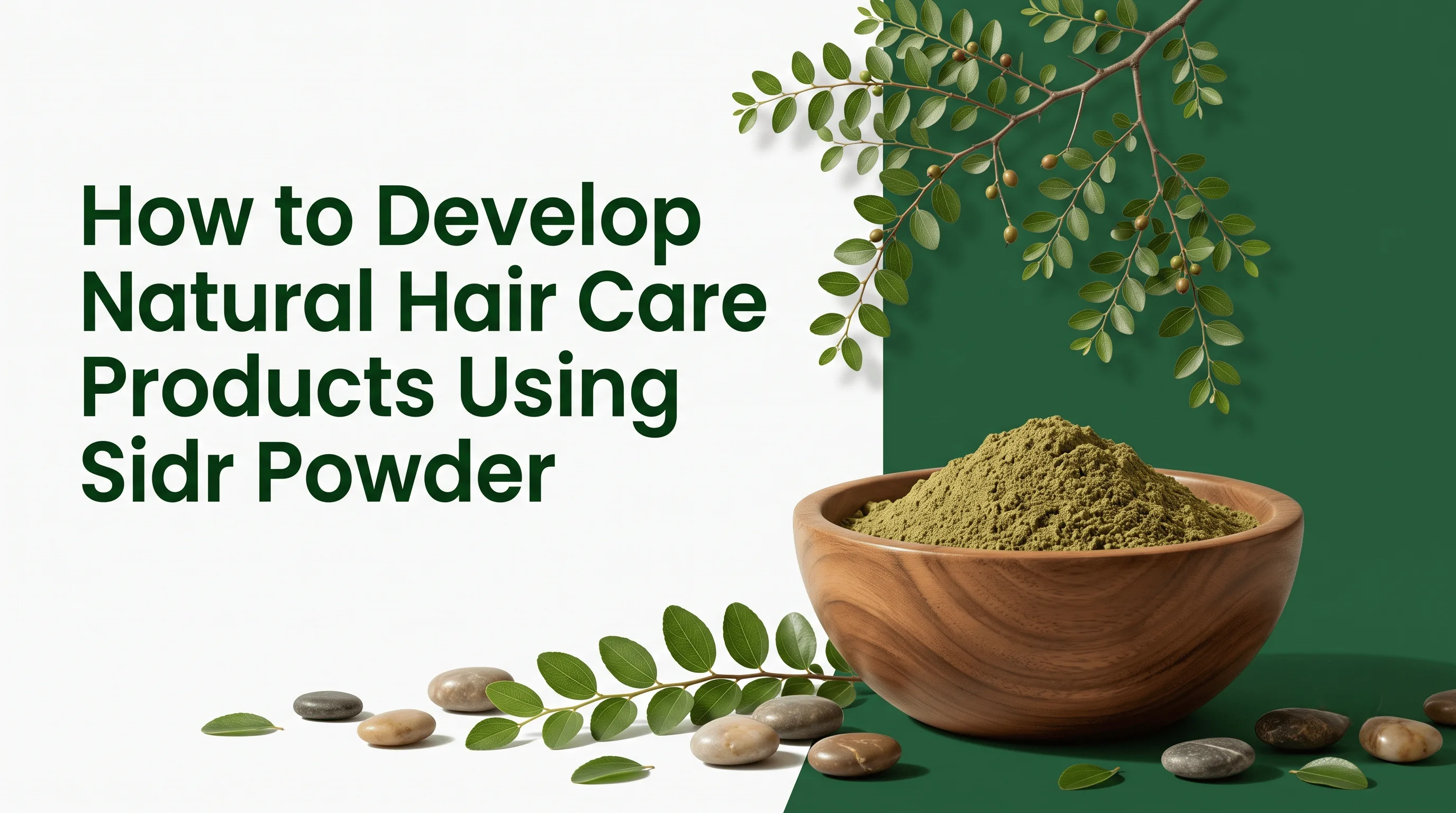
The demand for natural hair care products continues to grow as consumers increasingly look for plant-based formulations, recognizable ingredients and traditional approaches to personal care. Sidr powder, derived from the leaves of Sidr trees, is attracting attention from cosmetic formulators and brands developing botanical hair products. Depending on the botanical source, Sidr may be associated with Ziziphus jujuba or Ziziphus spina-christi, so accurate botanical identification is important when sourcing the ingredient. It can be explored in cleansers, hair masks, shampoos and herbal hair treatments. For brands, understanding ingredient quality, formulation requirements, testing and sourcing is essential for turning a traditional botanical into a consistent, market-ready product.
What Is Sidr Powder?
Sidr powder is a finely milled botanical ingredient produced from the leaves of Sidr plants. The leaves are generally cleaned, dried under controlled conditions and processed into a powder with a suitable particle size for cosmetic applications. The exact botanical identity should always be confirmed with the supplier because different species can be commercially referred to as Sidr. For brands sourcing wholesale sidr leaves powder, verifying botanical identity and raw-material specifications is especially important.
Traditionally, Sidr leaves have been used in personal care practices, particularly for hair and scalp cleansing. Their long-standing use makes the ingredient relevant to brands interested in combining traditional botanical knowledge with modern cosmetic development.
For commercial formulation, however, traditional use alone is not enough. Developers should evaluate the quality and consistency of the raw material. Important parameters can include botanical authenticity, purity, processing method, color, aroma, particle size, moisture content and microbiological quality.
The processing method can also influence the finished powder's appearance and performance. A well-processed ingredient should have a consistent texture that allows it to disperse or blend appropriately with other ingredients. Reliable sourcing and documented specifications are therefore important when developing products at commercial scale.
Why Use Sidr Powder in Hair Care?
One of the main attractions of Sidr is its suitability for brands building plant-focused cosmetic concepts. Formulators can investigate sidr powder for hair in different product formats depending on the desired consumer experience and overall formulation. Working with an experienced ayurvedic powder manufacturer can also help brands source consistent botanical materials for product development.
The sidr powder benefits for hair are often discussed in connection with traditional cleansing and botanical hair-care practices. However, brands should distinguish between traditional uses and substantiated cosmetic claims. Product claims should be supported by appropriate evidence and should comply with the regulations applicable to the target market.
From a formulation perspective, Sidr can be considered among natural hair care ingredients for powder blends and other botanical concepts. It can support product positioning centered around plant-based formulations, traditional beauty practices and simplified ingredient lists.
The ingredient may be particularly interesting for brands developing dry cleansing products because powdered botanicals can be combined into convenient blends without requiring the same formulation approach as conventional liquid products. It can also be evaluated alongside other botanical materials selected for specific texture, sensory or formulation objectives.
Natural Hair Care Products You Can Develop with Sidr Powder
Sidr can be incorporated into several product concepts. The appropriate format depends on the target consumer, desired application method, supporting ingredients and regulatory requirements.
Sidr Powder Hair Cleanser
A powdered hair cleanser can combine finely milled Sidr with other compatible botanical materials. The objective is to create a uniform, easy-to-measure blend that mixes appropriately with water before application.
Particle size is particularly important because excessively coarse material may create an unpleasant application experience, while inconsistent milling can lead to separation within the finished blend. Packaging should also protect the powder from moisture during storage and use.
Sidr Hair Mask
Sidr can be incorporated into a botanical hair mask alongside complementary powders. Formulators can experiment with different ingredient combinations to achieve the desired texture and application characteristics.
A good hair mask should be easy to mix, spread evenly and rinse according to the intended product concept. The final formulation should therefore be evaluated as a complete system rather than judging individual ingredients independently.
Herbal Shampoo
Sidr can also be considered when developing dry or liquid herbal shampoo concepts. In a dry shampoo powder, it may be blended with other powdered ingredients. In a liquid product, the formulator must consider dispersion, preservation, viscosity, stability and compatibility with the complete formula.
Each approach requires appropriate laboratory testing. The goal is to create a product that remains physically and microbiologically stable while delivering a consistent user experience throughout its shelf life.
Scalp and Hair Treatment Products
Another opportunity is to explore Sidr in botanical scalp-care and hair-treatment concepts. Depending on the intended product, it may be combined with other herbal hair care ingredients selected for complementary formulation characteristics.
Brands should pay close attention to product stability, application instructions, packaging and consumer expectations. Any performance or treatment claims should be carefully evaluated before commercial launch.
How to Formulate Hair Care Products Using Sidr Powder
Developing a product with Sidr requires a structured process rather than simply adding the powder to an existing formula. The following steps can help brands and product developers establish a practical natural hair care formulation process.
1. Define the Product Concept
Start by identifying the product format, target customer, intended application and market positioning. A powder cleanser, hair mask and liquid shampoo will have different technical requirements.
2. Select the Appropriate Raw Material
Choose a Sidr ingredient with a clearly documented botanical identity and defined quality specifications. Review certificates, test reports and technical documentation before beginning formulation trials.
3. Establish the Appropriate Use Level
Determine the suitable concentration based on the product format and the characteristics of the complete formulation. There is no universal inclusion level for every product, so laboratory trials should guide the final formulation.
4. Select Complementary Ingredients
Other botanical powders, cleansing materials, conditioning ingredients or functional cosmetic ingredients can be selected according to the product objective. Compatibility should be assessed before finalizing the formula.
5. Develop and Test Prototypes
Prepare several laboratory prototypes and compare their physical and sensory characteristics. This stage helps identify issues with dispersion, texture, odor, color and application.
6. Evaluate the Finished Product
Assess the complete formula rather than relying solely on the characteristics of the individual raw materials. A successful Sidr powder formulation should provide consistent performance and acceptable sensory properties.
7. Conduct Safety and Stability Testing
Appropriate safety, stability and microbiological assessments should be completed before commercial production. Testing requirements can vary depending on the formulation type and intended market.
8. Finalize Packaging and Production Specifications
Select packaging that protects the product from moisture, contamination and other environmental factors. Establish manufacturing specifications, quality-control procedures and batch requirements before scaling up.
Key Factors to Consider When Sourcing Sidr Powder
For B2B buyers, sourcing quality raw material is just as important as formulation development. When purchasing bulk Sidr powder, brands should evaluate the supplier's ability to provide consistent material over multiple production cycles.
Start by confirming botanical identity and authenticity. If organic positioning is important, verify whether the material has the required organic certification for the destination market. Purity and foreign-matter controls should also be clearly documented.
Microbiological quality is particularly important for botanical powders because natural plant materials can be susceptible to contamination if harvesting, drying, processing or storage is poorly controlled. Depending on the application and destination market, buyers may also require heavy-metal and contaminant testing.
Consistent particle size can improve formulation and blending performance. Batch-to-batch consistency in color, aroma, moisture and other specifications is equally valuable for brands manufacturing products at scale.
Documentation and traceability should be considered throughout the supply chain. Buyers can request technical specifications, certificates of analysis and relevant quality documentation from a Sidr powder supplier before placing larger orders.
Packaging and storage conditions should also be reviewed. A supplier should have suitable systems for protecting powdered botanicals during transportation and storage. Businesses seeking organic Sidr powder wholesale should also confirm the certification scope, product specifications and documentation applicable to their intended market.
Why Quality Matters in Commercial Hair Care Formulation
Raw-material consistency directly influences the consistency of the finished product. Differences in botanical quality can affect color, odor, texture, dispersion and overall consumer experience.
Poor-quality botanical powder may introduce unwanted foreign material or create variability between production batches. These issues can become increasingly difficult to manage as production volumes increase.
Reliable sourcing enables manufacturers to establish defined specifications and repeatable production processes. Testing and documentation can also help businesses demonstrate appropriate quality controls to customers and commercial partners.
For brands planning long-term product development, working with an experienced botanical ingredient manufacturer can simplify sourcing and quality management. A capable manufacturing partner should be able to support documentation, quality testing, production consistency and scalable supply.
Tips for Developing a Market-Ready Sidr Hair Care Product
Successful development begins with clear positioning. Decide whether the product will focus on traditional botanical beauty, clean-label personal care, powder-based convenience or another specific consumer benefit.
Keep the ingredient story straightforward and transparent. Consumers increasingly want to understand what they are purchasing, but brands should avoid unsupported cosmetic or therapeutic claims.
Select complementary ingredients carefully and evaluate how they behave together. A product may contain excellent individual ingredients but still perform poorly if the overall formulation has problems with texture, stability or usability.
Testing the finished formula is essential. Laboratory evaluation can help identify issues before commercial production and reduce the risk of costly reformulation later.
Packaging should match the product format. Powder products need protection against moisture, while liquid formulations may require appropriate preservation and packaging compatibility assessments.
Shelf-life, stability and microbiological quality should be validated using suitable testing procedures. Finally, ensure that product claims, labeling and marketing materials comply with the cosmetic regulations applicable to each target market.
Sourcing Sidr Powder for Your Hair Care Brand
Cultivator Natural Products can support brands looking to develop botanical hair-care products with reliable raw-material sourcing. Businesses can explore Sidr leaves powder for applications requiring consistent botanical ingredients and scalable supply.
For commercial development, sourcing organic Sidr leaves from a controlled supply chain can help brands maintain a clear ingredient story while supporting quality-management requirements. Buyers can also evaluate bulk organic Sidr powder according to their formulation, certification and market requirements.
The right sourcing partner should be able to provide consistent processing, quality testing and documentation while supporting different order volumes. Packaging specifications and customized requirements can also be discussed according to the needs of individual brands.
For businesses developing new botanical formulations, Sidr can be evaluated alongside other natural ingredients for herbal hair care products to create differentiated product concepts. Brands can discuss their requirements with the supplier before moving from laboratory development to larger-scale production.
Conclusion
Sidr powder offers an interesting opportunity for brands developing botanical hair-care concepts, particularly where traditional ingredients and plant-focused formulations are part of the product story. However, successful commercial development requires more than selecting a popular botanical. Brands should evaluate raw-material authenticity, quality, formulation compatibility, stability, packaging and regulatory requirements at every stage. Working with a reliable supplier can make it easier to maintain consistency as production scales. For businesses planning to develop or source Sidr-based hair-care products, contact us to discuss bulk requirements, formulation needs and scalable botanical ingredient supply.