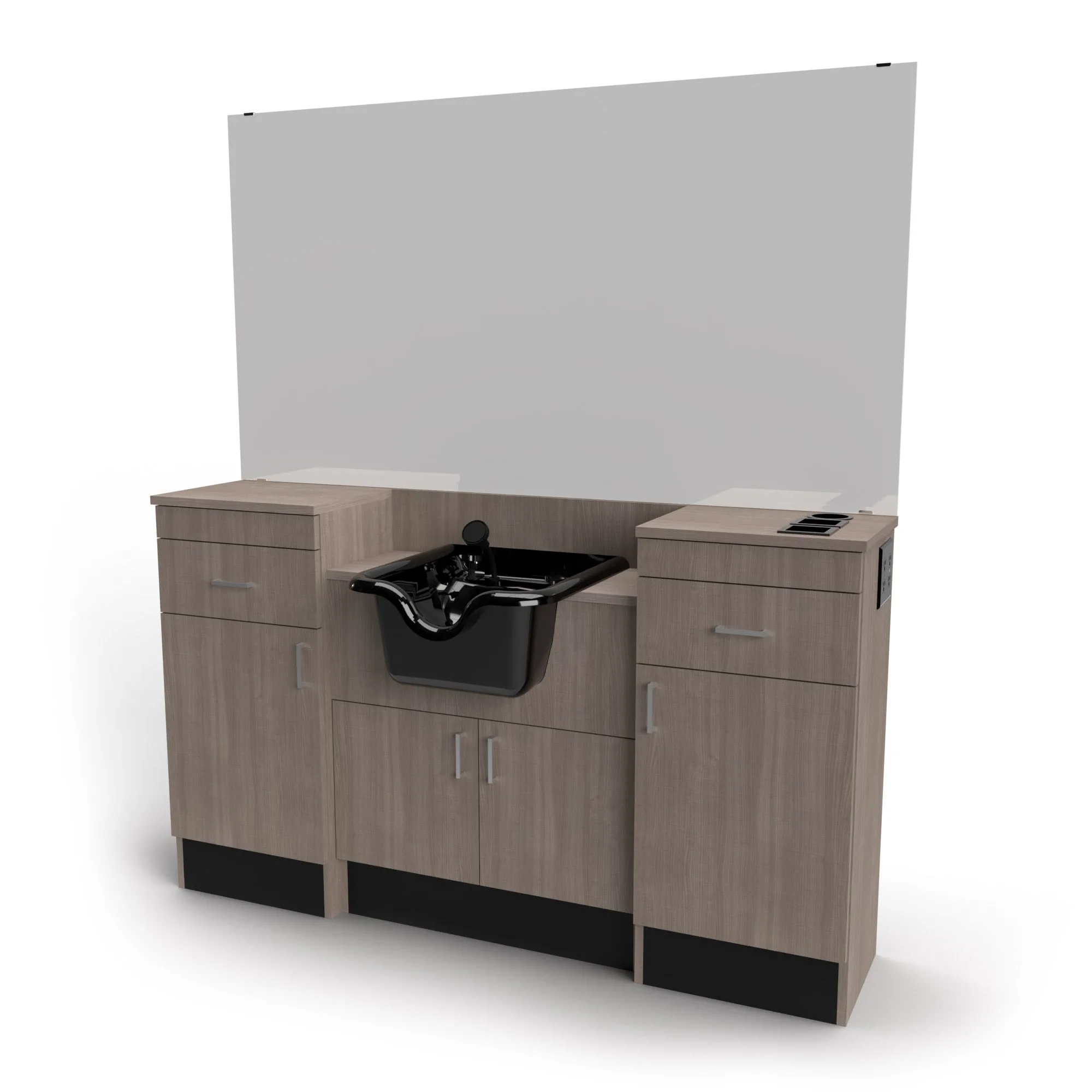
Ask a client what they remember about a salon visit and the shampoo comes up more often than you might expect. It is the one part of the appointment where they lie back, close their eyes, and hand over control completely. If the bowl digs into their neck or their head hangs at an odd angle, they spend those minutes bracing instead of relaxing. A wet station puts that experience right at the stylist’s chair, so the station's design decides whether the wash feels like a treat or a chore.
Here is where comfort is won or lost, and what to check before you buy.
Start With the Relationship Between Bowl and Chair
Most bowl discomfort has nothing to do with the bowl alone. It comes from a mismatch between the bowl's height and the chair's height and recline. When the chair sits too low, the client’s head drops past the rim, and their neck takes the strain. When it sits too high, their shoulders lift off the seat back, and they end up holding themselves in place.
The fix is to treat the wet station and the chair as one system. Note the counter height on any station you are considering. Some models list it in the name, such as 39-inch-high wet booths. Then pair the station with a chair whose height and recline you can adjust so the client’s neck sits squarely on the rim. An all-purpose chair that both tilts and reclines is the usual partner here, and the reclining salon chairs with adjustable bases give stylists the range to fit tall and short clients at the same station.
Consider a Tilting Bowl
A fixed bowl asks every client to fit it. A tilting bowl adjusts to fit the client. Collins builds this into its T100 wet station, which uses a porcelain bowl that tilts toward the client’s neck. For salons with a wide mix of clients, or with older guests who find a deep recline uncomfortable, a tilting bowl is one of the most direct comfort upgrades available. It costs more and typically takes longer to build, so weigh it against how many washes the station will handle each day.
Give the Stylist Room to Work
Client comfort depends on the stylist more than most owners realize. A stylist who is cramped, reaching awkwardly or hunting for a towel will rush the wash, splash water, and spend less time on the scalp massage clients actually came for.
Width has the biggest effect. Wet booth stations range from compact 32-inch shampoo bowl cabinets to full 72-inch units with counter space on both sides of the bowl. A wider station lets the stylist stand where they need to without leaning over the client or bumping a neighboring booth. Storage matters too. Concealed bottle wells keep shampoo and conditioner within reach without cluttering the counter, and a soiled towel bin built into the cabinet means a damp towel never ends up draped over the chair arm. If your stations are tight on storage, a separate backbar towel cabinet can sit alongside the booth.
Browse the full range of wet booth stations with water to see how much these layouts differ, from simple bowl cabinets to complete barbering booths with mirrors, upper cabinets, and tool panels.
Keep the Wash Area Calm and Tidy
Clients notice clutter even with their eyes closed. They hear bottles knocking together and feel a stylist reaching across them. A wet station for beauty salon use should keep every tool in a fixed, predictable place so the wash flows without interruption.
Lift-lid designs help differently. On models like the 42-inch lift-lid wet station, the bowl hides under a lid when it is not in use, so the client sits at a clean counter during the cut and color service. The station reads as a styling area first and a sink second, which feels more polished than staring at a basin for an hour.
Do Not Overlook Water Control and Temperature
Comfort at the bowl also comes down to the water. A sprayer that reaches the full head without stretching the hose lets the stylist rinse the hairline without water running toward the client’s face or down their collar. Fixtures that hold a steady temperature save the stylist from adjusting the tap mid-rinse, when clients tend to tense up. When you compare stations, check the included fixtures and ask the seller whether faucets and hardware come with the bowl or are sold separately.
Choose Materials That Stay Comfortable Over Time
A station that looks great on delivery day can feel worn within a year if the materials cannot handle constant water. Quality wet booths use moisture-resistant laminates over solid construction, often in a wide range of colors so the station matches the rest of the salon. Porcelain bowls hold up better to daily washing and chemical exposure than lower-grade materials. When finishes chip or edges swell, the station starts to look tired, and clients notice.
USA-made options are worth a look if you plan to keep the station for many years. They often come with more color and configuration choices, though build times commonly run six to ten weeks. Plan the order well ahead of a renovation or opening date.
Match the Station to How Your Salon Works
There is no single best wet station. A busy barbershop doing quick shampoos between cuts needs speed, compact storage, and durability. A color-focused salon running long rinses and treatments benefits from a tilting bowl, a fully reclining chair, and extra counter space for product. A salon suite with one stylist per room may want a complete booth that handles everything in a single unit.
Start with the services you offer most often and the clients who sit in your chairs. Then choose the width, bowl style, and storage that let your stylists give every client an unhurried, comfortable wash. That is what brings people back.