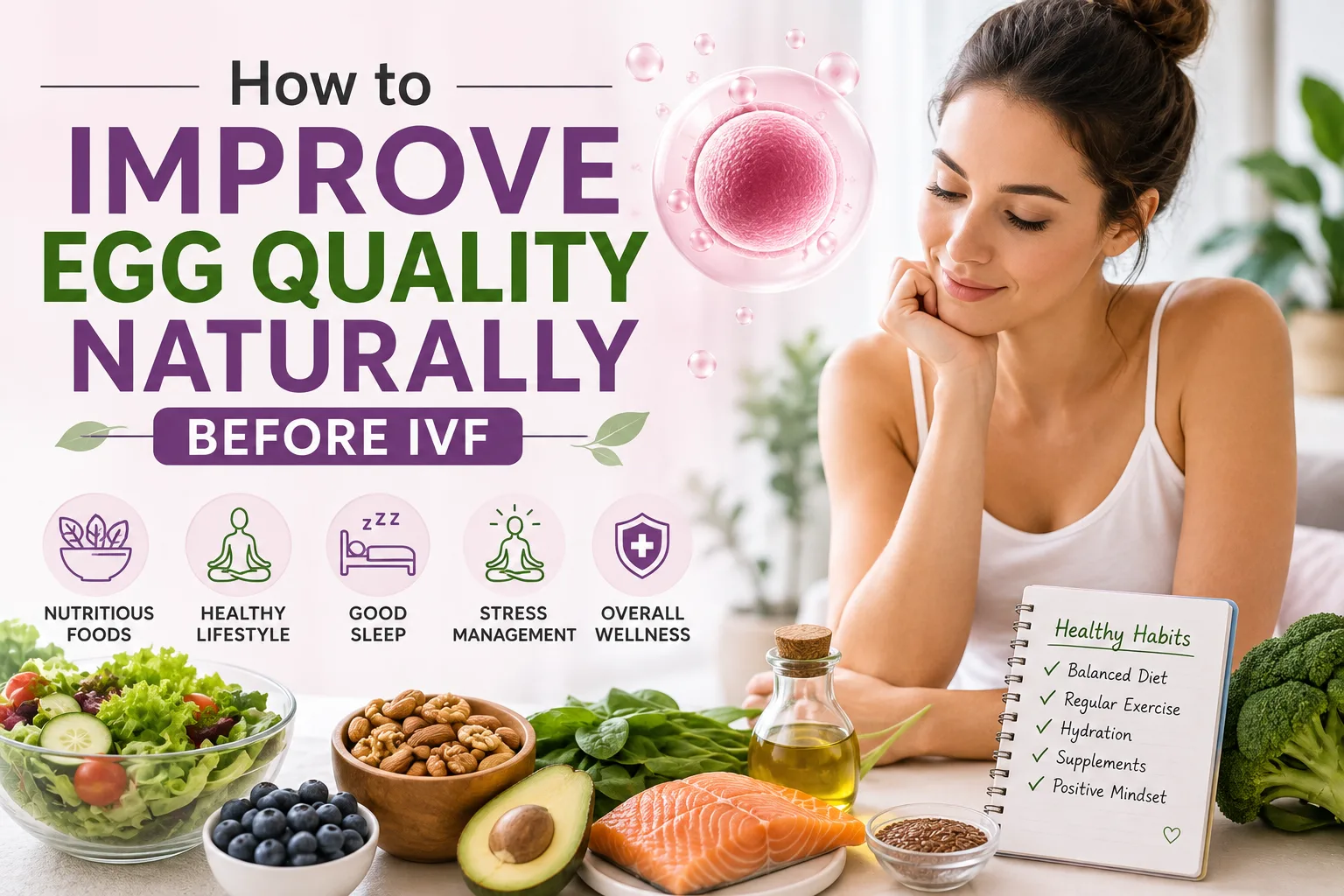
Preparing for IVF can bring many questions, especially about egg quality. People often search for ways to improve egg quality naturally through diet, exercise, supplements, sleep, and lifestyle changes before starting fertility treatment.
The important point is that healthy habits can support overall reproductive and general health, but there is currently no proven natural method that can completely reverse age-related changes in egg quality. Egg quality is strongly influenced by age, and lifestyle changes should be viewed as supportive rather than as a guarantee of better IVF outcomes.
If you are preparing for IVF, working with a fertility specialist can help you understand your individual situation and decide which changes are appropriate before treatment.
What Is Egg Quality?
Egg quality refers to the developmental potential of an egg, including its ability to be fertilized and contribute to the development of a healthy embryo.
Egg quality and ovarian reserve are not the same thing. Ovarian reserve mainly refers to the number of eggs remaining in the ovaries, while egg quality relates more closely to whether an egg can develop normally after fertilization. Tests such as AMH and antral follicle count can provide information about ovarian reserve, but they do not directly measure egg quality.
Age is an especially important factor. As reproductive age increases, the chances of chromosomal abnormalities in eggs and embryos also increase. This is one reason why age remains an important factor when doctors discuss IVF outcomes.
This means that searching for ways to improve egg quality naturally should be approached realistically. Healthy habits may support overall health, but they cannot guarantee that egg quality will improve or that IVF will result in pregnancy.
Can You Improve Egg Quality Naturally Before IVF?
There is no scientifically proven diet, food, supplement, or lifestyle routine that can guarantee a significant improvement in egg quality.
However, maintaining good overall health before IVF can be beneficial. A balanced diet, regular physical activity, adequate sleep, avoidance of smoking and recreational drugs, and appropriate management of existing health conditions can support general reproductive health.
The goal should therefore be to create the healthiest possible environment for fertility treatment rather than looking for a single "egg-quality boosting" food or supplement.
1. Focus on a Balanced, Nutrient-Rich Diet
Diet is one of the most common areas people consider when trying to improve egg quality naturally.
Instead of focusing on one specific food, aim for an overall balanced eating pattern that includes a variety of nutrient-rich foods.
Consider including:
- Vegetables of different colours
- Fresh fruits
- Whole grains
- Beans and lentils
- Nuts and seeds
- Eggs and other sources of protein
- Fish that is appropriate during preconception
- Healthy fats such as those from nuts, seeds and olive oil
- Adequate sources of calcium and iron
Research has explored Mediterranean-style and other healthy dietary patterns in relation to fertility and IVF outcomes. Some observational studies have reported associations with better reproductive outcomes, while other studies have not found consistent benefits. ASRM notes that stronger randomized evidence is still needed.
Therefore, rather than following an extremely restrictive "fertility diet," focus on sustainable, balanced nutrition.
2. Include Sources of Healthy Fats
Healthy fats can be part of a balanced preconception diet.
Foods such as nuts, seeds, olive oil and certain fish provide unsaturated fats and other nutrients.
Omega-3 fatty acids have also been investigated in relation to fertility. However, evidence is not strong enough to say that increasing omega-3 intake will directly improve egg quality or guarantee better IVF outcomes.
If you eat fish, discuss appropriate choices and portions with your healthcare provider, particularly because some fish can contain higher levels of mercury.
3. Eat Enough Protein
Protein is important for maintaining tissues and supporting normal body functions.
Include a variety of protein sources such as:
- Lentils
- Beans
- Chickpeas
- Eggs
- Dairy products, if tolerated
- Fish
- Poultry
- Nuts and seeds
- Soy-based foods
There is no single protein source proven to improve egg quality naturally, so variety is generally more useful than relying on one particular food.
4. Get Adequate Folic Acid
Folic acid is an important nutrient for people who may become pregnant.
ASRM recommends that women attempting conception take at least 400 micrograms of folic acid daily to reduce the risk of neural tube defects.
However, folic acid should not be described as an egg-quality treatment. Its established role is in reducing the risk of certain birth defects after conception.
Your fertility specialist may recommend a prenatal vitamin or other supplements based on your individual needs.
5. Maintain a Healthy Weight
Body weight can be relevant to reproductive health. Both very low and high body weight can be associated with reduced fertility.
If you are preparing for IVF, maintaining a healthy and sustainable weight may be part of your overall preconception plan.
However, avoid crash diets or rapid weight-loss programs without medical guidance. Nutrition should provide enough energy and essential nutrients to support your health.
If you are significantly underweight or overweight, speak with your fertility specialist or a qualified dietitian about an appropriate plan.
6. Exercise Regularly
Regular physical activity is beneficial for overall health and can be part of a healthy pre-IVF lifestyle.
Activities such as:
- Walking
- Swimming
- Cycling
- Yoga
- Strength training
- Other moderate physical activities
can help support cardiovascular and metabolic health.
However, more exercise is not always better. Extremely intense exercise combined with inadequate nutrition can affect menstrual and reproductive health in some people.
A sustainable exercise routine is generally more appropriate than an extreme workout program when preparing for IVF.
7. Stop Smoking
Smoking can negatively affect fertility and reproductive health.
ASRM notes that smoking has substantial adverse effects on fertility and recommends avoiding smoking when trying to conceive.
If you smoke and are preparing for IVF, stopping can be an important health goal.
Avoiding exposure to second-hand smoke may also be beneficial.
If you find quitting difficult, talk to your doctor about evidence-based support options rather than relying on unproven "detox" products.
8. Limit Alcohol
Alcohol consumption is another lifestyle factor to discuss before IVF.
ASRM recommends limiting alcohol use while attempting pregnancy and emphasizes healthy lifestyle practices when trying to conceive.
Once pregnancy is possible or confirmed, recommendations become more restrictive. Your fertility specialist can advise you about alcohol use during your specific IVF treatment cycle.
9. Manage Caffeine Intake
Caffeine does not need to be treated as a fertility "poison," but excessive intake may not be advisable when preparing for pregnancy.
ASRM recommends limiting caffeine to minimal-to-moderate levels while trying to conceive.
Remember to consider all sources of caffeine, including:
- Coffee
- Tea
- Energy drinks
- Cola
- Some chocolate products
- Certain supplements
Your fertility clinic can provide guidance based on your individual treatment plan.
10. Prioritize Good Sleep
Sleep is an important part of overall health.
Try to establish a consistent sleep routine by:
- Going to bed at a similar time each night
- Keeping the bedroom comfortable and dark
- Limiting screen use before bed
- Avoiding excessive caffeine late in the day
- Maintaining regular daytime activity
There is not enough evidence to say that improving sleep alone will directly improve egg quality naturally. However, good sleep supports overall physical and mental wellbeing during what can be a stressful treatment process.
11. Manage Stress Without Blaming Yourself
IVF can be emotionally demanding. Fertility treatment involves appointments, medications, financial considerations, uncertainty and sometimes repeated treatment cycles.
Stress management may help you feel better during treatment.
Consider activities such as:
- Walking
- Meditation
- Breathing exercises
- Yoga
- Journaling
- Relaxation exercises
- Spending time with supportive people
- Speaking with a fertility counsellor
It is important not to blame yourself for fertility difficulties. Stress is not simply a personal failure, and reducing stress should not be presented as a guaranteed way to improve egg quality naturally.
12. Be Careful With Supplements
Supplements are frequently marketed as ways to improve egg quality before IVF. Products may contain antioxidants, vitamins, minerals, herbal ingredients or other compounds.
However, "natural" does not automatically mean effective or safe.
ASRM notes that robust evidence is lacking that antioxidant or herbal interventions improve natural fertility in women without ovulatory dysfunction.
Some supplements can also interact with medications or may not be appropriate during fertility treatment.
Before taking supplements such as CoQ10, DHEA, melatonin, antioxidants or herbal products, discuss them with your fertility specialist.
Do not start a supplement simply because it is promoted online as an "egg-quality booster."
13. Avoid Extreme Detox Diets
Detox drinks, fasting programs and restrictive diets are often promoted online as ways to "cleanse" the reproductive system.
There is no good evidence that these approaches can remove toxins from the ovaries or directly improve egg quality.
Extreme diets may also make it harder to obtain adequate protein, calories, vitamins and minerals.
A balanced diet is generally a more sensible approach to pre-IVF nutrition.
14. Manage Existing Health Conditions
Conditions such as thyroid disorders, diabetes, PCOS, endometriosis and other reproductive or metabolic conditions can affect fertility and may require individualized management.
If you have an existing medical condition, discuss it with your fertility specialist before beginning IVF.
Do not stop or change prescribed medication because you are trying to improve egg quality naturally. Some medications may need adjustment before pregnancy, while others may be important for maintaining your health.
15. Understand What Ovarian Reserve Tests Can Tell You
People preparing for IVF often look at AMH and antral follicle count when evaluating fertility.
These tests can help doctors estimate ovarian reserve and predict aspects of ovarian response during stimulation. However, they do not directly measure egg quality.
ASRM explains that AMH and antral follicle count are useful markers of ovarian reserve, while their association with qualitative outcomes such as egg quality, pregnancy and live birth is weak.
Therefore, a low AMH result does not automatically mean that pregnancy is impossible, and a high AMH does not guarantee good egg quality.
Your age, medical history and previous treatment response should all be considered when interpreting fertility tests.
Egg Quality and IVF Success
Egg quality can influence IVF outcomes because the egg contributes genetic material to the embryo.
However, IVF success depends on multiple factors, including:
- Age
- Egg and sperm factors
- Embryo development
- Uterine factors
- Ovarian response
- Underlying medical conditions
- IVF laboratory quality
- Treatment approach
Age is an especially important factor in reproductive success because egg quality changes with reproductive aging. ESHRE patient guidance notes that AMH and antral follicle count predict egg numbers rather than pregnancy, and that age is the most important factor influencing the chance of pregnancy and a healthy baby.
This is why lifestyle changes should complement, rather than replace, appropriate fertility treatment.
How Long Before IVF Should You Start Making Changes?
There is no universally established period during which a specific lifestyle program is proven to "upgrade" egg quality.
Nevertheless, adopting healthy habits before IVF can support general health and help you enter treatment in better overall condition.
If possible, discuss your diet, medications, supplements, exercise routine, smoking or alcohol use, and existing medical conditions with your fertility specialist before treatment begins.
Do not delay medically indicated fertility treatment for months in the hope that a particular diet or supplement will significantly change egg quality.
What to Discuss With Your Fertility Specialist
Before your IVF cycle, consider asking your doctor:
- What does my ovarian reserve testing indicate?
- How does my age affect my expected IVF outcomes?
- Are there nutritional changes you recommend?
- Should I take a prenatal vitamin?
- Do I need folic acid or other supplements?
- Are any of my current medications relevant to IVF?
- Should I change my exercise routine?
- Should I limit caffeine or alcohol?
- Are there medical conditions that need to be controlled before treatment?
- Are supplements such as CoQ10 or DHEA appropriate for me?
These questions can help you distinguish evidence-based recommendations from unsupported fertility claims.
Common Myths About Improving Egg Quality
Myth 1: One Food Can Dramatically Improve Egg Quality
No single food has been proven to dramatically change egg quality.
A balanced dietary pattern is more appropriate than focusing on one "fertility superfood."
Myth 2: Supplements Can Reverse Egg Aging
There is no supplement proven to reverse the age-related decline in egg quality.
Some supplements are being studied, but evidence varies and should be discussed with a fertility specialist.
Myth 3: A High AMH Means High Egg Quality
AMH primarily provides information about ovarian reserve rather than egg quality.
Myth 4: Low AMH Means IVF Cannot Work
A low ovarian reserve does not automatically mean pregnancy is impossible. AMH and other reserve tests should be interpreted alongside age, medical history and the overall clinical picture.
Myth 5: Lifestyle Changes Guarantee IVF Success
Healthy habits can support overall wellbeing, but they cannot guarantee fertilization, embryo development, implantation or live birth.
A Simple Pre-IVF Lifestyle Checklist
If you want to improve egg quality naturally as part of your pre-IVF preparation, focus on realistic, evidence-informed habits:
- Eat a balanced and varied diet.
- Include vegetables, fruits, whole grains, legumes, nuts and healthy protein sources.
- Take folic acid as recommended by your healthcare provider.
- Maintain a healthy weight.
- Exercise regularly but avoid extreme routines.
- Stop smoking.
- Avoid recreational drugs.
- Limit alcohol.
- Keep caffeine intake moderate.
- Prioritize adequate sleep.
- Manage stress in ways that support your wellbeing.
- Review supplements with your fertility specialist.
- Manage existing medical conditions.
- Attend recommended fertility assessments and appointments.
Conclusion
Trying to improve egg quality naturally before IVF is understandable, but it is important to separate realistic lifestyle measures from claims that are not supported by strong evidence.
A balanced diet, regular exercise, healthy weight management, adequate folic acid, smoking cessation, appropriate alcohol and caffeine intake, good sleep and management of existing health conditions can support overall health before IVF. However, there is no proven natural treatment that can guarantee improved egg quality or IVF success.
Age remains one of the strongest factors affecting egg quality and reproductive potential. Ovarian reserve tests such as AMH and antral follicle count provide information about egg quantity and expected ovarian response, but they do not directly measure egg quality.
If you are preparing for IVF, discuss your nutrition, supplements, medications and lifestyle with your fertility specialist. The most useful approach is usually a combination of healthy daily habits and an individualized medical treatment plan—not relying on a single food, supplement or "egg-quality boosting" routine.