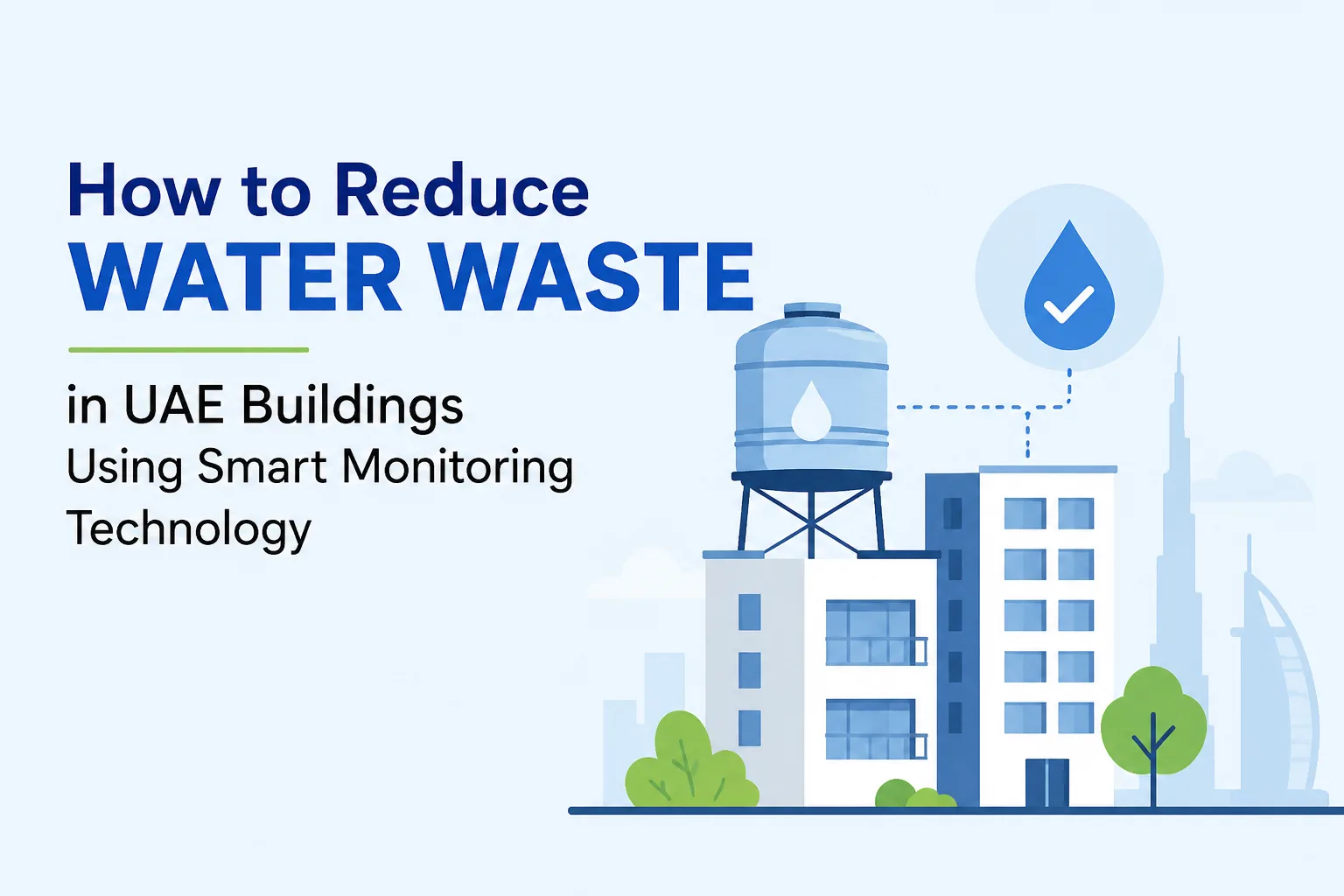
How to Reduce Water Waste in UAE Buildings Using Smart Monitoring Technology
Water conservation has become a major priority across the UAE due to increasing urban development, high water consumption, and sustainability goals. Commercial buildings, residential towers, hotels, and industrial facilities often experience water wastage caused by tank overflows, leakages, inefficient monitoring, and delayed maintenance. Smart monitoring technology offers an effective solution by providing real-time insights into water usage and helping building managers optimize water management.
The Growing Challenge of Water Waste in UAE Buildings
The UAE relies heavily on desalinated water, making efficient water management essential for both economic and environmental reasons. Traditional water tank management methods often depend on manual inspections, which can lead to unnoticed leaks, overfilled tanks, and unnecessary water loss. Even small inefficiencies can result in significant waste over time, increasing operational costs and putting additional pressure on water resources.
How Smart Water Monitoring Technology Works
A Smart Water Tank Monitoring System uses advanced sensors, IoT connectivity, and cloud-based software to continuously track water levels, consumption patterns, and system performance. The collected data is transmitted in real time to a centralized dashboard or mobile application, allowing facility managers to monitor water usage from anywhere.
The system can automatically detect abnormal water consumption, sudden drops in tank levels, and potential leaks before they become major issues. Automated alerts enable maintenance teams to respond quickly, reducing water loss and preventing costly repairs.
Preventing Water Tank Overflows
One of the most common causes of water waste in large buildings is tank overflow. When water tanks are not monitored effectively, pumps may continue running even after tanks reach full capacity. Smart Water Level Monitoring technology eliminates this problem by tracking tank levels continuously and automatically controlling pump operations.
By preventing overflows, buildings can save thousands of liters of water each year while reducing energy consumption associated with pumping systems.
Detecting Leaks Before They Escalate
Hidden leaks can waste substantial amounts of water and often remain unnoticed for long periods. Smart Water Monitoring Systems use real-time analytics to identify unusual flow patterns and sudden changes in water consumption. Early leak detection helps maintenance teams address issues immediately, preventing water loss and minimizing infrastructure damage.
For hotels, residential communities, and commercial complexes in the UAE, this proactive approach can significantly reduce maintenance expenses and improve operational efficiency.
Supporting Sustainability Goals
The UAE has ambitious sustainability initiatives focused on resource conservation and smart infrastructure development. Implementing IoT Water Monitoring Solutions helps organizations align with these goals by reducing water waste and improving resource efficiency.
Detailed consumption reports and analytics also help facility managers identify opportunities for further conservation measures, supporting green building certifications and environmental compliance requirements.
Conclusion
Smart monitoring technology is transforming water management across UAE buildings. By combining Smart Water Tank Monitoring Systems, IoT Water Monitoring Solutions, and Water Level Monitoring technology, organizations can reduce water waste, prevent overflows, detect leaks early, and improve overall operational efficiency. As sustainability becomes increasingly important, smart water monitoring represents a practical and cost-effective investment for the future of UAE infrastructure.