
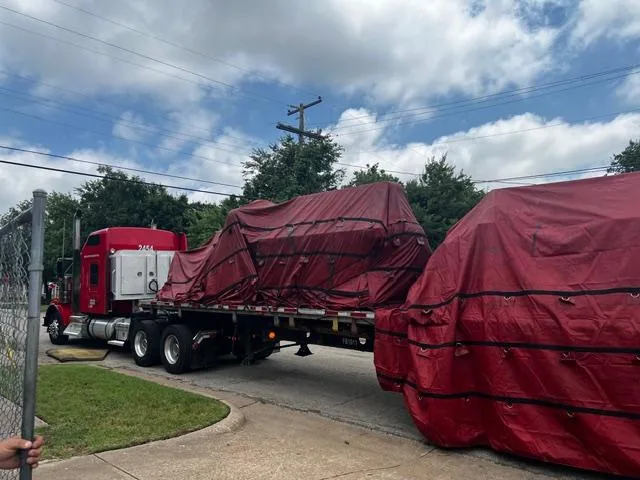
Industrial machinery rarely moves as easily as ordinary freight. A large production machine, processing unit, electrical cabinet, or specialized factory component may be too heavy for standard delivery methods, too delicate for careless handling, or too valuable to leave unprotected during transportation.
For companies arranging industrial equipment shipping in Fort Worth, the process begins long before a truck arrives. The equipment needs to be understood, its condition assessed, transportation requirements identified, and the pickup and delivery locations prepared. Depending on the item, specialized packaging or crating may also be necessary.
Fort Worth serves a broad business and industrial market, with companies regularly moving machinery between facilities, warehouses, manufacturing plants, construction projects, and customers. Equipment may also travel from the area to destinations across Texas or other parts of the United States.
The most effective shipping strategy is not necessarily the most complicated one. It is the one that matches the equipment to the right method of preparation, protection, transportation, and handling.
What Counts as Industrial Equipment?
Industrial equipment covers a broad range of machinery used to manufacture products, process materials, operate facilities, and support commercial operations.
Examples may include:
- Manufacturing machinery
- Production equipment
- CNC machines
- Industrial presses
- Pumps
- Compressors
- Generators
- Motors
- Electrical control cabinets
- Processing equipment
- Conveyor systems
- Welding machinery
- Packaging equipment
- Material-handling machines
- Industrial automation components
Some equipment can be relatively compact but extremely heavy. Other machinery may be large, tall, or irregularly shaped.
The shipping requirements can therefore vary considerably.
A small electrical control cabinet might be packaged and transported as a protected freight shipment. A large production machine could require specialized transportation and lifting equipment. Treating both shipments in exactly the same way would make little sense.
The equipment itself should determine the plan.
Why Industrial Machinery Requires Careful Transportation
Industrial equipment is often designed to perform precise and repetitive tasks. Although the exterior may look sturdy, internal components can be sensitive to excessive movement or impact.
For example, a manufacturing machine might contain delicate controls, sensors, motors, or alignment-sensitive parts. If these components are damaged during transportation, the machine may require inspection or repair before it can return to service.
The financial consequences can extend beyond the repair bill.
A damaged machine may also lead to:
- Production interruptions
- Installation delays
- Additional labor costs
- Missed project deadlines
- Replacement part expenses
This is why shipping should be viewed as part of the equipment's overall handling process rather than simply a transportation task.
Start by Building an Accurate Equipment Profile
Before arranging industrial equipment shipping in Fort Worth, collect as much accurate information about the shipment as possible.
Useful details include:
- Equipment name
- Manufacturer and model
- Length
- Width
- Height
- Weight
- Center of gravity
- Removable parts
- Lifting points
- Operating condition
- Packaging requirements
These details help determine how the machinery can be moved.
Accurate measurements are particularly important when equipment is large or unusually shaped. A few inches can sometimes affect whether a shipment fits inside a particular transportation arrangement.
It is similar to measuring a large appliance before moving it through a doorway. Knowing the exact size beforehand is much easier than discovering a problem when the movers are already standing outside.
Assess the Equipment's Condition Before Shipping
A pre-shipment inspection is a practical step that should not be overlooked.
The equipment should be examined for existing damage, loose components, fluid leaks, exposed areas, and other conditions that could affect transportation.
Photographs can also be taken from multiple angles.
This creates a visual record of the equipment before it leaves the original facility. If questions arise later about its condition, the photographs provide a useful reference.
The inspection can also identify parts that require additional protection.
For example, a machine may have a sturdy outer frame but a vulnerable control screen. Protecting the entire machine in the same way may not be necessary. Instead, attention can be focused on the components most likely to be affected during handling.
Decide Whether the Equipment Should Be Disassembled
Large industrial machinery does not always need to travel in one piece.
Depending on its design, certain components may be removed before transportation.
Disassembly can sometimes:
- Reduce overall dimensions
- Simplify loading
- Make handling easier
- Reduce the risk of damage
- Allow components to be packaged separately
However, disassembly should only be performed when appropriate.
Some machinery requires specialized knowledge to take apart and reassemble correctly. If a component is removed, it should also be clearly labeled and protected so that it can be identified at the destination.
The goal is to simplify transportation without creating unnecessary complications during reinstallation.
Selecting the Right Transportation Method
The transportation method should reflect the equipment's characteristics.
Possible options may include:
- Flatbed transportation
- Enclosed trailers
- Specialized heavy equipment trailers
- Standard freight vehicles
- Crated freight
- Palletized transportation
The right choice depends on the equipment's size, weight, sensitivity, and destination.
A precision machine may benefit from enclosed transportation, while a large industrial structure may require a different solution.
The important thing is to avoid selecting transportation based solely on price or convenience. A suitable method should provide enough capacity and protection for the shipment.
Loading Is a Major Part of the Process
Industrial equipment can be difficult to load because it is often too heavy to move manually.
Depending on the machinery, loading may require:
- Forklifts
- Cranes
- Ramps
- Hoists
- Specialized lifting equipment
The equipment's lifting points should be understood before moving it.
Improper lifting can damage machinery or create safety risks. The loading area should also be inspected to ensure that the ground and access routes can support the equipment and handling equipment involved.
A good loading plan answers important questions before work begins.
Where will the transportation vehicle park? How will the equipment reach the vehicle? What lifting equipment is available? Who will oversee the process?
Having these answers in advance helps avoid delays.
Protecting Machinery From Movement
Industrial equipment can experience vibration and movement during transportation.
Even when the road appears smooth, a vehicle is constantly responding to changes in speed, direction, and road surface.
Heavy machinery should therefore be positioned and restrained appropriately.
Depending on the equipment, securing methods may include:
- Blocking
- Bracing
- Chains
- Straps
- Chocks
- Protective supports
The specific method depends on the type of shipment.
A useful comparison is carrying a fragile object inside a vehicle. If it is left loose, it can slide or tip when the vehicle turns. Securing the object reduces unnecessary movement.
The same basic idea applies to industrial equipment, even though the scale is much larger.
Consider the Equipment's Most Vulnerable Areas
Not every part of an industrial machine needs identical protection.
Some components may be especially sensitive, including:
- Digital displays
- Control panels
- Sensors
- Electrical connections
- Glass surfaces
- Precision components
- Exposed hydraulic parts
These areas may need protective covers, cushioning, or separate packaging.
Before shipping, identify the parts that are most likely to be affected by impact, moisture, dust, or repeated handling.
This allows protective measures to be focused where they provide the most value.
When Custom Packaging Is Worth Considering
Industrial equipment often has shapes that do not fit neatly into standard shipping containers.
A control panel may have delicate switches and screens. A machine component may be unusually long or narrow. A precision part may need to remain stable throughout transportation.
This is where custom packaging and shipping services in Fort Worth can be useful.
Custom packaging is created around the item instead of expecting the item to fit into an ordinary box.
Think of it like buying a case specifically designed for a camera. The camera could technically be placed in a larger bag, but a fitted case provides better support and reduces unnecessary movement.
Custom packaging can be considered for:
- Industrial controls
- Electrical equipment
- Precision components
- Machine parts
- Specialized tools
- Automation equipment
- Fragile accessories
The objective is to create a more controlled environment for the item during transportation.
The Importance of Internal Protection
A strong exterior package is only part of the solution.
The inside of a crate or container should also be designed to support the equipment appropriately.
Internal packaging may involve:
- Cushioning
- Blocking
- Bracing
- Dividers
- Protective padding
- Specialized supports
These materials help prevent the equipment from moving excessively inside the package.
For example, imagine placing a heavy object inside a large box without securing it. Even if the box itself is sturdy, the object could shift during transportation and damage the package or itself.
Internal protection helps address that problem.
How AA&D Crating Can Fit Into the Shipping Process
When industrial machinery or components require specialized packaging, professional crating can be an important part of the transportation plan.
AA&D Crating can be considered by businesses looking for custom crating and packaging support for industrial equipment and other valuable items.
The advantage of custom crating is that the packaging can be designed around the item's characteristics.
A heavy machine component may need strong structural support. A sensitive electronic system may require cushioning and protection from environmental exposure. A uniquely shaped item may need a crate built specifically for its dimensions.
The right approach depends on the equipment.
Professional crating can also help organize components that might otherwise be difficult to handle or store.
Preparing the Pickup Facility
The shipping process can be delayed if the pickup location is not ready.
Industrial equipment may be located inside a factory, warehouse, production facility, or distribution center. Each location can have different access conditions.
Before pickup, consider:
- Door dimensions
- Loading dock availability
- Floor capacity
- Vehicle access
- Overhead clearance
- Space for lifting equipment
- Temporary storage requirements
For example, a machine may be too large to pass through a particular doorway while still assembled. That possibility should be identified before the transportation team arrives.
Planning the pickup environment is just as important as planning the equipment itself.
Don't Overlook the Destination
The receiving location should also be prepared before the shipment arrives.
Questions to consider include:
- Is there enough space for the delivery vehicle?
- Can the equipment be unloaded safely?
- Is a forklift or crane required?
- Is the receiving team available?
- Is there a suitable location for temporary storage?
A delivery can be delayed even when transportation goes perfectly if the destination is not ready.
Clear communication between the shipper, carrier, and receiving team can help prevent these problems.
Route Planning for Large Industrial Shipments
Oversized industrial equipment may require route planning based on its dimensions.
Depending on the shipment, planners may need to consider:
- Bridge clearances
- Road restrictions
- Construction zones
- Narrow roads
- Traffic
- Height limitations
The route should be appropriate for the actual load.
For example, a tall piece of equipment may face clearance limitations that would not affect a standard truck. A wide shipment may also require additional consideration when traveling through narrow roads or congested areas.
Planning the route in advance can reduce the chance of unexpected obstacles.
Weather Can Affect Handling and Transportation
Weather conditions may influence the shipping process, particularly during loading and unloading.
Rain can create slippery surfaces or affect outdoor access. Strong winds may complicate the handling of certain large objects. Extreme temperatures can also be relevant for some sensitive equipment.
While weather cannot be controlled, businesses can monitor conditions and maintain communication with the transportation team.
Having some flexibility in the schedule may help when conditions change unexpectedly.
Documentation Keeps the Shipment Organized
Industrial equipment shipments often involve several people and organizations.
The equipment owner may not be the same company arranging transportation. A packaging provider may handle crating, while another team manages loading and installation.
Clear documentation helps keep everyone informed.
Useful records may include:
- Equipment descriptions
- Dimensions
- Weight
- Photographs
- Condition reports
- Packaging instructions
- Pickup details
- Delivery information
- Handling requirements
Good records reduce confusion and make it easier for each party to understand what is expected.
Avoiding Common Industrial Shipping Mistakes
Several problems can often be prevented with better preparation.
Using Estimated Measurements
Guessing the equipment's size may result in an unsuitable transportation plan.
Forgetting About Removable Parts
Loose or detached components can be misplaced or damaged if they are not properly labeled and packaged.
Ignoring Site Access
Large transportation vehicles need enough room to reach both pickup and delivery locations.
Using Inappropriate Packaging
Standard packaging may not provide adequate protection for specialized components.
Leaving Preparation Too Late
Custom crating and specialized transportation may require advance coordination.
Failing to Document Condition
Without a clear record, it can be difficult to compare the equipment's condition before and after transportation.
Avoiding these issues starts with a detailed pre-shipment review.
A Better Way to Organize Industrial Equipment Shipping
A successful shipment can be viewed as a series of connected stages.
First, identify the equipment and document its condition.
Next, determine its dimensions, weight, and handling requirements.
Then decide whether it should remain assembled or be partially disassembled.
After that, evaluate transportation options and identify any custom packaging needs.
Finally, prepare the pickup and delivery locations and confirm the schedule.
This step-by-step approach makes it easier to identify problems before they become expensive surprises.
When Timing Matters Most
Industrial machinery is often connected to larger business operations.
A production line may depend on one machine. A factory expansion may require equipment to arrive before installation can begin. A repair facility may need a replacement component to restore operations.
In these situations, shipping delays can affect much more than transportation.
Starting the planning process early provides more time to address unusual requirements and coordinate different teams.
It also creates an opportunity to arrange custom packaging when needed rather than rushing the process at the last minute.
A Useful Pre-Shipment Checklist
Before arranging industrial equipment shipping in Fort Worth, businesses can review these key points:
- Confirm equipment dimensions.
- Verify the total weight.
- Photograph the equipment.
- Record existing damage.
- Identify detachable components.
- Determine whether disassembly is practical.
- Check loading requirements.
- Choose an appropriate transportation method.
- Identify sensitive areas requiring protection.
- Arrange custom packaging when necessary.
- Confirm pickup access.
- Prepare the delivery site.
- Organize shipping documents.
- Allow sufficient time for transportation.
This checklist can serve as a simple starting point for a more organized shipment.
Conclusion: Make the Equipment the Center of the Plan
Industrial equipment is often too valuable and too specialized to be handled like ordinary freight. A successful shipment depends on understanding the machinery and building the transportation process around its actual needs.
For companies arranging industrial equipment shipping in Fort Worth, the process should begin with accurate information. Dimensions, weight, condition, handling requirements, packaging needs, and site access all influence how the shipment should be managed.
When components require extra protection, custom packaging and shipping services in Fort Worth can offer a practical way to protect unusual, fragile, or valuable items. Properly designed crates and internal supports can help keep equipment stable and organized throughout transportation.
Businesses may also consider AA&D Crating when they need specialized crating or packaging support for industrial machinery and components.
Ultimately, the most effective approach is to plan the entire journey before the equipment moves. From the first inspection to final unloading, each stage plays a role in protecting the machinery and keeping the shipment on track. With accurate preparation and the right support, businesses can make the transportation of industrial equipment more manageable and better suited to the demands of modern industry.