
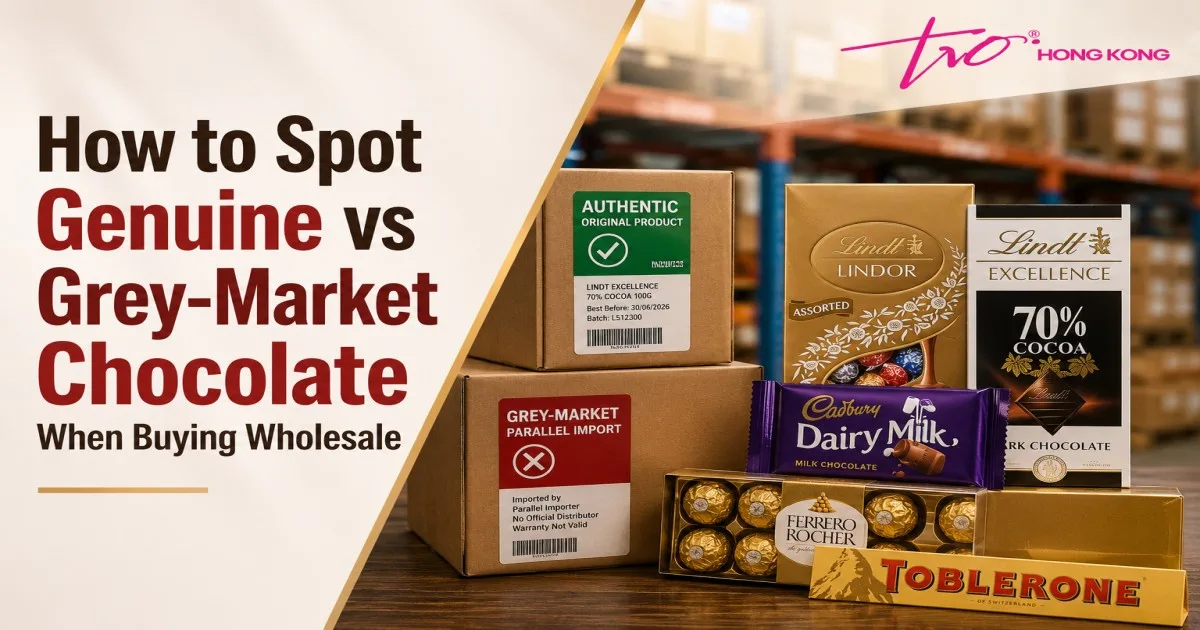
A pallet of chocolate arrives priced well below what every other supplier is quoting. It looks fine on the outside. The branding matches. And yet, six months later, a retailer discovers the batch never came through an authorized channel at all. This is exactly how grey-market chocolate slips into a supply chain. And it costs retailers far more than the discount ever saved them. This post explains how to identify genuine chocolate products and avoid grey-market products when buying chocolate wholesale. Here we go!
Why Grey-Market Chocolate Is a Hidden Risk for Retailers
Grey-market stock is not always fake. Often it is genuine products from Mars distributor that entered a market through a channel the brand owner never authorized. And it is sometimes diverted from a completely different region. And sometimes repackaged along the way. Either way, it carries real risk. The risk is no accountability if something goes wrong, inconsistent storage history, and formulations that may not even match what local shoppers expect from a familiar name like Mars, Snickers, or M&M's.
The danger is that grey-market stock often looks identical to genuine products at first glance. It is only once a retailer digs into batch history, storage records, or shelf-life documentation that the gaps start showing up.
Signs of Repackaged or Diverted Stock
A few warning signs are worth watching for:
- Packaging that looks slightly different from the standard version sold locally, even in small details like font or seal placement. For purchasing the right products, you need to check the logo as well. And it is with the original one. The product name and ingredient information. And these attributes will help you to not choose the fake one. Even you can find any small difference in packaging that may indicate that the product was sourced from another market or is not from the authorized supply chain.
- Batch codes that do not match the format used by the brand in that region
- Pricing that sits noticeably below every other quote for the same product and quantity
- A supplier who cannot clearly explain where the stock originated
Reading Batch Codes, Best-Before Dates and Packaging
Every legitimate batch of chocolate carries a traceable code. It is usually stamped or printed near the best-before date. This code should match a format the brand actually uses. And a genuine distributor should be able to explain what it means without hesitation.
Documentation and Traceability to Ask For
Before committing to a bulk order, ask any supplier for:
- Batch or lot numbers on every shipment, not just the invoice
- A documented supply chain showing where the stock was sourced from
- Confirmation of remaining shelf life at the point of delivery. It is not just the date printed at manufacture
A FMCG supplier who hesitates on any of these questions is telling you something. Even if they never say it directly.
Heat-Damaged Stock: How to Recognise and Avoid It
Grey-market risk often overlaps with poor handling. It is diverted stock rarely travels through a properly managed cold chain. Heat exposure shows up as bloom, a dull greyish-white coating on the chocolate's surface. And along with softened texture or an uneven, waxy finish. None of these signs mean the chocolate is unsafe, but they do mean quality has already been compromised before it reached the shelf. And that is something that you need to detect in the products.
A reliable FMCG supplier ensures providing chocolates that are in fresh and well-packaged conditions. For that, they have a dedicated temperature control solution to keep the confectionery products in their suitable environment to protect their originality. This is how you can get a trusted and reliable partner company in Hong Kong.
Retailers should check incoming stock for these signs on arrival. Not after a customer complains. Catching it early means the problem stays a supplier issue, not a reputation issue.
How Treasure Orbit Group Guarantees Genuine Brands
Treasure Orbit Group is a dedicated FMCG supplier and distributor in Hong Kong. We distribute confectionery through documented, supplying confirmed brands including Mars, Snickers, M&M's, Maltesers, Kit Kat, Haribo, and Lindt. Every shipment carries batch information that can be traced back to the source. That gives retailers a way to verify authenticity. It is simply trusting a name on the box. For brands not listed here, such as Twix, availability should be confirmed directly before assuming a specific product is in stock.
Final Thoughts
Grey-market chocolate rarely announces itself. It looks fine until the batch history, the storage record, or the brand's own documentation says otherwise. Retailers who ask the right questions before ordering, rather than after a problem surfaces, protect both their margin and their reputation far more reliably than chasing the lowest price ever will.
Ready to Source Genuine Confectionery?
Looking for confirmed, traceable chocolate supply? Contact Treasure Orbit Group to discuss brand availability and documentation for your bulk order.
Contact Mr. Dinesh Mahbubani — [email protected] | WhatsApp/Cell +1-201-233-0879 Mr. Kevin (Kalpesh Panchal) — [email protected] | +852-61937842
FAQs
How can I tell if chocolate is genuine?
Check that batch codes match the format the brand actually uses in that region, confirm the chocolate distributor can document where the stock was sourced from, and be wary of pricing that sits well below the rest of the market for the same product.
What is grey-market chocolate?
Grey-market chocolate is a genuine product that has entered a market through a channel the brand owner never authorized, often diverted from a different region or passed through unverified intermediaries before reaching a buyer.
How do I check for heat-damaged stock?
Look for bloom, a dull greyish-white coating on the surface, along with softened texture or an uneven, waxy finish. These signs indicate the chocolate was exposed to heat at some point, even if it still looks acceptable at first glance.
How does buying direct reduce counterfeit risk?
Buying directly from an accountable Mars distributor means the stock can be traced back to a documented source, with someone responsible for its authenticity, rather than passing through unverified resellers with no accountability if something turns out to be wrong.