
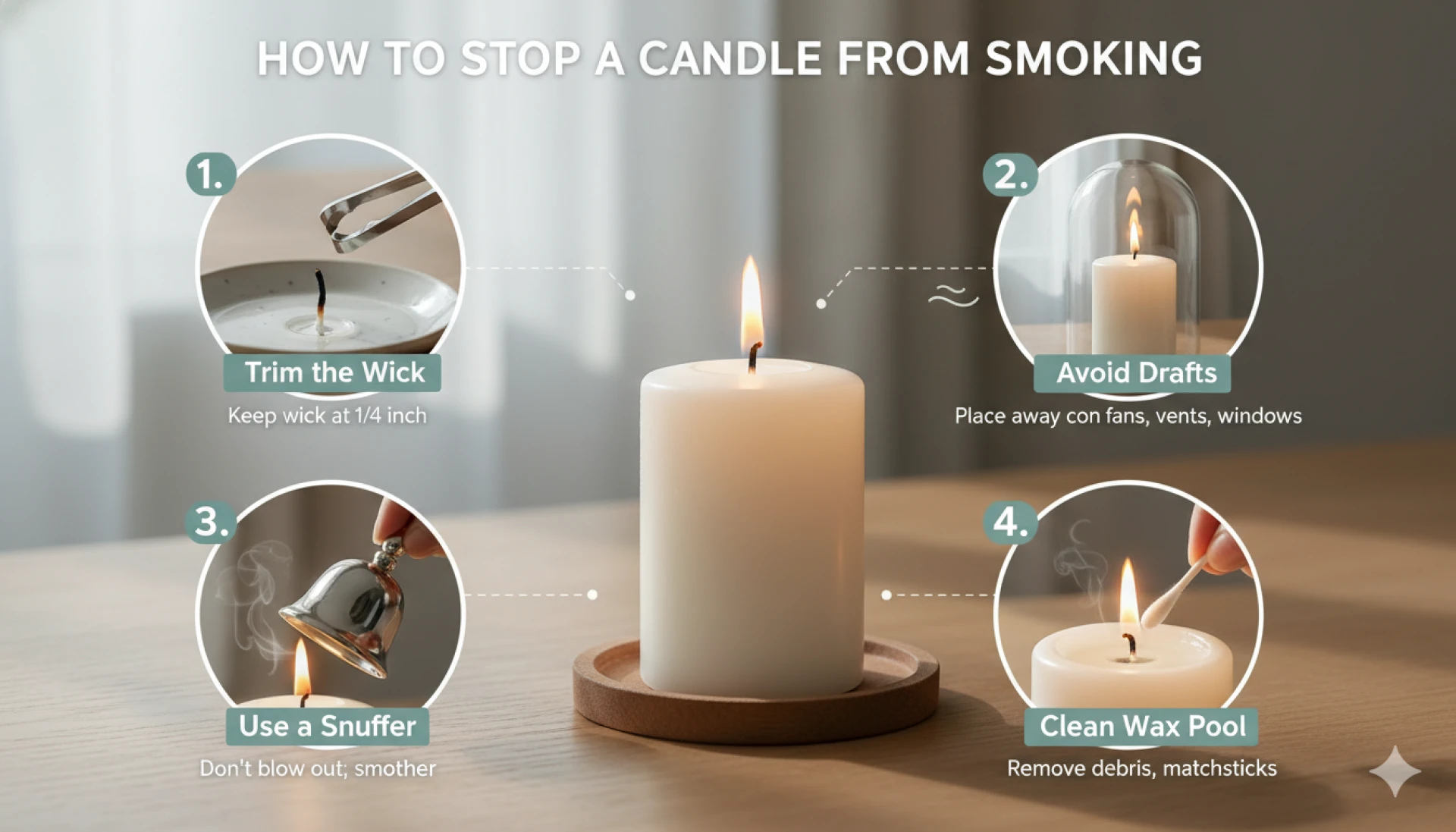
Candles add warmth, aroma, and ambience to any space, but there’s nothing cozy about a candle that smokes like a chimney. If you’ve ever lit a candle only to see a black, sooty trail rising into the air, you’re definitely not alone. In this guide, we’re diving deep into how to stop a candle from smoking, why it happens in the first place, and what you can do to make your candles burn cleaner and safer.
Let’s get started!
Understanding Why Candles Smoke
Candle smoke is essentially unburned carbon particles released when a flame isn’t burning as cleanly as it should. This smoke can leave soot on walls, ceilings, furniture, and even inside jars. While smoke itself isn’t always dangerous, the soot buildup can be annoying, unhealthy, and harmful to your home’s air quality.
Common Causes Behind Smoking Candles
Several issues can trigger smokiness:
- A wick that’s too long
- Poor-quality wax
- Burning a candle in a drafty location
- Debris trapped in the wax
- Incorrect wick size for the candle diameter
Most of these problems are easy to fix once you understand them—so don’t worry, we’ll cover everything step-by-step.
Why Fixing Candle Smoke Matters
Besides looking unpleasant, candle smoke can darken your walls, clog air vents, and stain candle jars. Over time, it can create the same effect as a miniature fireplace burning indoors—and no one wants that. A clean-burning candle is safer, lasts longer, and smells better.
Trim the Wick Properly
Ideal Wick Length
If you remember only one thing from this article, let it be this:
A wick should always be trimmed to about 1/4 inch (6 mm) before lighting.
When a wick is too long, it pulls too much wax into the flame, causing it to burn hotter and produce more smoke.
Tools You Can Use
You don’t need anything fancy. Try:
- Wick trimmers
- Nail clippers
- Scissors
- Small wire cutters
Just make sure the tool can reach the wick even when it gets lower in the jar.
How Often to Trim
Trim the wick:
- Before every burn
- Anytime you see carbon buildup (“mushrooming”)
- If the flame grows too tall
This simple step alone eliminates 70% of smoking issues.
Choose the Right Candle Wax & Wick Type
Soy, Paraffin, Beeswax – Which Smokes Less?
Some waxes naturally burn cleaner:
- Soy wax: One of the cleanest-burning options
- Beeswax: Produces minimal soot and purifies the air
- Coconut wax blends: Also clean-burning
- Paraffin: Affordable but more likely to create soot
High-quality wax = cleaner flames.
Wick Materials That Burn Clean
Cotton wicks, wooden wicks, and properly sized braided wicks are ideal. If a candle has a metal-core wick, it may burn hotter and create more soot.
Signs You're Using a Poor-Quality Candle
Watch out for:
- Fast-mushrooming wicks
- Strong chemical smell
- Blackened jar rims after one burn
- Uneven wax texture
Midway through the content, you may even consider how manufacturers ensure their products arrive safely. Some brands invest in upgraded packaging like Affordable Candle Shipping Boxes, which protect candles during transport and maintain wax integrity so the candle burns evenly when you use it.
Improve Candle Burning Conditions
Avoid Drafty Areas
A flickering flame looks romantic but signals a problem. When a flame dances around:
- Airflow disrupts burning
- Wick pulls wax unevenly
- Smoke becomes unavoidable
Keep candles away from ceiling fans, open windows, air conditioners, and vents.
Proper Candle Placement
Place candles on flat, stable surfaces. A tilted wick causes uneven burning, which leads to soot and black smoke.
Ventilation Mistakes to Avoid
Don’t burn candles right under cabinets or shelves. Soot rises, and you may be shocked to see dark stains—especially on white surfaces.
Fixing Tunneling and Uneven Burning
How Tunneling Causes Smoking
Tunneling happens when a candle burns down the center, leaving a ring of unmeted wax. This narrows the space for the flame and pushes it upward, causing it to burn hotter and smoke more.
Methods to Prevent Tunneling
Try the “first-burn rule”:
Let the candle melt all the way to the edges during the first burn (usually 2–3 hours).
Aluminum Foil Hack
If tunneling already happened:
- Wrap foil around the candle.
- Leave a hole at the top for the flame.
- Let it burn for 20–40 minutes.
The trapped heat melts the wax evenly again.
Clean the Candle Rim and Wax Surface
Why Dust and Debris Affect Smoke Levels
Dirt, wick trimmings, matches, and dust resting on the wax melt unevenly. When the flame burns through debris, smoke increases drastically.
How to Clean a Candle Safely
Try:
- Blotting the wax surface with a tissue
- Using a spoon to scoop debris
- Wiping jar walls before lighting
A clean candle burns cleaner—simple but effective.
Advanced Tips to Stop Candle Smoking
Using Candle Accessories
Accessories like:
- Wick dippers
- Wick trimmers
- Snuffers
- Candle warmers
All help maintain a clean flame and reduce soot.
Why Candle Quality Matters
Low-quality candles may contain too many additives or poorly sized wicks. Sometimes the issue isn’t you it’s the candle itself.
DIY Candle Maintenance Routine
Try this weekly checklist:
- Trim the wick
- Clean jar rims
- Rotate candle position indoors (away from airflow)
- Check for soot buildup on walls nearby
While discussing maintenance, it’s interesting how even hospitality professionals like Room Attendant Staff follow similar cleaning principles removing soot, maintaining surfaces, and ensuring clean environments. It’s a reminder that good care brings better, long-lasting results.
Safety Tips for a Smoke-Free Candle Experience
When to Stop Burning a Candle
Stop burning once only ½ inch (1 cm) of wax remains. Burning too low overheats the container and increases smoke.
Identifying Unsafe Flames
If the flame is:
- Too tall
- Flickering rapidly
- Producing black smoke
Blow it out immediately, trim the wick, and relight.
Storage Tips for Your Candles
Store candles:
- Away from heat
- Covered to avoid dust
- In upright positions
- Out of direct sunlight
Proper storage preserves wick function and wax quality.
Conclusion
Stopping a candle from smoking doesn’t need to be complicated. With proper wick trimming, choosing high-quality candles, eliminating drafts, and maintaining clean burning conditions, you can enjoy a beautiful, soot-free experience every time. Candles should elevate your space—not pollute it so a little care goes a long way. Follow the tips in this guide and you’ll notice cleaner flames, longer candle life, and a much more enjoyable atmosphere.
FAQs
1. Why does my candle smoke when I first light it?
Because the wick is often too long or contains leftover carbon buildup. Trim the wick to 1/4 inch before lighting.
2. How do I stop jar candles from leaving black soot?
Trim the wick regularly, keep the jar clean, and avoid burning in drafty spots.
3. Can scented candles cause more smoke?
Yes. Heavy fragrances and dyes can burn hotter, leading to more soot if the wick isn’t properly trimmed.
4. Why does my candle flame get so big?
An oversized flame means the wick is too long or the candle is burning unevenly. Blow it out, trim, and relight.
5. Do candle warmers prevent smoking?
Absolutely. Candle warmers melt wax without flame, eliminating smoke and soot entirely.