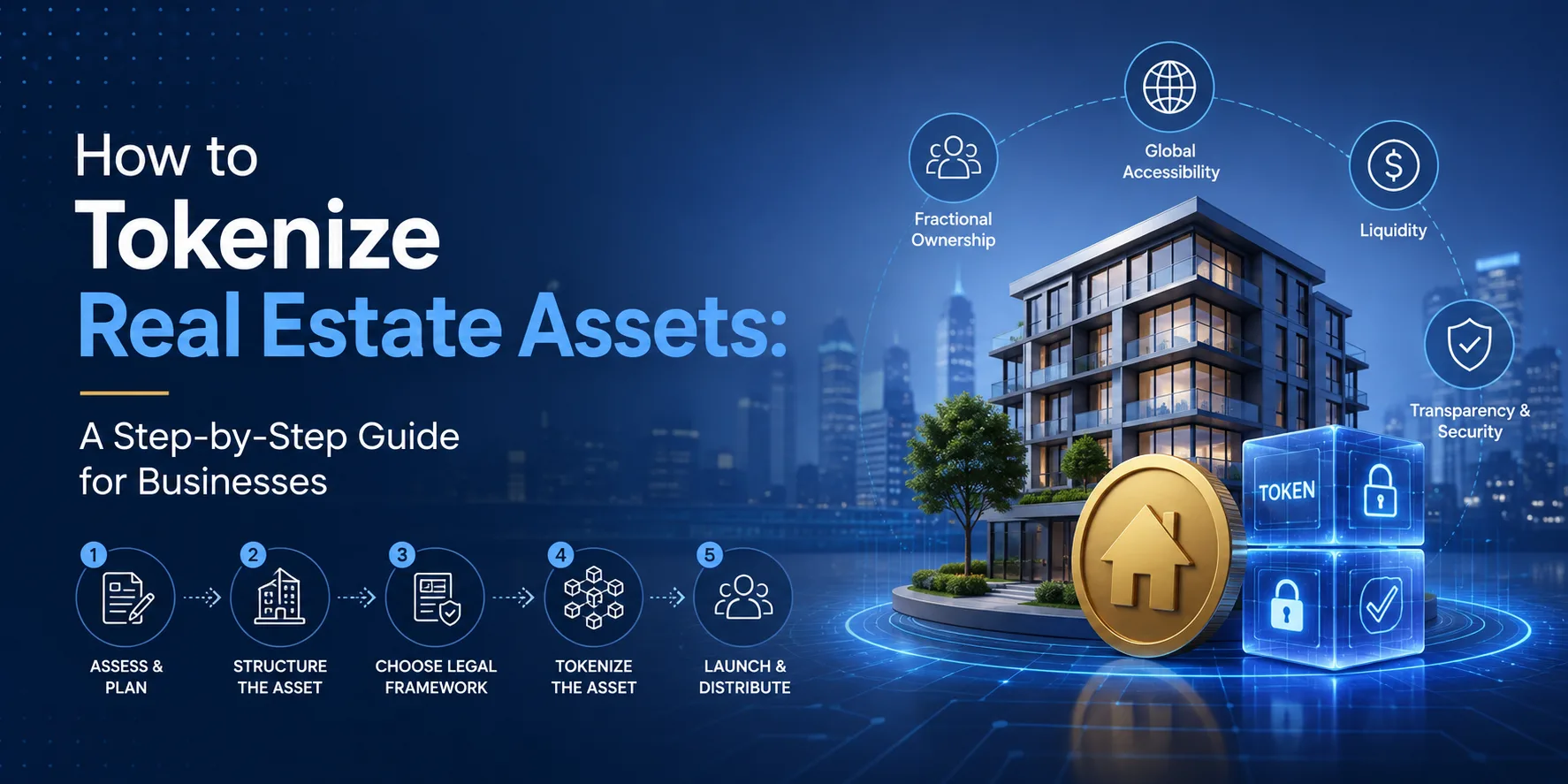
Real estate has traditionally been viewed as a stable and valuable investment class, but investing in property has also involved significant barriers. High capital requirements, lengthy transaction processes, complex documentation, limited liquidity, and geographical restrictions can make conventional real estate investment difficult for smaller investors and even institutional participants.
Real estate tokenization is emerging as a blockchain-based approach to address some of these limitations. It involves representing ownership rights, economic interests, debt claims, or other rights associated with a property through digital tokens recorded on a blockchain. Depending on the legal structure, these tokens can potentially enable fractional participation, automated distributions, transparent ownership records, and more efficient transaction workflows.
The opportunity is becoming increasingly significant. Deloitte's Center for Financial Services estimates that tokenized real estate could grow from less than $0.3 trillion in 2024 to approximately $4 trillion by 2035, representing a projected compound annual growth rate of 27%.
For businesses considering entering this market, however, tokenization is not simply a matter of creating tokens and putting them on a blockchain. The underlying property rights, legal structure, compliance framework, technology infrastructure, investor experience, and ongoing asset management all need to work together. This guide explains how businesses can approach the process strategically.
What Is Real Estate Tokenization?
Real estate tokenization is the process of converting ownership or economic rights associated with a real-world property into digital tokens that can be issued and managed using blockchain technology.
For example, imagine a commercial property valued at $10 million. Instead of requiring one investor to purchase the entire property, a business could establish an appropriate legal structure, such as a special purpose vehicle (SPV), that holds the property. Eligible investors could then receive or purchase digital tokens representing defined interests in that structure.
If 100,000 tokens were issued, each token could represent a proportional economic interest, subject to the legal and contractual arrangements governing the offering. Investors could potentially receive distributions from rental income or participate in appreciation according to the rights attached to the tokens.
The important point is that the token itself does not automatically create ownership of the physical property. The legal relationship between the token holder, issuing entity, SPV, and underlying property must be clearly established. The exact treatment also depends heavily on the jurisdiction and offering structure.
In the United States, for example, the SEC stated in January 2026 that tokenized securities can represent securities whose ownership records are maintained in whole or in part through crypto networks. The regulatory treatment therefore depends on the characteristics and rights of the underlying instrument rather than simply on the fact that blockchain technology is being used.
Why Are Businesses Tokenizing Real Estate?
The attraction of tokenization comes from its ability to combine traditional real estate with programmable digital infrastructure.
One major advantage is fractionalization. A large commercial property can potentially be divided into smaller investment interests, allowing an issuer to design offerings with lower minimum investment requirements where regulations permit. This can broaden the potential investor base.
Tokenization can also improve operational efficiency. Traditional real estate transactions can involve property managers, administrators, brokers, transfer agents, custodians, banks, lawyers, and other intermediaries. Blockchain-based systems can automate selected processes, including ownership records, transfer restrictions, distributions, and reporting.
Deloitte notes that blockchain technology can potentially improve transparency, reduce inefficiencies, and streamline processes associated with commercial real estate transactions, financing, leasing, and payments.
Another important benefit is potentially improved liquidity. Real estate is naturally illiquid because properties are expensive and transactions often take considerable time. Tokenization does not automatically make an asset liquid, but a compliant secondary marketplace can make transfers easier if applicable regulations, market infrastructure, and investor demand support trading.
Step 1: Define the Business Objective
Before selecting a blockchain or developing smart contracts, businesses should determine exactly why they want to tokenize the property.
The objective could be raising capital for a new development, fractionalizing an existing property, creating a real estate investment fund, issuing debt against property assets, improving investor administration, or creating a regulated digital marketplace.
This decision influences almost everything that follows.
For example, a property developer raising construction capital may need a different token structure from an investment manager tokenizing interests in an existing rental portfolio. Similarly, a company seeking institutional investors may prioritize permissioned infrastructure, compliance controls, custody, and reporting over public-market accessibility.
A clear business model should therefore be established before technical development begins.
Step 2: Select the Real Estate Asset
Not every property is equally suitable for tokenization.
Businesses should assess the property's ownership structure, valuation, income-generating potential, existing debt, title status, geographic location, tax position, and investment characteristics.
Suitable assets may include:
- Commercial buildings
- Residential rental properties
- Hotels and hospitality assets
- Industrial properties
- Real estate funds
- Development projects
- Mortgage or real estate debt
- Land and infrastructure projects
The business should also determine whether it wants to tokenize a single property or create a portfolio containing multiple properties. Portfolio tokenization can provide diversification but introduces additional complexity in valuation, reporting, governance, and asset management.
Step 3: Establish the Legal and Regulatory Structure
This is arguably the most important stage of real estate tokenization.
Businesses must determine what legal rights the token represents and how those rights connect to the underlying property. Depending on the jurisdiction and structure, the token could represent equity in an SPV, an interest in a fund, debt, revenue participation, or another contractual right.
Legal professionals should assess securities regulations, property law, investor eligibility, marketing restrictions, AML/KYC requirements, taxation, custody, transfer restrictions, and reporting obligations.
The regulatory question should be addressed before token development begins. Otherwise, a company may build a technically sophisticated platform around a token structure that cannot legally be offered to its intended investors.
This is particularly important because tokenization does not remove existing financial regulations. Instead, blockchain becomes another technological layer through which financial or ownership interests may be issued and transferred.
Step 4: Perform Property Due Diligence
Once the legal structure has been established, the underlying property needs comprehensive due diligence.
This can include verification of:
- Property title and ownership
- Valuation
- Existing mortgages and liens
- Lease agreements
- Rental income
- Operating expenses
- Insurance
- Property taxes
- Zoning and development permissions
- Environmental considerations
- Existing contractual obligations
The objective is to ensure that the digital representation corresponds to a genuine and properly documented real-world asset.
This connection between off-chain assets and on-chain tokens is critical. A blockchain can provide an immutable record of token transactions, but it cannot independently guarantee that the physical property exists, that its valuation is accurate, or that the issuer actually controls the asset.
Step 5: Design the Token Economics
The next stage is deciding what the token represents and how the economic model works.
Suppose a business creates a tokenized investment structure around a $5 million rental property. It might issue 50,000 tokens, with each token representing a defined proportionate interest in the economic rights of the structure.
However, token economics involve more than dividing the property value by the number of tokens.
Businesses need to define:
- Total token supply
- Initial token price
- Investor eligibility
- Minimum investment
- Distribution mechanisms
- Voting rights
- Redemption conditions
- Transfer restrictions
- Fees
- Governance rights
- Exit mechanisms
For example, rental income could potentially be distributed to eligible token holders according to their holdings. Smart contracts can automate portions of this process, although off-chain banking, accounting, tax, and regulatory processes may still be required.
Step 6: Choose the Right Blockchain
Blockchain selection should follow the business and regulatory requirements rather than the other way around.
A business should evaluate transaction costs, scalability, security, ecosystem maturity, interoperability, privacy, smart-contract capabilities, wallet compatibility, and regulatory requirements.
Public blockchains can provide broad accessibility and transparent transaction records. Permissioned or enterprise-oriented networks may offer greater control over participant access and confidential information.
Deloitte similarly highlights blockchain selection as a critical infrastructure decision for real estate managers, particularly around scalability, security, confidentiality, regulatory compliance, data integrity, and asset distribution.
For larger businesses, interoperability can also become important. A tokenization platform may eventually need to interact with custodians, payment systems, identity providers, accounting software, property-management systems, and secondary marketplaces.
Step 7: Develop Smart Contracts
Smart contracts provide the programmable foundation of the tokenization platform.
Depending on the model, smart contracts can manage token issuance, transfers, investor eligibility, ownership records, distribution calculations, voting, and other predefined rules.
For example, a compliance-enabled transfer mechanism could prevent a token from being transferred to an address that has not completed required verification.
Smart contracts can also automate distributions. If rental income is received and the relevant conditions are satisfied, the platform can calculate eligible investor allocations and initiate the appropriate payment workflow.
However, smart contracts should not be treated as a replacement for legal agreements. The legal documents should establish the rights and obligations, while the smart contract should implement appropriate portions of those rules technologically.
Because smart-contract vulnerabilities can lead to financial losses, independent auditing and security testing are essential before deployment.
Step 8: Build KYC, AML, Custody, and Compliance Infrastructure
A professional real estate tokenization platform needs much more than a token contract.
Investor onboarding should generally include identity verification, eligibility checks, sanctions screening, AML procedures, and appropriate recordkeeping based on the jurisdiction and offering structure.
Custody is another major consideration. Investors may use self-custody wallets, institutional custody solutions, or a combination of approaches. Businesses need to determine how private keys, transaction approvals, wallet recovery, and access controls will be handled.
Deloitte identifies custody, taxation, accounting, and cybersecurity as important considerations for organizations entering tokenized real estate.
Step 9: Create the Investor Platform
The investor-facing platform is where tokenization becomes accessible to users.
A well-designed platform may provide property information, offering documents, investor onboarding, token balances, transaction history, distribution records, compliance status, and portfolio information.
A property dashboard could show information such as valuation, occupancy, rental revenue, expenses, historical performance, and relevant documentation.
The goal should be to make the blockchain infrastructure largely invisible to ordinary investors. Users should not need deep technical knowledge of blockchain to understand what they own, what rights they have, how distributions work, or how transactions are processed.
Step 10: Launch, Manage, and Monitor the Tokenized Asset
Tokenization does not end when the tokens are issued.
The property continues to generate income, incur expenses, require maintenance, and undergo changes in valuation. The platform must therefore support ongoing asset servicing.
Businesses should maintain accurate records of rental income, property expenses, investor distributions, valuations, corporate actions, and compliance events.
Blockchain-based infrastructure can provide a transparent transaction layer, but accurate information still depends on reliable off-chain data. Where external information needs to enter the blockchain, oracle or integration infrastructure may be required.
Deloitte's 2026 analysis describes a broader architecture involving smart contracts, backend connections, oracles, custody and wallet infrastructure, and audit/control layers for real estate fund workflows.
Real-World Example: Tokenized Real Estate Funds
Real estate funds are one of the areas where tokenization can have significant potential.
Instead of maintaining all investor records through fragmented traditional systems, a fund could issue blockchain-based interests representing eligible investors' rights. The platform could then support issuance, ownership tracking, distributions, and potentially secondary transfers.
Deloitte projects tokenized private real estate funds could reach $1 trillion by 2035, illustrating the potential scale of this use case.
Another example comes from the securitization market. Deloitte reports that Redwood Trust has used LiquidFi's blockchain technology for CoreVest securitizations to provide daily loan-level payment reporting. It also notes that LiquidFi reported reducing loan-level MBS reporting time from 55 days to 30 minutes in one blockchain implementation.
These examples demonstrate that tokenization is not limited to simply dividing a property into smaller ownership units. It can also transform how real estate debt, funds, financing, reporting, and servicing are managed.
Key Challenges Businesses Must Address
Despite its potential, real estate tokenization introduces significant challenges.
Regulatory uncertainty remains one of the most important. The legal treatment of tokens varies between jurisdictions and depends on the rights attached to them.
Liquidity is not guaranteed. Creating tokens does not automatically create buyers or a functioning secondary market.
Technology risk is another concern. Smart-contract vulnerabilities, wallet compromises, faulty integrations, and inadequate access controls can create serious problems.
Off-chain dependency also matters. Blockchain records can be transparent and tamper-resistant, but they cannot independently verify property valuations, title ownership, rental income, or physical asset conditions.
Finally, businesses need to consider taxation and accounting. Tokenized assets can create accounting and tax questions that differ from conventional property structures, making professional advice important.
The Future of Real Estate Tokenization
The future of real estate tokenization is likely to move beyond simple fractional ownership.
Tokenized funds, debt instruments, automated distributions, programmable compliance, digital identity, stablecoin-based settlement, and interoperable secondary markets could create increasingly integrated real estate ecosystems.
The most successful businesses are unlikely to treat tokenization as merely a blockchain project. Instead, they will approach it as a combination of real estate finance, legal structuring, compliance, asset management, and digital infrastructure.
As infrastructure matures, tokenization could make certain real estate investment and administration processes more efficient while creating new ways to structure and distribute investment products.
Conclusion
Real estate tokenization offers businesses a way to modernize property investment and asset management by combining real-world assets with blockchain-based ownership and transaction infrastructure. From fractional investment and automated distributions to transparent records and potentially improved liquidity, the model can address several longstanding inefficiencies in conventional real estate markets. However, successful implementation requires careful legal structuring, property due diligence, token economics, blockchain selection, smart-contract security, investor compliance, custody, and ongoing asset management. Businesses looking to build a reliable solution should work with experienced real estate tokenization experts and real estate blockchain development experts who understand both the technical and business sides of the industry. Blockchain App Factory provides best real estate tokenization services, helping businesses develop secure, scalable, and business-focused blockchain solutions for tokenized real estate ecosystems.