There was a time when marketing a physical product required the product itself, or at least a working prototype, ready to be photographed. That requirement created real bottlenecks: marketing timelines tied entirely to manufacturing schedules, expensive photo shoots that had to be repeated for every color variant or configuration, and no realistic way to market a product still in development. That constraint has largely disappeared, and it's changed how companies plan product launches from the ground up.
Why Photography Alone No Longer Meets Marketing Needs
Traditional product photography requires a finished, physical unit, proper lighting, a controlled environment, and often multiple sessions to capture every angle, color option, and configuration a company wants to market. For companies with large product catalogs or frequent variant releases, this becomes an enormous ongoing expense, one that scales directly with the number of products and configurations needing representation.
It also creates a fundamental timeline problem. Marketing materials traditionally couldn't be finalized until a physical sample existed, often pushing critical promotional work dangerously close to a product's actual launch date, or forcing companies to market based on early prototypes that don't accurately represent the final shipped product.
How Digital Visualization Changes This Equation
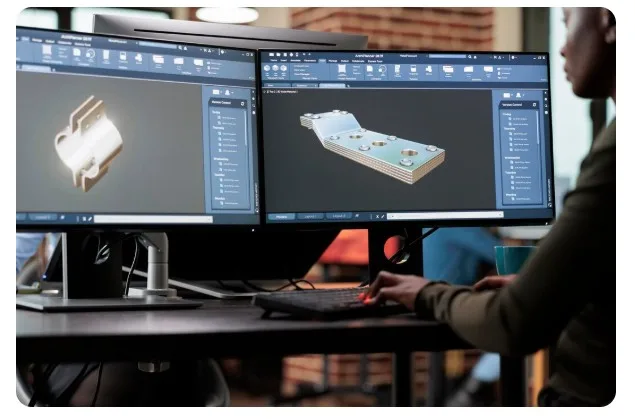
Modern rendering technology allows a product to be visualized with photorealistic accuracy directly from its engineering or design files, well before a physical unit exists. This means marketing materials, packaging design, and promotional content can be developed in parallel with manufacturing rather than waiting for it to conclude, dramatically compressing the overall timeline from design to market-ready launch materials.
Beyond the timeline advantage, this approach offers remarkable flexibility. A single base model can be rendered in multiple colors, finishes, or configurations without the cost of physically producing each variant just to photograph it, a significant advantage for companies offering extensive customization options.
Where This Capability Delivers the Most Value
Pre-launch marketing campaigns. Companies can build anticipation and begin promotional campaigns well ahead of a physical product's availability, using accurate visualizations rather than vague conceptual sketches or waiting until inventory exists to begin marketing efforts.
E-commerce and catalog imagery. Online retailers benefit enormously from consistent, high-quality product imagery across every variant and angle a customer might want to examine, achievable without physically photographing every single configuration a catalog might offer.
Packaging and design iteration. Reviewing how a product looks within its packaging, or evaluating different packaging concepts, becomes far more efficient when done digitally before committing to costly physical packaging prototypes and production runs.
Trade show and presentation materials. Products still in development or limited to prototype quantities can still be represented compellingly at trade shows or investor presentations through accurate digital visualization, without requiring finished inventory on hand.
Configuration and customization tools. Companies offering customizable products can use rendering technology to power interactive tools that let customers visualize their own specific configuration choices before committing to a purchase, a capability that would be essentially impossible using traditional photography.
What Separates Strong Work From Generic Output
Not all rendering work achieves the same level of quality or usefulness. The strongest 3D product rendering services combine precise technical accuracy, correctly representing materials, proportions, and finishes, with genuine artistic sensibility around lighting, composition, and presentation that makes a rendered image feel as compelling as professional photography rather than obviously synthetic or generic.
Achieving this balance requires more than technical software proficiency. It requires an understanding of how lighting and material properties behave in the real world, combined with the visual instincts of an experienced photographer or art director, applied within a digital rather than physical production process.
A Capability That Keeps Expanding
As rendering technology continues to mature, its applications keep expanding beyond simple marketing imagery into interactive configurators, augmented reality previews, and increasingly sophisticated animated content, all built from the same underlying digital product representation rather than requiring separate physical production for each new use case.
Final ThoughtsThe ability to visualize a product with complete accuracy before it physically exists has fundamentally changed how companies plan launches, manage marketing timelines, and represent complex product catalogs. For companies ready to bring their own products to life this way, Industrial Animator offers the technical precision and visual expertise needed to make every rendered image genuinely compelling.