
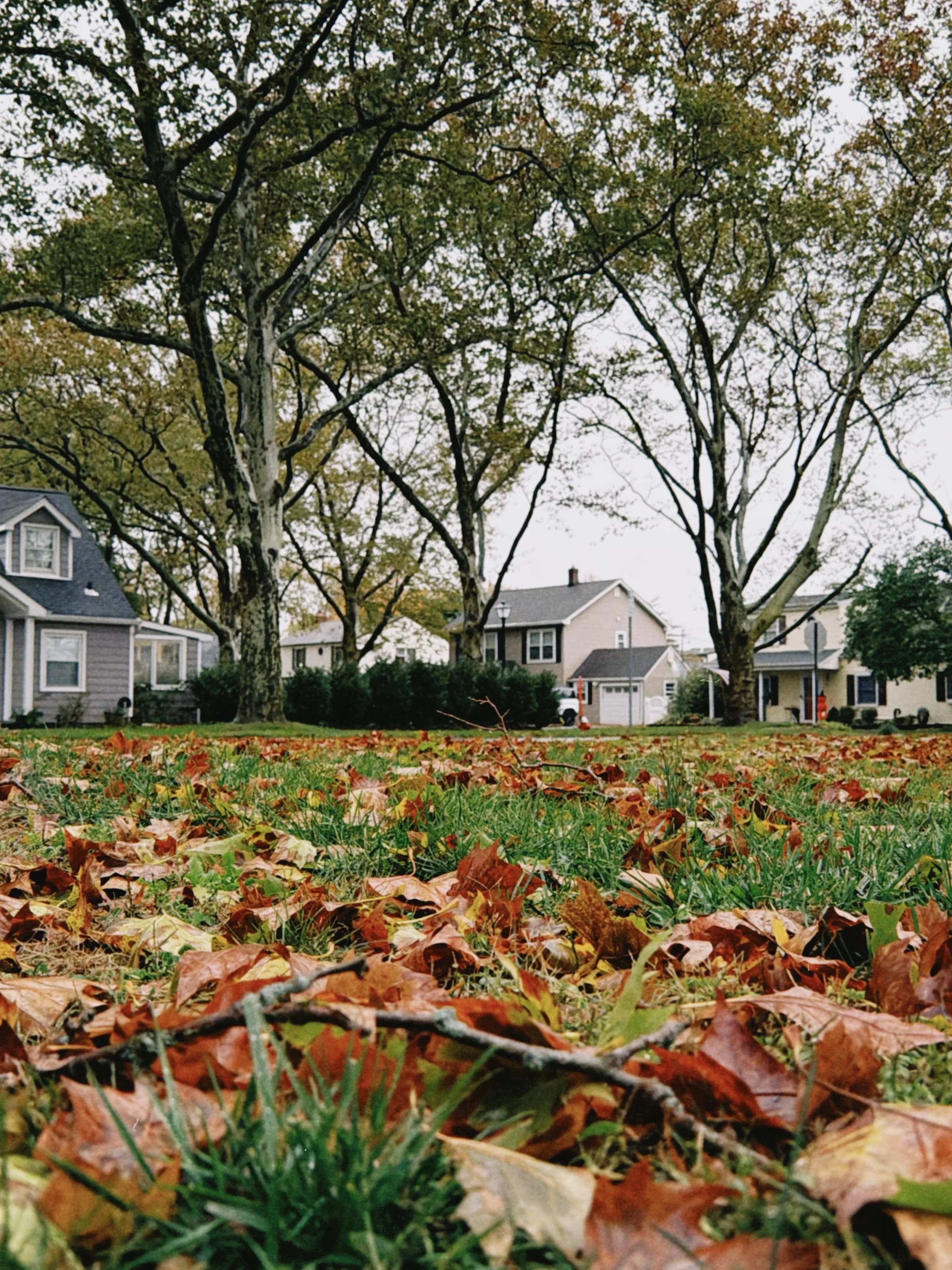
Fall lawn care sounds simple in theory. The leaves come down, you clear them, done. In practice, if you have kids, dogs, and a larger property, it's more complicated than that — and the standard advice about raking and blowing doesn't account for the actual conditions you're working in.
Here's what fall lawn management actually looks like when your yard is a functioning family space, and what makes it more manageable.
The Problem With Clearing Leaves Once a Week
The conventional approach — wait until there are enough leaves to make it worth going outside, then clear the whole yard in one session — sounds efficient. For a busy household, it usually means the leaves sit for a week or more between sessions.
That's long enough for problems to start. A layer of wet leaves matted against the grass blocks sunlight and traps moisture, creating exactly the conditions that fungal diseases like dollar spot and grey snow mould need to take hold. By the time you clear the leaves, the damage to the grass underneath may already be done — and you won't see it clearly until spring.
With kids and dogs using the yard daily, this gets worse. Leaves get kicked around, redistributed, and compressed into corners and high-traffic areas. The yard that looked halfway clear on Sunday can be a mess by Wednesday without anyone deliberately making it that way.
Frequent Clearing Beats One Big Session
The better approach — supported by basic turf science — is to clear more often, not all at once. Removing leaves before they accumulate and mat down keeps the grass accessible to light and air, and each individual clearing session is much easier when you're dealing with a light covering rather than a week's worth of buildup.
The problem is that "clear more often" is easy advice and hard to follow when you're already managing a household. Adding two or three leaf clearing sessions per week to a schedule that already includes school runs, work, and everything else isn't realistic for most people.
This is where a robot leaf blower changes the equation. Running on a schedule you set, it goes out regularly — clearing light accumulations before they become heavy ones — without requiring your presence or your time. The frequent clearing that's best for turf health happens automatically, without you having to decide to do it.

Working Around Kids and Dogs
A yard that's actively used by children and dogs creates a few specific challenges for lawn care equipment.
The first is timing. You can't run a leaf blower — robotic or otherwise — when the dog is loose in the yard or the kids are playing outside. With a traditional blower, you're the one managing that schedule: waiting until everyone's inside, going out, doing the job, coming back in. With a robotic system, you can schedule clearing for early morning before anyone's up, or in the evening after the yard clears out. The machine runs; nobody has to coordinate around it.
The second is safety. Modern robotic outdoor equipment uses obstacle detection to stop automatically when something enters the operating area. That's not a substitute for sensible scheduling — running any powered equipment unsupervised around small children or pets requires common sense — but it does mean the system responds to unexpected entries rather than continuing regardless.
The third is the yard condition itself. Dogs in particular create uneven terrain — worn patches, areas of compacted soil, spots where they habitually run or dig. A robotic system navigates these with the same GPS-based mapping it uses everywhere else; there's no operator having to make judgment calls about how to handle each section of the yard.
The Fall Lawn Underneath
Worth keeping in mind through all of this: fall is a critical growth period for cool-season grasses, which covers most of the northern US. The lawn is actively recovering from summer heat stress and setting up root systems for the following spring. How you treat it in September and October has a real impact on what it looks like in April.
Keeping leaves cleared, maintaining a consistent mowing schedule (grass keeps growing until the ground freezes), and avoiding heavy compaction from foot traffic during wet periods — these are the things that matter most. An autonomous system that handles clearing on a schedule, regardless of whether you had time to get outside, makes it easier to actually follow through on the basics.
For households where the yard is used hard and time is short, that consistency is usually the difference between a lawn that looks good in spring and one that needs significant recovery work.
Explore the full Yarbo fall lineup — including the robot leaf blower module — at yarbo.com.