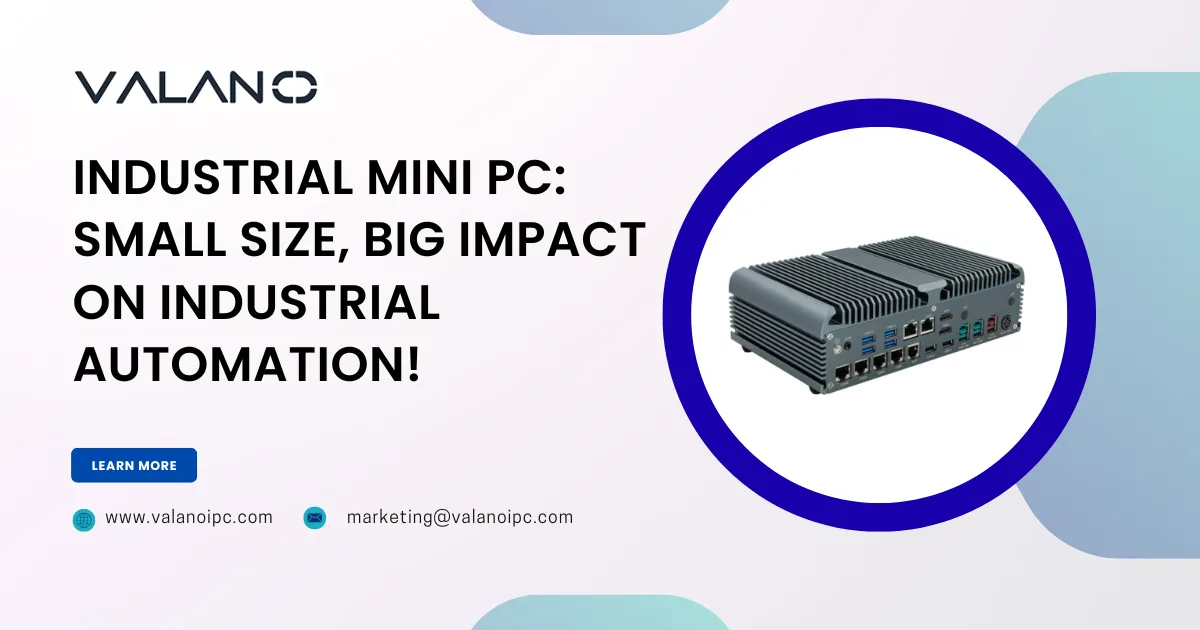
In the ever-evolving landscape of industrial automation, space and efficiency have become two of the most valuable commodities on the factory floor. As manufacturers and system integrators push the boundaries of productivity and precision, the need for compact yet powerful computing solutions becomes increasingly critical. This is where the industrial mini PC steps into the spotlight.
At ValanoIPC, we recognize that despite their small footprint, industrial mini PCs deliver enormous benefits by enabling flexible deployment, enhanced processing capabilities, and robust performance—even in the most demanding industrial environments. Their compact design does not mean limited functionality; rather, these devices are engineered to provide expandable computing power that fits into tight spaces without compromising on reliability or connectivity.
To fully appreciate why the industrial mini PC is a game-changer in factory automation, it is essential to understand where these devices fit into the automation ecosystem and the unique advantages they deliver. From improving machine control and data acquisition to facilitating predictive maintenance and IoT connectivity, industrial mini PCs empower modern manufacturing plants to operate smarter, faster, and more efficiently.
Moreover, with the rising complexity of automation systems, integration and scalability become indispensable. Thanks to their small size and modular design, industrial mini PCs can be easily integrated alongside machinery—even in confined control cabinets, portable test and measurement setups, or edge computing nodes—thereby streamlining workflows and simplifying the expansion of existing systems.
What is an Industrial Mini PC?
An industrial mini PC is a compact, ruggedized computer specifically designed to operate reliably in industrial settings. Unlike standard commercial PCs or personal computers, industrial mini PCs are built with industrial-grade components to withstand harsh environmental conditions such as extreme temperatures, dust, vibration, and electromagnetic interference.
Despite their reduced size — often just a fraction of a desktop PC — these mini PCs offer surprisingly robust computing capabilities. They function as the backbone for automation tasks including process control, machine vision, data analytics, and network gateway functions. Thanks to their small dimensions, industrial mini PCs can be mounted in constrained spaces such as control cabinets or directly near machines without sacrificing performance.
Why Industrial Mini PCs are Essential for Modern Automation
1. Space-Efficient Computing for Tight Industrial Environments
Industrial production facilities often face constraints on available space. Conventional industrial computers can be bulky and challenging to install in restricted areas, which complicates wiring and maintenance activities.
In contrast, industrial mini PCs offer a dramatically reduced footprint, allowing them to fit seamlessly into tight control panels, conveyor machinery corners, or mobile testing devices. Consequently, automation engineers gain tremendous flexibility when designing or retrofitting control systems, enabling smarter placement of computing resources exactly where they are needed.
This space efficiency does not stop at hardware installation; it also reduces clutter and improves airflow inside cabinets, which can lower cooling costs and improve system reliability.
2. High Performance in a Compact Form Factor
One might assume that the small size of an industrial mini PC comes at the cost of computing power. However, this is far from the truth. Modern industrial mini PCs feature advanced processors, including Intel Core i-series CPUs, embedded Atom processors, and even ARM-based architectures that deliver high-speed processing, rapid I/O, and low power consumption.
This powerful performance allows industrial mini PCs to handle demanding applications such as real-time machine control, complex analytics, image processing, and AI inference work at the edge. Therefore, manufacturers don’t have to compromise on the quality or speed of their automation workflows despite compact hardware.
3. Rugged and Reliable for Harsh Industrial Conditions
Industrial environments can encompass all sorts of challenges — from high temperature swings, metallic dust, moisture ingress, to continuous vibration caused by heavy machinery. Unlike consumer PCs, industrial mini PCs from reliable providers such as ValanoIPC are equipped with:
- Fanless cooling to prevent dust ingress and reduce mechanical failure.
- Extended temperature tolerance ranging from -40°C to 70°C or more.
- Shock and vibration resistance validated to industrial standards.
- Sealed metal housings that protect sensitive electronics.
Therefore, these devices ensure continuous uptime and reduce the frequency and cost of maintenance or replacement.
4. Enhanced Connectivity Options for Industrial Networks and IoT
Another significant advantage of industrial mini PCs is their comprehensive connectivity. These small yet versatile devices typically come equipped with multiple industrial interfaces, including:
- Ethernet ports supporting industrial protocols (e.g., Modbus TCP, EtherNet/IP, ProfiNet).
- USB ports for device integration.
- Serial communication ports (RS232/RS485) for legacy machine connections.
- Expandable options like HDMI, DisplayPort.
- Wireless options including Wi-Fi, Bluetooth, and cellular connectivity for remote operations.
Such rich connectivity enables industrial mini PCs to function as data gateways, edge computing nodes, or cloud interface points, which plays a critical role in IoT-enabled smart factories.
5. Cost-Effective and Scalable Solutions
Industrial mini PCs typically offer a lower total cost of ownership compared to larger industrial PCs or servers, especially when factoring in space efficiency, ease of installation, low power consumption, and reduced maintenance needs.
Besides affordability, the modular structure of many industrial mini PCs opens the door for scalability. For example, factories can deploy multiple mini PCs distributed across their facility to localize control while maintaining centralized monitoring, which optimizes responsiveness and reduces network bottlenecks.
Key Industries Benefiting from Industrial Mini PCs
Automotive Manufacturing
Automotive plants use industrial mini PCs for machine control in assembly lines, robotic guidance, and quality assurance inspections. Their compact size allows easy integration into limited machine spaces while providing the processing needed for vision systems and real-time analytics.
Pharmaceutical and Healthcare
Pharmaceutical processing requires rigorous monitoring and precise control, often in space-limited environments. Industrial mini PCs enable tight process controls, data logging, and compliance with manufacturing standards while maintaining compact and hygienic system footprints.
Food and Beverage
Food processing plants benefit from fanless, sealed industrial mini PCs that withstand frequent washdowns, temperature fluctuations, and humidity. They control bottling lines, packaging, and temperature regulation with ease.
Energy and Utilities
In energy generation and utility control rooms, where remote monitoring and failsafe operation are paramount, industrial mini PCs serve as reliable edge computing solutions, managing sensor networks, SCADA data, and predictive maintenance systems.
General Factory Automation & Smart Manufacturing
From robotics to conveyor belt control, industrial mini PCs power versatile automation tasks—enabling efficient factory operations, energy management, and integration with cloud analytics for continuous improvement.
Features to Look for When Choosing an Industrial Mini PC
When selecting an industrial mini PC for your automation needs, consider the following factors:
Environmental Specifications
- Verify the operating temperature range and ingress protection rating (e.g., IP40, IP65).
- Ensure shock and vibration resistance meet your factory standards.
Processor and Memory
- Match CPU performance with your application requirements.
- Consider memory expansions for future-proofing.
Connectivity Options
- Confirm necessary I/O ports for your devices and sensors.
- Look for support of key industrial communication protocols.
Form Factor and Mounting
- Ensure the physical dimensions fit your control panel or machine.
- Check for mounting flexibility: DIN rail, VESA, or wall mount options.
Software Compatibility
- Confirm support for operating systems like Windows, Linux, or specialized real-time OS.
- Compatibility with your existing automation software or SCADA systems.
Power Consumption
Opt for energy-efficient units that reduce operating costs.
Why Choose ValanoIPC Industrial Mini PCs?
At ValanoIPC, we specialize in delivering industrial-grade mini PCs that combine compactness with uncompromising performance and reliability. Our solutions are designed to:
- Operate flawlessly in the harshest industrial environments.
- Provide versatile connectivity tailored to modern automation protocols.
- Offer scalable configurations to fit from simple controllers to complex data gateways.
- Include expert support and rapid customization to meet your unique needs.
Additionally, ValanoIPC’s commitment to quality, innovation, and client success makes our industrial mini PCs ideal building blocks to the smart factories of tomorrow.
The compact yet powerful nature of the industrial mini PC marks a significant advancement for industrial automation. It elegantly solves the dilemma of limited space while delivering the computational horsepower required for modern, intelligent factory systems. Their ruggedized design, extensive connectivity, and scalable deployment make them indispensable tools for manufacturers striving to increase agility, productivity, and predictive insight.
Frequently Asked Questions (FAQ)
Q1: What distinguishes an industrial mini PC from a standard mini PC or desktop PC?
A1: Unlike consumer-grade mini or desktop PCs, industrial mini PCs are ruggedized to withstand extreme temperatures, dust, moisture, vibration, and electromagnetic interference. They are specifically designed for continuous 24/7 operation in harsh industrial environments and incorporate industrial-grade components and certifications.
Q2: Can an industrial mini PC replace traditional industrial PCs?
A2: In many cases, yes. Industrial mini PCs offer comparable or superior processing power in a smaller, more flexible package. However, the suitability depends on application complexity, environmental conditions, and I/O requirements.
Q3: How do industrial mini PCs support IoT and Industry 4.0 initiatives?
A3: By serving as edge computing nodes, industrial mini PCs aggregate data from sensors and machines, perform local processing and analytics, and communicate with cloud platforms. This decentralized approach reduces latency and enhances predictive maintenance, quality control, and operational efficiency.
Q4: Are industrial mini PCs easy to install?
A4: Yes. Their small form factor and mounting options such as DIN rail or VESA mount allow straightforward integration into existing control panels or machinery. This reduces installation time and space requirements.
Q5: What operating systems do industrial mini PCs support?
A5: Most industrial mini PCs support Windows (often embedded or IoT versions), Linux distributions, and sometimes real-time operating systems depending on the application needs.
Q6: How durable are industrial mini PCs in extreme environments?
A6: ValanoIPC’s industrial mini PCs are tested to endure wide temperature ranges (often -40°C to +70°C), resist dust and water ingress with IP-rated enclosures, and withstand shock and vibration as per industry standards.
Q7: Can an industrial mini PC handle complex automation tasks?
A7: Absolutely. Modern mini PCs are equipped with multi-core processors and ample memory to execute complex control routines, data analytics, and machine vision algorithms with low latency.
Q8: What connectivity options are typically available?
A8: Expect multiple Ethernet ports, USB 3.0 and legacy USB 2.0, serial ports like RS-232/RS-485, display outputs such as HDMI or DisplayPort, as well as optional wireless modules (Wi-Fi, Bluetooth, LTE).
Q9: How long is the expected lifespan of an industrial mini PC?
A9: With proper operation and maintenance, industrial mini PCs can last between 5 to 10 years, far exceeding typical consumer PC lifespans due to robust components and industrial design.
Q10: Why choose ValanoIPC for your industrial mini PC needs?
A10: ValanoIPC offers state-of-the-art, customizable industrial mini PCs backed by expert consulting and support. We ensure our clients receive reliable hardware tailored to their specific industrial automation challenges, leading to optimized production performance and ROI.