
Sell Smarter with Seamless Collaboration
Imagine closing deals faster and acting on insights instantly without switching between apps. For sales teams juggling multiple tools, constant context switching drains time and focus. Integrating Salesforce with Slack solves this by creating a unified workspace where communication, data, and action happen together.
This guide explains how Salesforce-Slack integration transforms collaboration, boosts productivity, and secures customer data—all in one place.
Why Integrate Salesforce with Slack?
Together, Salesforce and Slack create a collaborative selling hub where teams can access and act on customer data in real time.
Sales reps can share and update Salesforce records—leads, accounts, and opportunities—directly in Slack channels. Everyone stays aligned without logging into Salesforce or relying on long email chains.
Key Benefits of Integration
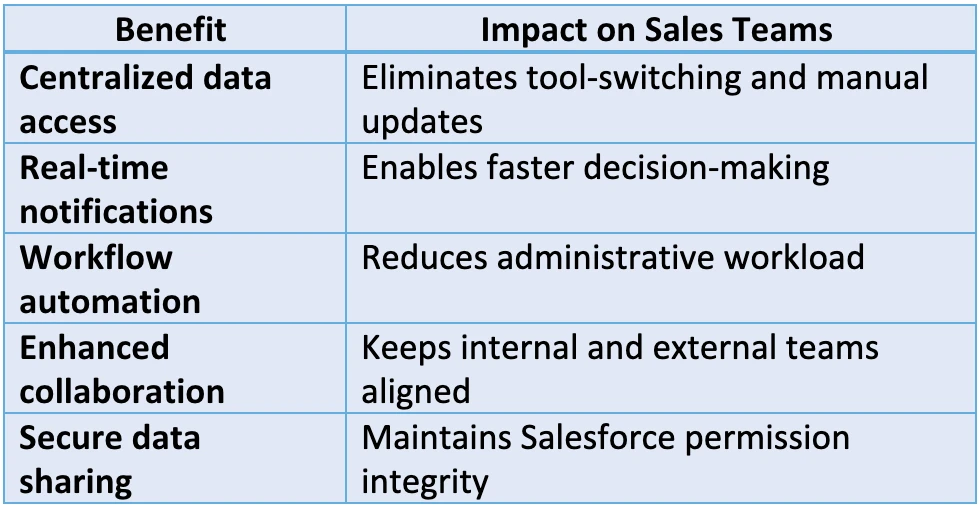
Organizations using this integration experience 36% faster response times and improved deal visibility across departments.
Real-Time Collaboration
When new leads enter the pipeline or deals move stages, teams receive instant Slack notifications. This visibility helps sales reps follow up faster and act on opportunities immediately.
Instead of scattered emails, discussions remain tied to Salesforce records. With Slack Connect, teams can even collaborate with external vendors or partners on key deals.
Improving Sales Performance
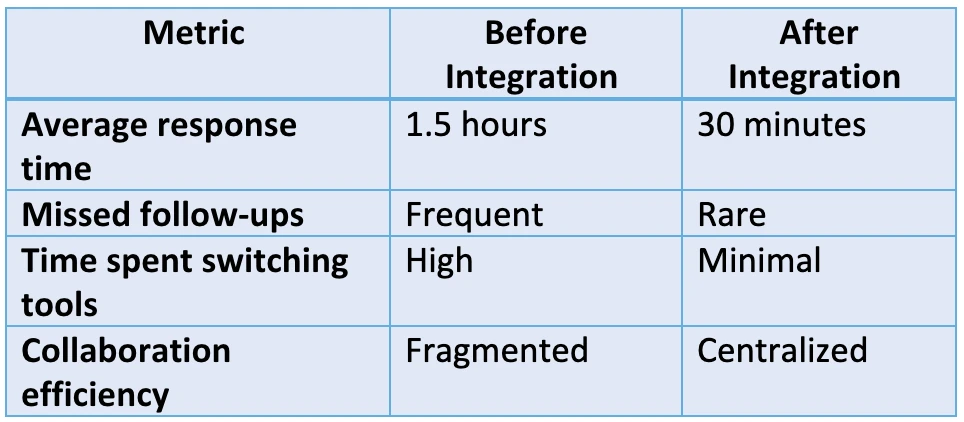
Constantly switching between apps hurts focus. In fact, 66% of salespeople feel overwhelmed by using too many tools. Salesforce-Slack integration fixes this by allowing updates, task assignments, and follow-ups directly within Slack.
Automated workflows can turn Slack messages into Salesforce actions—for example, creating a follow-up task when a customer issue is discussed.
Performance Gains from Integration
Technical Prerequisites
Before setup, confirm these requirements:
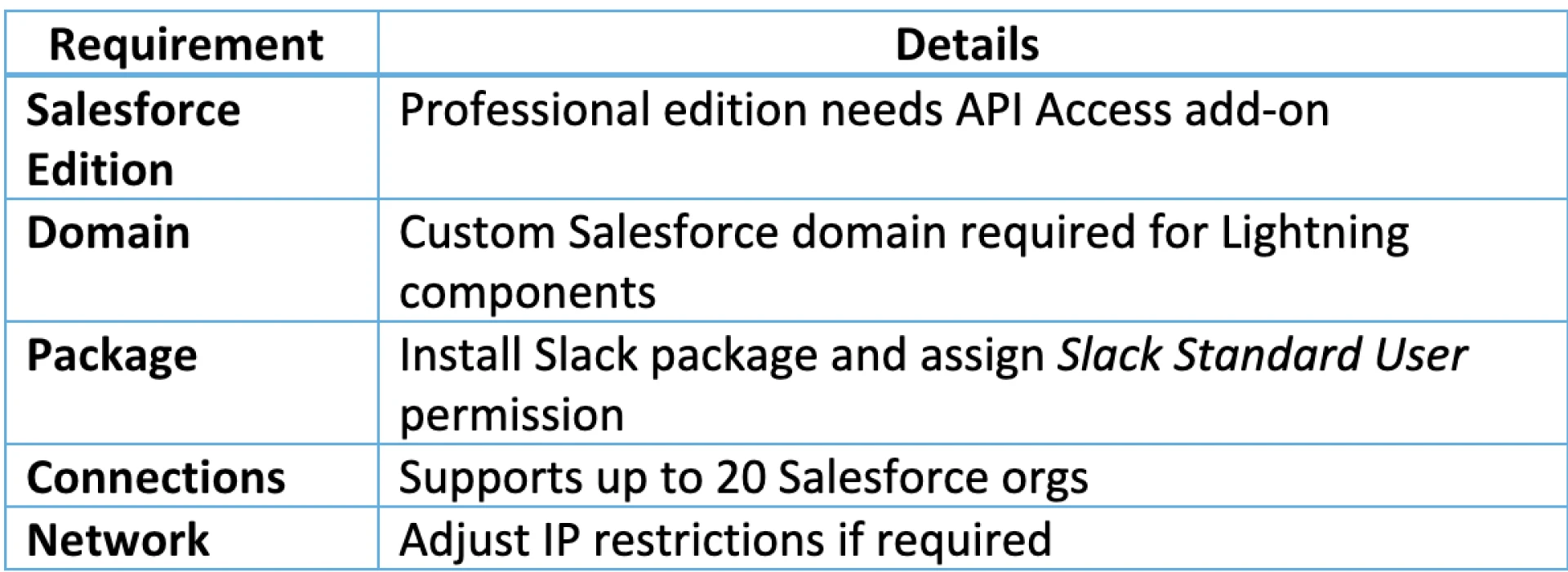
Meeting these conditions ensures a smooth, fully functional setup.
Security and Permissions
Salesforce channels in Slack inherit Salesforce record permissions, ensuring that only authorized users can view or act on data.
Security Best Practices
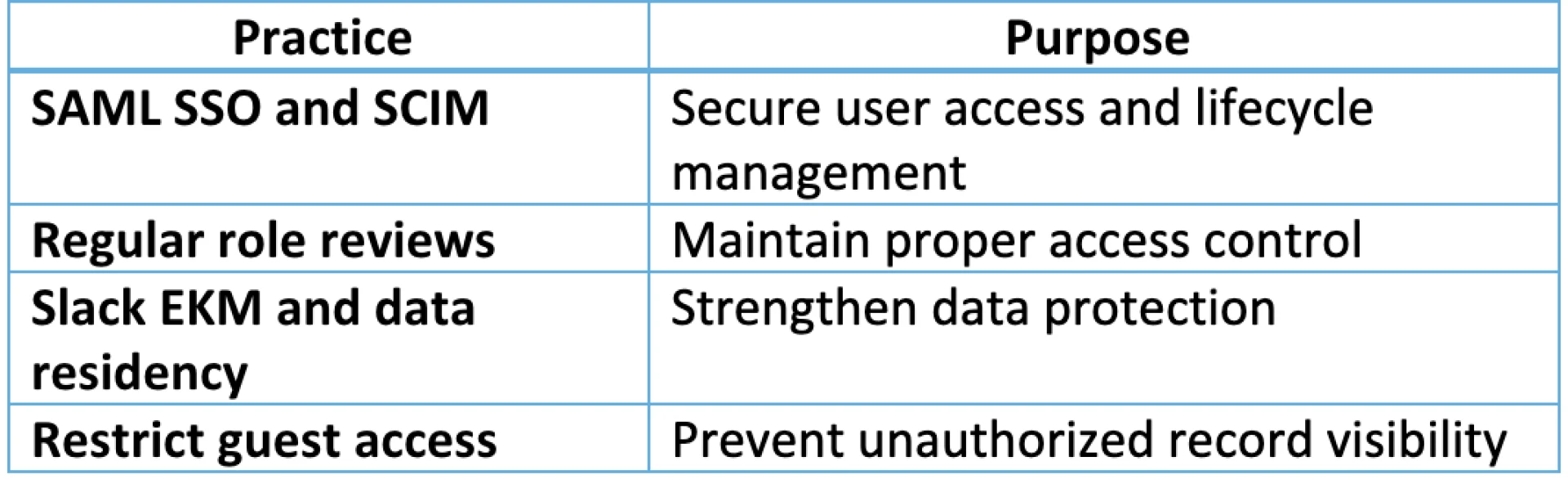
This layered approach keeps your collaboration environment both productive and compliant.
Data Mapping and Quality
Plan your data mapping early to ensure accurate record previews and notifications. Use unique identifiers to avoid duplicates and run regular audits to maintain data consistency.
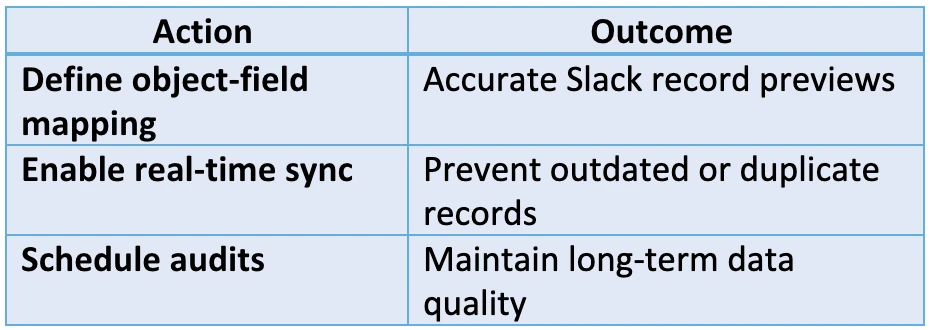
Smart Notifications, Less Noise
Too many alerts can overwhelm teams. Keep notifications targeted and relevant.
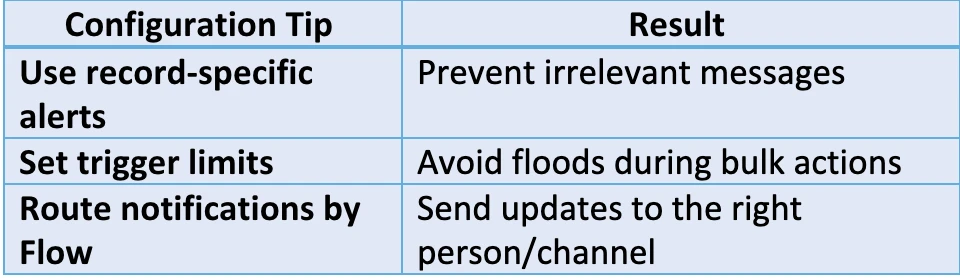
This ensures your Slack workspace stays informative, not noisy.
Channel and Identity Management
Channel Setup
Create dedicated Salesforce channels for Accounts, Opportunities, or key clients so data and conversation stay connected. Use private channels for sensitive information.
Note: Salesforce channels don’t support Slack Connect, so external collaboration should occur in separate shared channels.
Identity Mapping
Use SAML NameID for automatic Salesforce-Slack mapping. Keep mappings current through SCIM provisioning, and review exports regularly to maintain clean access control.
Workflow Automation
Enhance productivity with automation.
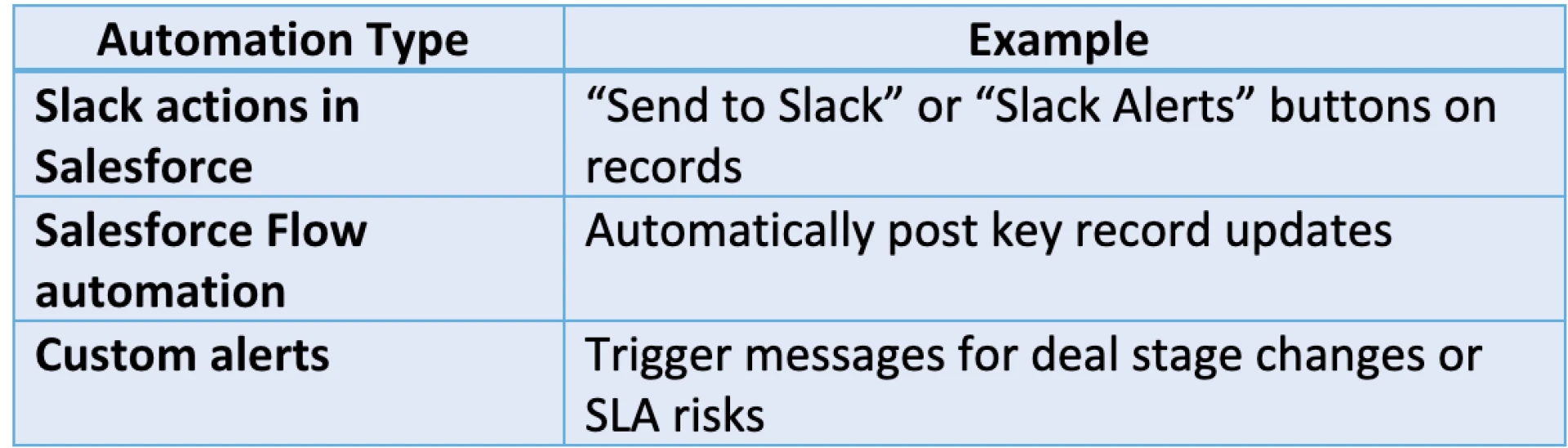
Automation ensures every update leads to meaningful action.
Testing and Rollout
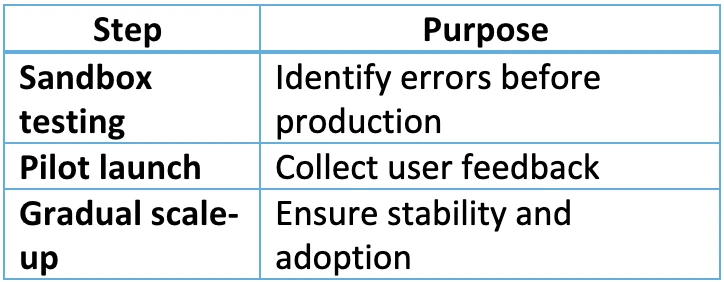
Start in a sandbox to validate permissions, data mappings, and OAuth scopes. Test end-to-end user journeys, refresh data sources in Slack, and pilot with a few teams before full rollout.
Avoid Common Pitfalls
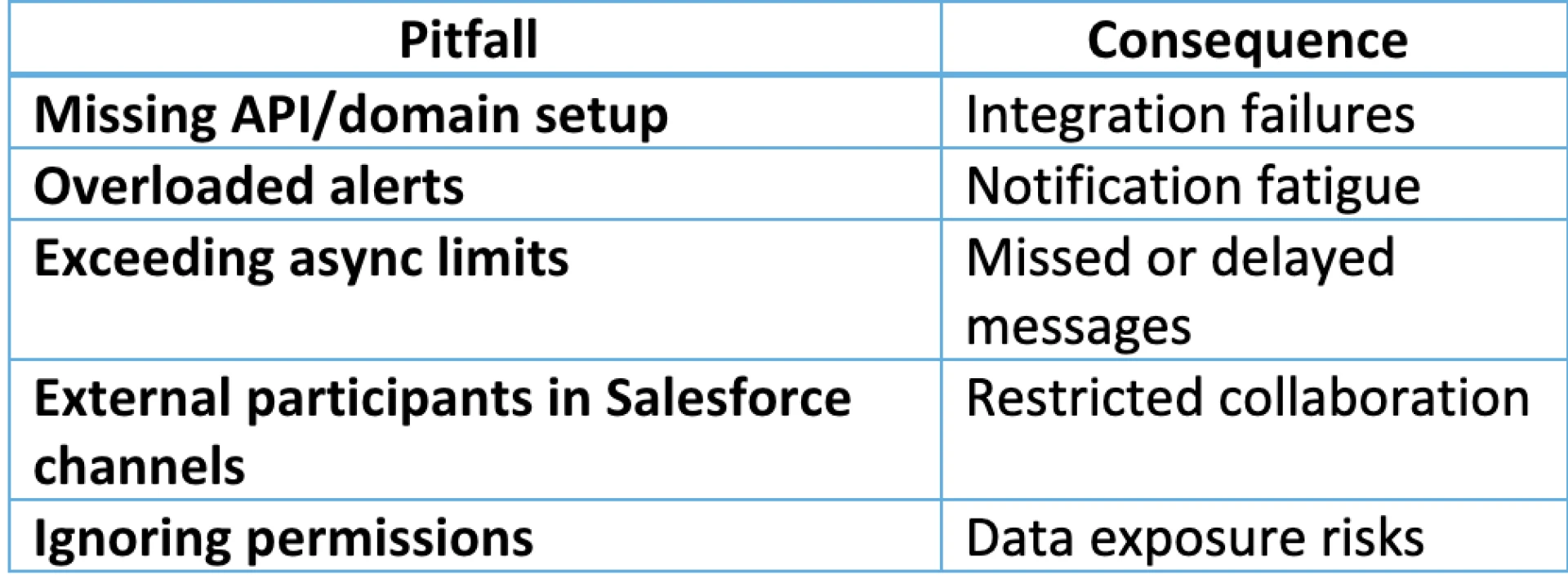
Prevent issues that can stall or degrade integration.
Hexaview’s Expertise in Salesforce-Slack Integration
At Hexaview, we specialize in building secure, scalable, and efficient Salesforce-Slack integrations.
Our focus includes:
- Tailored workflow automation
- Optimized alerts and channel design
- Robust data and identity mapping
- Governance-first rollout strategies
We help sales teams operate faster, smarter, and more collaboratively—all within Slack.
Final Thoughts
Integrating Salesforce with Slack isn’t just a tech upgrade—it’s a transformation in how sales teams work. With unified communication, instant insights, and automated workflows, your team can stay focused on what matters most: closing deals and delighting customers.
The future of connected selling is already here. It’s time to bring Salesforce and Slack together.