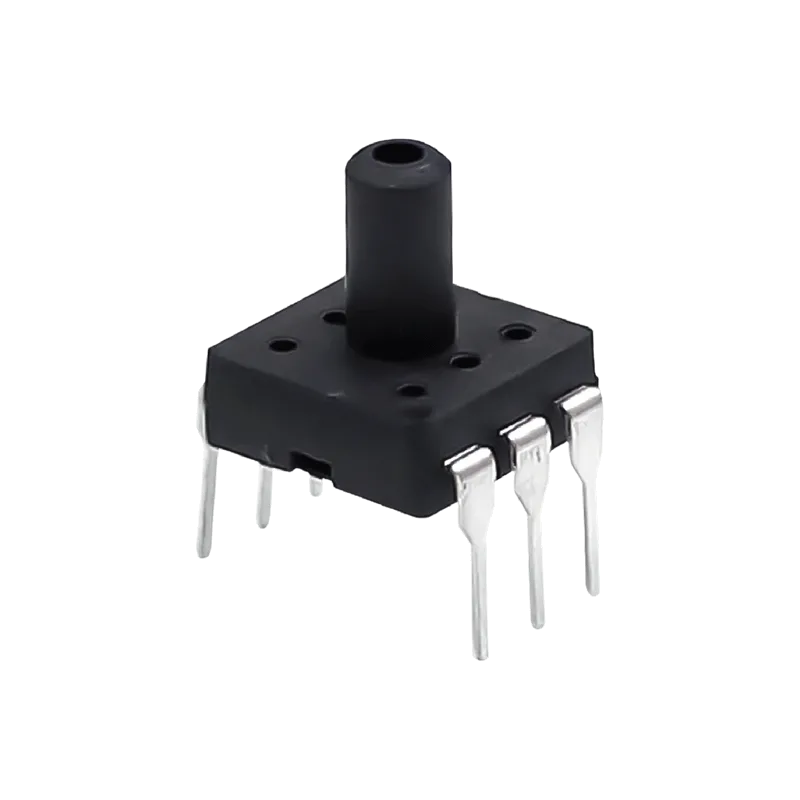
In the era of rapid technological development, integrated sensors, as an important evolutionary direction of sensor technology, are gradually becoming core components in fields such as the Internet of Things (IoT), smart homes, and industrial automation. An integrated sensor is an advanced sensor that integrates multiple functional modules, such as sensitive elements, amplification circuits, operation circuits, and compensation circuits, into a single chip or the same package. This highly integrated design not only drives innovation in sensor technology but also brings multiple advantages such as miniaturization, high performance, and multi-functionality, making it indispensable in numerous application scenarios. This article will delve into the key characteristics, main application fields, and future development trends of integrated sensors to help readers comprehensively understand how this technology drives the progress of an intelligent world.
Core Characteristics of Integrated SensorsThe design concept of integrated sensors is based on modular integration, enabling them to excel in multiple aspects. Firstly, integrated sensors achieve miniaturization and microminiaturization. Since multiple functions are compressed into a single chip or package, their volume is significantly reduced, making them ideal for space-constrained devices such as portable electronic products and miniature wearable devices. Secondly, high performance is another highlight of integrated sensors. They typically feature high sensitivity and precision, capable of providing accurate and reliable measurement data to meet stringent application requirements. In addition, multi-functional integration capability allows some sensors to monitor multiple parameters simultaneously, such as temperature, humidity, and pressure, thereby providing more comprehensive environmental perception. High reliability is also an important advantage; the close integration of internal components reduces external connection points, lowers the risk of failure, and enhances the stability of the overall system. Meanwhile, integrated sensors focus on micro-power consumption design; low-energy operation gives them a long lifespan advantage in battery-powered devices. Finally, through mass production technology, the manufacturing cost of integrated sensors has been reduced, achieving low prices and promoting wider market popularization.
Wide Application Fields of Integrated SensorsThe application range of integrated sensors is extremely broad, covering almost every corner of modern technology. In the IoT field, integrated sensors are the foundation for building wireless sensor networks, enabling remote monitoring and data collection, such as monitoring soil conditions in smart agriculture or optimizing energy use in urban management. Smart home systems extensively adopt integrated sensors for environmental monitoring (e.g., air quality detection), security protection (e.g., door and window sensors), and intelligent control (e.g., automatic lighting adjustment), enhancing living comfort and safety. Medical devices are also an important application scenario for integrated sensors; they can be integrated into portable monitors or wearable devices to real-time monitor physiological parameters such as heart rate and blood pressure, assisting in disease diagnosis and health management. In industrial automation, integrated sensors are used to monitor production processes, such as detecting machine status or controlling product quality, improving efficiency and reducing manual intervention. These applications demonstrate how integrated sensors, through their compact design and versatility, drive the digital transformation of various industries.
Future Development Trends of Integrated SensorsAs technology continues to advance, integrated sensors are evolving toward higher levels of integration, lower power consumption, greater precision, and expanded functionality. In the future, more functional modules are expected to be integrated onto a single chip, enabling higher system integration, further device miniaturization, and enhanced performance. Low-power design will continue to be optimized to extend battery life and support long-lasting wireless applications, such as remote sensor networks. Meanwhile, improvements in measurement accuracy will meet increasingly stringent standards, such as the high-precision requirements found in medical and industrial control sectors. Furthermore, integrated sensors will incorporate a wider range of sensing technologies—such as combining biometrics with environmental sensing—to deliver richer functional capabilities and open up new application areas. Overall, as a key driver of sensor technology evolution, integrated sensors will play an increasingly vital role in the future smart society, providing a solid technical foundation for innovative applications.

Integrated sensors not only represent the cutting edge of technology but also serve as a bridge connecting the physical and digital worlds. With advantages such as miniaturization, high performance, and low cost, they are accelerating transformation across sectors including the Internet of Things (IoT), smart homes, and healthcare. As integration levels rise and functionalities expand, integrated sensors will continue to drive technological progress, enabling the creation of smarter, more efficient, and more reliable systems. For enterprises and developers, staying abreast of the development trends and application scenarios of integrated sensors will help seize opportunities amidst fierce market competition and achieve sustainable growth.