
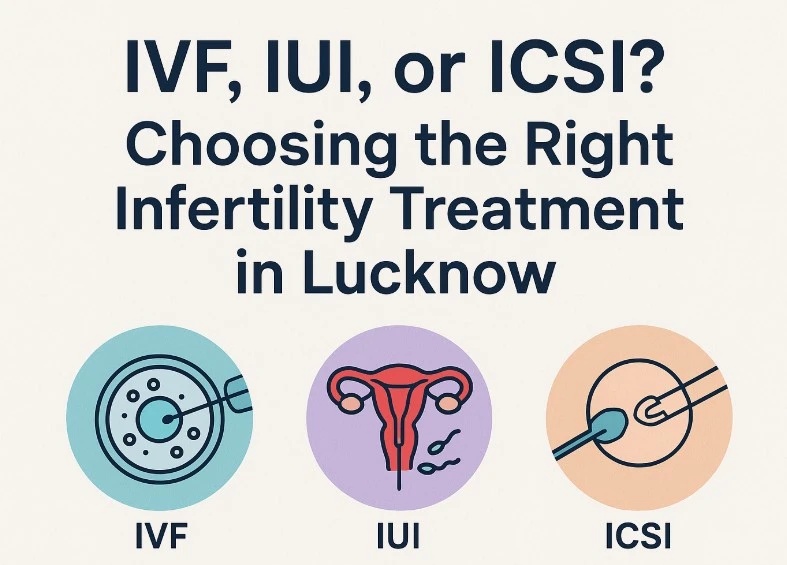
Infertility is an emotional and physical challenge faced by countless couples hoping to start a family. In a city like Lucknow, where medical infrastructure is steadily advancing and top fertility specialists are accessible, couples have more options than ever before. However, understanding which infertility treatment is best suited—IVF, IUI, or ICSI—can feel overwhelming.
This blog will help you navigate these options and make an informed decision when considering infertility treatment in Lucknow. Whether you are at the beginning of your journey or reassessing your treatment plan, knowing the differences between IVF, IUI, and ICSI is key to making the right choice—with the guidance of a skilled gynecologist in Lucknow.
Understanding the Basics: IVF, IUI, and ICSI
1. Intrauterine Insemination (IUI)
What is IUI?
Intrauterine Insemination is one of the simplest forms of assisted reproduction. It involves placing concentrated, healthy sperm directly into a woman’s uterus around the time of ovulation, increasing the chances of fertilization.
Who is it for?
IUI is typically recommended for:
· Mild male factor infertility (low sperm count or motility)
· Unexplained infertility
· Cervical factor infertility
· Couples using donor sperm
Advantages:
· Less invasive
· More affordable than IVF or ICSI
· Fewer side effects
Limitations:
Lower success rates compared to IVF
Not effective for severe male infertility or blocked fallopian tubes
2. In Vitro Fertilization (IVF)
What is IVF?
IVF involves stimulating the ovaries to produce multiple eggs, retrieving those eggs, fertilizing them with sperm in a lab, and then transferring one or more embryos into the uterus.
Who is it for?
IVF is often suggested when:
· IUI has failed
· The woman has blocked or damaged fallopian tubes
· The man has moderate to severe sperm issues
· Endometriosis is affecting fertility
· Advanced maternal age is a factor
Advantages:
· Higher success rates, especially for younger women
· Allows for embryo freezing
· Option for preimplantation genetic testing
Limitations:
· More invasive and costly
· Potential for multiple pregnancies if more than one embryo is transferred
· Emotional and physical demands due to medication and procedures
3. Intracytoplasmic Sperm Injection (ICSI)
What is ICSI?
ICSI is a specialized form of IVF. Instead of letting sperm fertilize the egg naturally in a lab dish, a single sperm is directly injected into the egg. The resulting embryo is then implanted into the uterus, similar to standard IVF.
Who is it for?
ICSI is often recommended for:
· Severe male infertility (low sperm count, poor motility or morphology)
· Previous IVF cycles with poor fertilization
· Use of frozen sperm or eggs
· Couples using surgically retrieved sperm (e.g., after vasectomy reversal)
Advantages:
· High fertilization rates even with very low sperm count
· Useful in cases of previous IVF failure
· Suitable for couples with sperm retrieval via testicular biopsy
Limitations:
· Costs more than standard IVF
· May not improve pregnancy chances if male infertility isn’t severe
· Requires advanced lab technology and experienced embryologists
How to Decide: IUI vs. IVF vs. ICSI
Choosing the right fertility treatment is a personal decision based on medical factors, emotional readiness, financial budget, and expert medical advice. Here’s a breakdown of key decision-making factors:
A. Medical History
Your reproductive health history plays a huge role. If you’ve been trying to conceive for a short time and have no major complications, IUI might be a good starting point. But if conditions like PCOS, blocked tubes, or severe male infertility exist, IVF or ICSI might be more suitable.
B. Age of the Female Partner
Age significantly affects fertility. Women under 35 typically have higher success rates with all forms of treatment. However, if you're over 35 and trying for a while, IVF may offer better chances of success than IUI.
C. Duration of Infertility
Couples trying for over two years may want to skip IUI and consider IVF or ICSI for quicker and more effective outcomes.
D. Budget Considerations
IUI is the most affordable option but comes with lower success rates. IVF and ICSI are costlier but may reduce the total number of cycles needed to conceive.
E. Expert Advice
Your gynecologist in Lucknow will conduct fertility evaluations such as hormone tests, ultrasounds, semen analysis, and more to suggest the best course of action. Personalized treatment based on test results often yields better outcomes.
Success Rates of IVF, IUI, and ICSI
Success rates vary based on several factors including age, cause of infertility, and clinic expertise. On average:
· IUI: 10–20% success per cycle
· IVF: 30–50% success per cycle (higher for younger women)
· ICSI: Similar to IVF, with higher fertilization success in male infertility cases
Why Opt for Infertility Treatment in Lucknow?
Lucknow has emerged as a leading city in Uttar Pradesh for advanced reproductive healthcare. With access to state-of-the-art IVF labs, affordable treatment packages, and experienced specialists, couples no longer need to travel to metros for quality infertility treatment.
Here’s why Lucknow is becoming a preferred destination:
· Cost-effective care without compromising on success rates
· Availability of skilled fertility experts and embryologists
· Advanced technologies like blastocyst culture, PGT, and laser hatching
· Comfortable environment with personalized attention
Importance of Choosing the Right Gynecologist in Lucknow
Success in fertility treatment not only depends on the technology used but also on the competence and experience of your fertility specialist. The best gynecologist in Lucknow will:
· Provide clear explanations of your options
· Tailor treatment plans to your health profile
· Support you emotionally through the process
· Monitor and manage all aspects of your fertility cycle
Look for a specialist with strong clinical credentials, a transparent success rate, and compassionate care values.
Deciding between IUI, IVF, or ICSI is not a one-size-fits-all approach. Each couple’s fertility journey is unique and deserves thoughtful consideration, thorough testing, and expert guidance. Whether you're dealing with unexplained infertility, male factor issues, or advanced age, the right treatment can dramatically improve your chances of conception.
Take the first step by consulting a qualified gynecologist in Lucknow who can guide you through diagnosis, counseling, and personalized treatment planning. It's essential to work with someone who stays updated with the latest reproductive technologies and approaches your case with both expertise and empathy.
If you're searching for the best gynecologist in Lucknow, consider Dr Mansi Dhingra, an accomplished Obstetrician and Gynaecologist who boasts over a decade of extensive expertise in her field. Notably, she holds a distinguished membership with the Royal College of Obstetrics and Gynaecology in London, UK. Visit Narika Women’s Health Clinic for your health and fertility needs—where compassionate care meets world-class expertise.