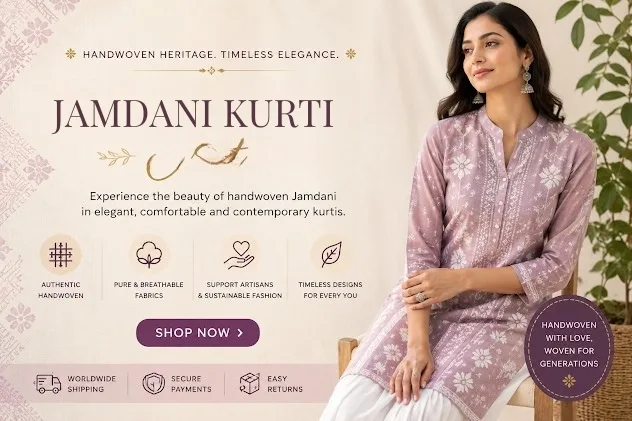
A Jamdani kurti with dupatta works for almost any occasion when you pair it right — festive events call for contrast dupattas and statement jewelry, office wear needs a matching dupatta styled simply over one shoulder, and weddings ask for layered draping with heavier accessories. The fabric's handwoven motifs already do the visual work, so the styling choices that matter most are the drape, the bottom wear, and how much jewelry you add.
This guide breaks down exactly how to style a Jamdani kurti for different occasions, which dupatta drapes suit which body type, what to pair it with, and how to pick a good one when you buy jamdani kurti online.
How Do You Style a Jamdani Kurti with Dupatta for Different Occasions?
The same kurti can look completely different depending on the occasion. Here's a quick breakdown:
- Office or daywear: Pair a solid or subtle Jamdani kurti with straight pants or a cotton palazzo. Drape the dupatta simply over one shoulder, letting it fall straight at the back. Skip heavy jewelry — jhumkas or small studs are enough.
- Festive occasions (Puja, Eid, Diwali): Choose a Jamdani kurti with a contrast-colored dupatta and go for a front pallu drape. Layer with a statement necklace, bangles, and a bindi to complete the festive look.
- Wedding functions: Style it with a silk or cotton-silk dupatta draped in the traditional Bengali style (pleated and pinned at the shoulder). Add temple jewelry, a maang tikka, and heels for a complete ethnic look.
- Casual outings: Wear the Jamdani kurti with jeans or straight-fit pants and let the dupatta hang loosely around the neck like a stole, or skip it altogether for a relaxed look.
What Should You Wear with a Jamdani Kurti?
Bottoms: Jamdani kurtis pair well with straight pants, palazzos, cotton churidars, or a simple pair of denims for a fusion look. Cotton and linen bottoms keep the overall outfit breathable, which matters since Jamdani is traditionally a summer-friendly weave.
Footwear: Juttis and kolhapuris work for daywear, while block heels or embellished sandals suit festive and wedding looks.
Jewelry: Because Jamdani motifs are intricate, less is often more. Oxidized silver jhumkas, a single statement necklace, or delicate gold-toned pieces let the weave stay the focal point instead of competing with heavy accessories.
Bag or clutch: A structured potli bag or a small embroidered clutch complements the handwoven texture better than a casual sling bag.
How Do You Drape a Dupatta with a Jamdani Kurti?
There are four drapes that consistently work well with Jamdani kurtis:
- One-shoulder drape: The most common and easiest — throw the dupatta over one shoulder and let it fall naturally at the back. Best for office wear and casual outings.
- Front pallu drape: Pin the dupatta at one shoulder so it falls in front like a saree pallu. This works well when the kurti has a plain body and the dupatta carries the main motif work.
- Bengali-style pleated drape: Since Jamdani originates from Bengal, this drape (pleated at the front and pinned at both shoulders) is a natural pairing for festive and wedding wear.
- Neck stole drape: Simply wrap the dupatta around the neck like a stole. This is the most casual option and works when you want the dupatta more for styling than tradition.
Jamdani Kurti vs Other Traditional Kurtis: How Is It Different?
FeatureJamdani KurtiChikankari KurtiBlock Print KurtiWeaving/Work techniqueHandwoven motifs on the loomHand embroidery on fabricHand-stamped printsFabric feelLight, airy, slightly crispSoft, breathable cottonVaries by base fabricBest suited forFestive wear, gifting, heritage occasionsEveryday and semi-formal wearCasual and daywearMotif styleGeometric and floral woven patternsFloral embroidery outlinesPrinted floral/geometric patternsPrice rangeMid to premium (labor-intensive weave)Mid-rangeBudget-friendlyOriginWest Bengal / BangladeshLucknowRajasthan/GujaratJamdani stands apart because the pattern is woven into the fabric itself rather than added afterward, which is part of why it carries a Geographical Indication (GI) tag recognizing its regional heritage and craftsmanship.
How Do You Choose the Right Jamdani Kurti Online?
When you buy jamdani kurti online, a few checks help you avoid a mismatched purchase:
- Check the fabric composition: Authentic Jamdani is traditionally woven in cotton or cotton-silk blends. Read the product description carefully.
- Look at motif placement: Genuine handwoven Jamdani has motifs that are part of the weave, not printed on top — zoom into product photos to check texture.
- Confirm sizing and fit: Since kurtis are cut differently across brands, always check the size chart rather than relying on standard S/M/L labels.
- Check dupatta inclusion: Not every Jamdani kurti online comes with a matching dupatta — confirm this in the product listing before ordering.
- Read return and exchange policy: Handwoven pieces can have slight batch-to-batch variation in color, so a clear exchange policy is useful.
Brands like Indeloom list their Jamdani kurti with dupatta sets with fabric details and sizing information upfront, which makes it easier to compare before purchasing — a good habit regardless of which brand you eventually buy from.
How Do You Care for a Jamdani Kurti?
- Hand wash in cold water with a mild detergent, or dry clean for the first few washes to preserve the weave.
- Avoid wringing the fabric; press out water gently instead.
- Dry in shade rather than direct sunlight to prevent color fading.
- Iron on a low setting, ideally with a thin cloth between the iron and the fabric.
- Store folded in a cotton or muslin cloth rather than a plastic cover, to let the fabric breathe.
Occasion-Wise Quick Styling Reference
OccasionDupatta DrapeBottom WearJewelryOfficeOne-shoulderStraight pantsMinimal studsFestiveFront palluPalazzoStatement necklaceWedding functionBengali pleatedCotton-silk pantsTemple jewelryCasual outingNeck stoleJeansOxidized jhumkasFrequently Asked Questions
Is a Jamdani kurti suitable for daily wear?
Yes, if the weave is on cotton and the motifs are minimal. Lighter Jamdani kurtis with subtle patterns work well for daily or office wear, while denser motif work is better saved for festive occasions.
Can I wear a Jamdani kurti without a dupatta?
Yes. Many people style Jamdani kurtis with just bottoms for casual or office settings, and add the dupatta only for festive or formal occasions.
What makes Jamdani different from regular embroidered kurtis?
The motifs on a Jamdani kurti are woven directly into the fabric during the weaving process, rather than embroidered or printed afterward, which is why it's recognized as a distinct handloom craft.
Is Jamdani kurti with dupatta good for gifting?
Yes, a Jamdani kurti with a matching dupatta is a popular gifting choice for festive seasons and weddings because it reflects heritage craftsmanship and works across multiple occasions.
How can I tell if a Jamdani kurti is handwoven and not printed?
Check the reverse side of the fabric — handwoven Jamdani motifs are visible (though slightly duller) on the back too, since they're woven through, while printed patterns appear only on the front.
Jamdani weaving is recognized as an Intangible Cultural Heritage craft, and the Geographical Indication (GI) registry maintained by the Government of India's Office of the Controller General of Patents, Designs and Trade Marks (ipindia.gov.in) documents its regional origin and protected status. Readers who want to verify GI-tagged handloom products before purchase can refer to the official GI Registry, Government of India.