
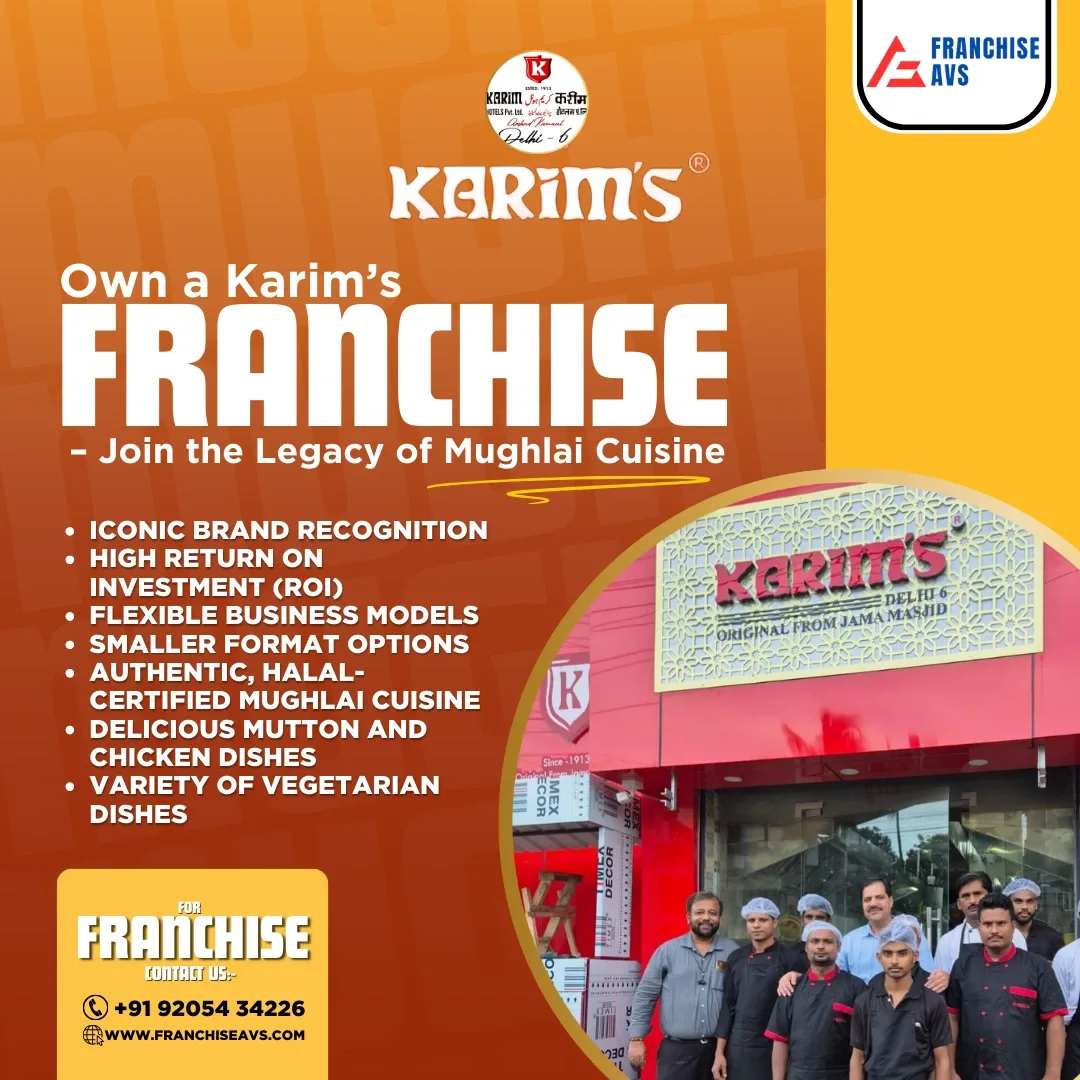
India's food industry continues to grow as customers look for diverse dining experiences, traditional flavors, and trusted food brands. Among India's many cuisines, Mughlai food has a special appeal because of its rich taste, aromatic spices, kebabs, curries, and biryanis. Karim’s is a well-established name associated with this culinary tradition, with a history that dates back to 1913.
For entrepreneurs interested in the restaurant and hospitality sector, the Karims Franchise can be explored as a potential business opportunity based on an established Mughlai food concept.
The Legacy of Karim’s
Karim’s began its journey in Delhi and developed its identity around traditional Mughlai cuisine. Over the years, the brand has become known for serving dishes inspired by India's rich culinary heritage.
A long-established food brand can have an advantage when entering new markets because customers may already be familiar with its cuisine and reputation. This can provide a foundation for franchise entrepreneurs who want to build a restaurant business around a recognized concept.
Traditional Mughlai Cuisine
Mughlai cuisine is popular for its distinctive flavors and variety. Kebabs, biryanis, curries, and other traditional dishes form an important part of this food culture.
Karim’s focuses on traditional Mughlai flavors, giving the restaurant a clear culinary identity. This can help differentiate an outlet from restaurants offering more general menus.
For customers, dining at a Mughlai restaurant can also provide an opportunity to enjoy traditional food in a comfortable restaurant environment.
Exploring the Karims Franchise
Starting an independent restaurant requires significant planning. Entrepreneurs need to develop the brand, prepare a menu, identify suppliers, recruit employees, establish operating procedures, and create marketing strategies.
The Karims Franchise allows prospective entrepreneurs to explore a restaurant model connected with an established food brand. Franchise support can provide guidance in areas such as restaurant setup, operations, training, marketing, and procurement.
This can be useful for entrepreneurs who want to enter the food industry with an existing business concept rather than developing an entirely new restaurant brand.
Choosing the Right Location
Location plays a major role in the performance of a restaurant. Entrepreneurs should carefully study the area before selecting a property.
Factors such as customer demographics, foot traffic, accessibility, parking, competition, nearby offices and residential areas, and rental costs should be considered. A location that matches the restaurant's target audience can help improve visibility and customer reach.
Proper location research can therefore be an important part of planning a franchise outlet.
Restaurant Setup and Management
Opening a restaurant involves more than simply preparing food. The outlet needs an appropriate layout, kitchen equipment, dining facilities, trained employees, inventory systems, and customer-service procedures.
A structured franchise model can provide entrepreneurs with guidance during the setup process. Once the restaurant is operational, effective management becomes essential for maintaining food quality, service standards, cleanliness, and customer satisfaction.
Training and Staff Development
Employees have a direct impact on the customer experience. Chefs need to understand food preparation and kitchen procedures, while service staff need to provide professional and friendly customer service.
Training can help employees understand their responsibilities and follow consistent restaurant procedures. Entrepreneurs should also focus on regular staff development to maintain service quality as the business grows.
Supply Chain and Procurement
Restaurants require a steady supply of ingredients and equipment. Efficient procurement helps prevent shortages and supports smooth daily operations.
For a restaurant based on traditional cuisine, consistency in ingredients and preparation is particularly important. A well-organized supply chain can help franchise partners manage their requirements and maintain operational efficiency.
Marketing a Restaurant Franchise
Marketing is another important part of restaurant growth. A new outlet needs to attract customers and establish itself within the local market.
Franchise entrepreneurs can use a combination of digital marketing, social media, local advertising, promotional offers, and customer engagement activities. An established brand identity can also support local marketing efforts.
Building a strong online presence is particularly useful because customers often use search engines, social media, and food platforms when deciding where to eat.
Benefits of Exploring a Karims Franchise
The Karims Franchise may be worth considering for entrepreneurs interested in the restaurant industry and traditional Indian cuisine.
Potential factors to evaluate include:
- Established Mughlai food concept
- Long-standing culinary heritage
- Recognizable brand identity
- Restaurant business model
- Training and operational guidance
- Marketing support
- Procurement and supply chain assistance
- Opportunities to expand into different markets
Entrepreneurs should evaluate these factors according to their individual business plans and financial capacity.
Growing Opportunities in the Food Industry
India's expanding cities and changing dining habits continue to create opportunities for restaurants. Customers are increasingly interested in both modern dining concepts and traditional cuisines.
Mughlai cuisine can benefit from this demand because it appeals to customers looking for flavorful and familiar Indian dishes. A restaurant brand with an established culinary identity can explore opportunities in cities where there is sufficient demand for this type of cuisine.
Important Considerations Before Investment
Although a franchise can provide an established concept, entrepreneurs should conduct proper research before investing.
Important factors include the total investment, franchise fee, property requirements, staffing expenses, equipment costs, operating expenses, royalty structure, marketing costs, and expected revenue. Local competition and customer demand should also be studied carefully.
Prospective franchisees should obtain the latest commercial details directly from the authorized representatives and review the franchise agreement before making a financial commitment.
Conclusion
Karim’s has built its identity around traditional Mughlai cuisine and a long-standing culinary heritage. Its association with popular dishes such as kebabs, curries, and biryanis gives the restaurant concept a distinctive position in the Indian food market.
For entrepreneurs interested in the restaurant and hospitality sector, the Karims Franchise can be explored as a potential opportunity to operate a business connected with an established Mughlai food concept.
With careful location selection, effective management, quality food, trained employees, and strong marketing, a restaurant franchise can be positioned to serve its target market effectively. However, every prospective investor should conduct independent financial and commercial due diligence and confirm the latest franchise terms before proceeding.