Modern commercial buildings often lean on aluminium curtain walls and big patches of architectural glass to keep that fresh, clean and modern look. But over time, exposure to sunlight, rain, pollution, moisture, and those constant shifts in temperature can make building facades fade, change colour, get scratched, or basically lose their original finish.
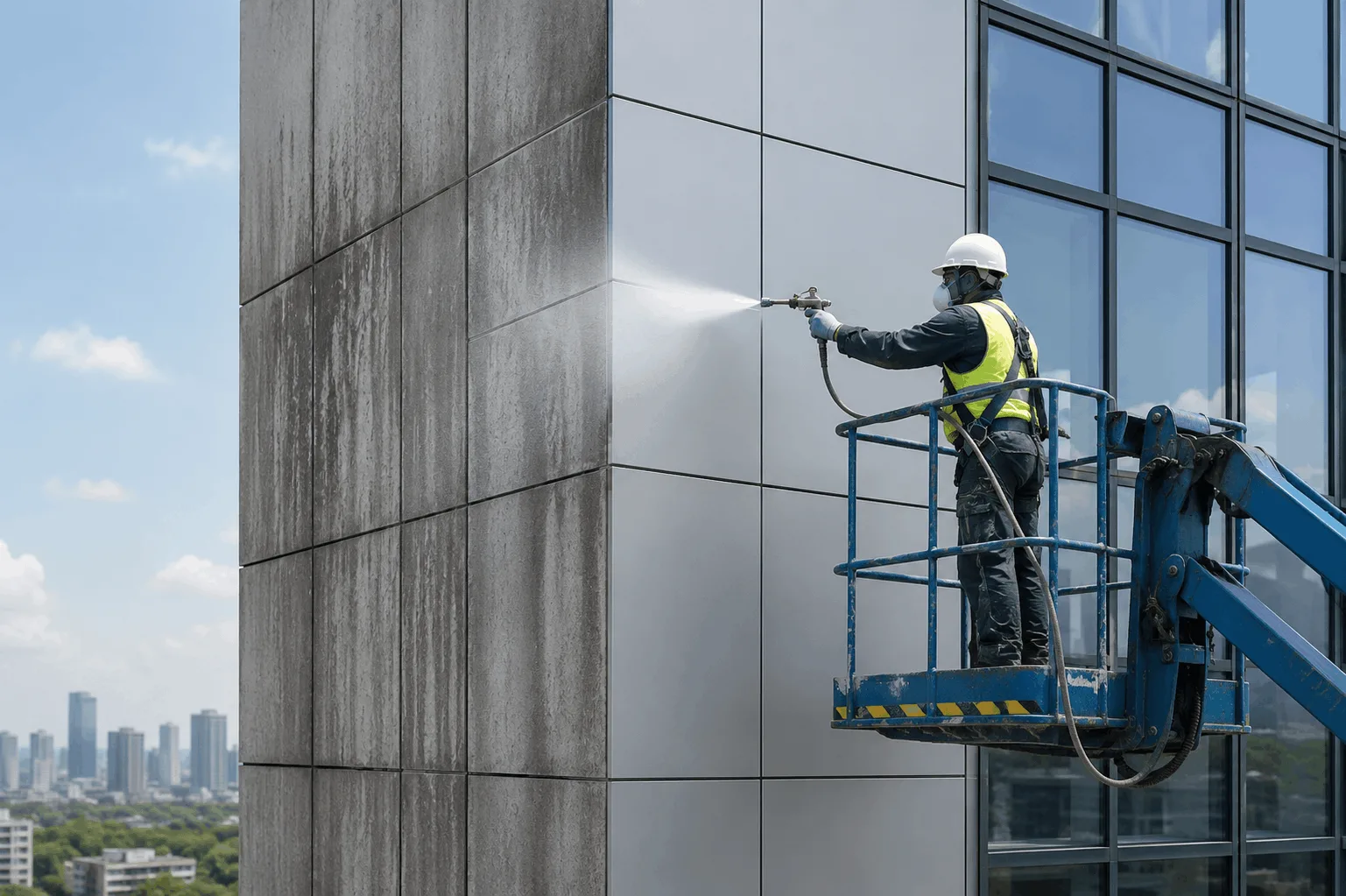
So does that mean the whole facade must be replaced? Not always, curtain wall spraying can be a practical route to revive and refresh worn aluminium surfaces, and it may help cut the cost plus the day-to-day disruption that usually comes with full replacement.
And when it is paired with things like anodised repairs, glass spraying, and a glass scratch removal system, facade restoration can tackle multiple exterior issues at once, without swapping out otherwise still serviceable components.
What Is Curtain Wall Spraying?
A specialised surface restoration process is curtain wall spraying used to refresh and refinish aluminium curtain wall frames, panels, doors, windows and other architectural metalwork. Instead of pulling off the existing facade and starting again, the surface is got ready in a careful way before a proper coating system is professionally applied.
In practice, this can help restore colour uniformity and improve the overall look of aluminium that has been weathered. Depending on the job, the right coatings can also give durability and added resistance against environmental wear, rain, sun, and general exposure.
For commercial property owners, this method is often a really practical option, especially if the curtain wall system is still structurally sound but has become a bit dated in appearance or is showing damage.
When Are Anodised Repairs a Better Option?
Can every damaged aluminium surface just be sprayed, done and dusted? A lot of architectural aluminium actually has an anodised surface, and it really takes specialist thinking.
For certain types of impact, deterioration, or just that visual mismatch, anodised repairs work well. You can suddenly notice it on anodised aluminium. The right repair approach depends on what the surface is like, the exact finish, where the problem is, and how far the damage goes.
For properties with anodised aluminium curtain walls, a professional evaluation can decide if local repairs make sense or if refinishing or yet another restoration option is the more sensible route.
Also, pairing specialist anodised restoration with wider curtain wall spraying can help achieve a more even facade, without automatically swapping out large areas of aluminium.
Can Glass Spraying Improve the Appearance of Existing Glass?
So, you fix the aluminium; it starts looking neat again, but the glass still feels a little dated. At that point glass spraying might offer another angle for transforming architectural glass in certain situations.
With specialist glass coatings you can change the look and tone, improve privacy levels, or adjust the whole visual impact of compatible glass surfaces. It can be a practical route for commercial refurbishment work, especially when swapping out large glazed areas would be costly and disruptive in the building.
That said, glass spraying really should be reviewed based on the glass type, its position, the finish you want, and how it will be used day to day. Proper preparation matters a lot, and the coating selection too, if you want something durable and visually consistent rather than patchy.
How Does a Glass Scratch Removal System Restore Damaged Glass?
Scratched glass makes a building look, well, neglected, even if the rest is in great shape. But does every pane that has scratches really have to be replaced? Often, in many suitable circumstances, a glass scratch removal system becomes a real alternative.
In general, glass scratch removal uses specialist techniques meant to lessen or remove specific scratches and surface imperfections on glass. The precise approach varies a lot; it depends on things like how deep the scratch is, what kind of glass it is, where the damage sits, and how the whole area is holding up.
Also, professional glass restoration can be especially beneficial for large commercial windows, shopfronts, office buildings, hotels, and similar sites. In those settings, replacing the glass may bring extra expense, difficulty getting to the panels, or downtime that disrupts daily operations.
How Can These Restoration Techniques Work Together?
Can one refurbishment project tackle aluminium and glass at the same time? Yeah, it can. A thorough facade restoration plan can blend multiple specialist methods, sort of in one go rather than separate little tasks.
For example, curtain wall spraying can refresh dull or faded aluminium frames, while anodised repairs can deal with matching damaged anodised areas. In the same way glass spraying can shift the look or enhance selected glass surfaces, and a glass scratch removal system can bring back glass that’s been marked by surface scratches.
With this integrated approach, property owners can look at the facade like one complete system, not like every damaged part is a replacement job all by itself.
Is Curtain Wall Spraying a Practical Solution for Faded Building Facades?
Most of the time yes, curtain wall spraying, can work wonders, especially when the existing aluminium curtain wall is still solid structurally but it looks dull or tired and just needs a cosmetic reset.
With the help of anodised repairs, plus glass spraying and even a glass scratch removal system, a specialist facade restoration approach can tackle both the aluminium and the glass in a more continuous way. It’s like a total re-finish, without immediately jumping to replacement.
For commercial and architectural sites, the real factor is picking the proper restoration method for each material and then making sure prep work and application are done by experienced people. When it’s planned well, the ageing facade can come back with a refreshed look, while you avoid unnecessary swapping out of serviceable building parts.