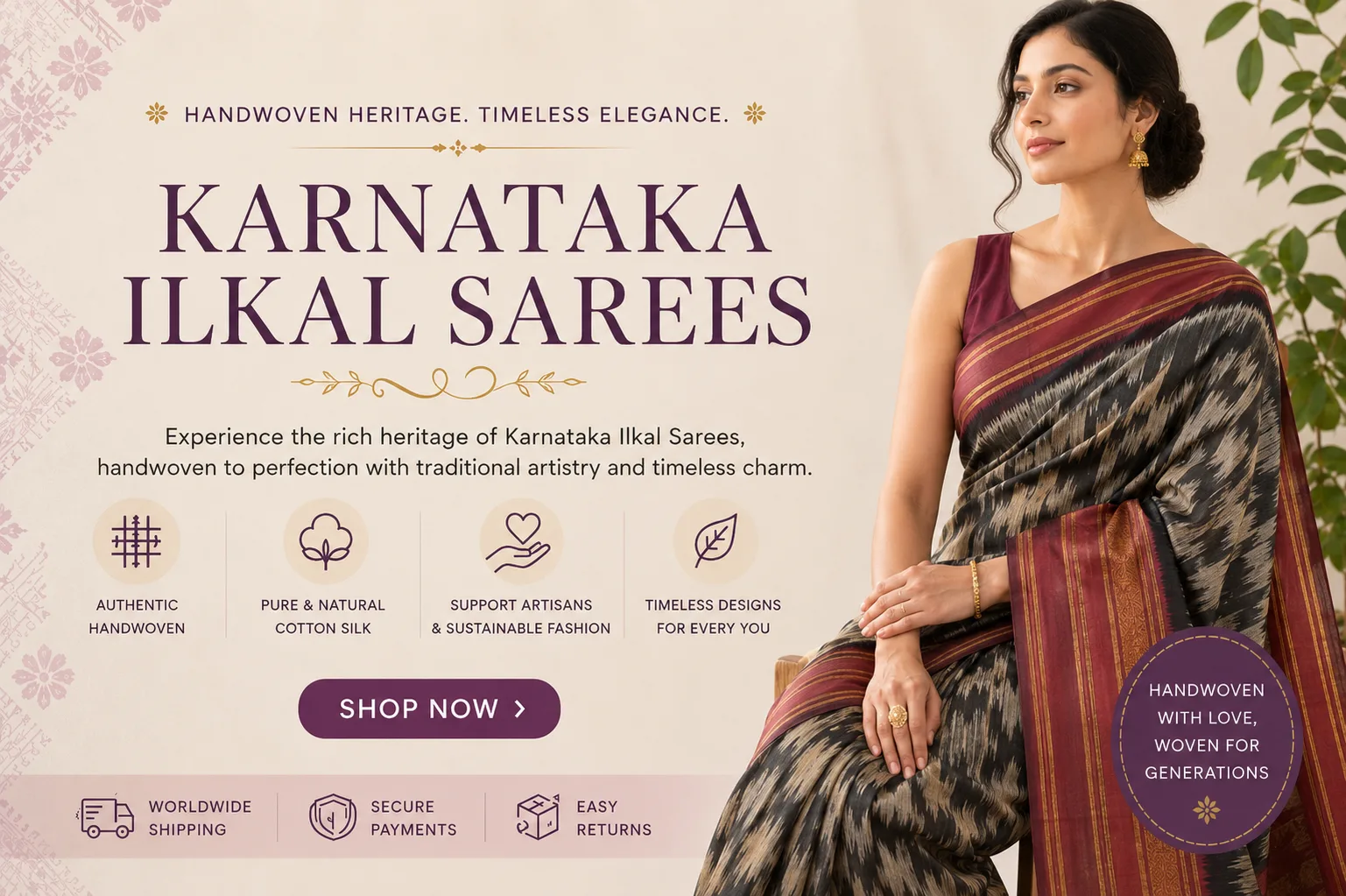
India's handloom heritage is a treasure trove of artistry, culture, and craftsmanship, and among its most celebrated creations are Karnataka Ilkal Sarees. Known for their distinctive borders, vibrant colors, and traditional weaving techniques, these sarees have been cherished by women for generations. They beautifully represent the cultural richness of Karnataka while continuing to remain relevant in modern fashion.
Whether worn during festivals, weddings, religious ceremonies, or special occasions, Karnataka Ilkal Sarees offer a perfect combination of tradition and elegance. Their unique weaving style and timeless appeal have made them one of the most recognizable handloom sarees in India, attracting saree enthusiasts from across the country.
The History of Karnataka Ilkal Sarees
The origin of Karnataka Ilkal Sarees can be traced back several centuries to the town of Ilkal in the Bagalkot district of Karnataka. This region became famous for its weaving communities, who developed a distinctive technique that set Ilkal sarees apart from other traditional handloom textiles. Over time, these sarees became an integral part of Karnataka's cultural identity.
Historically, Ilkal sarees were woven primarily for local women and were often associated with religious and cultural traditions. As their popularity grew, the craft expanded beyond regional boundaries. Today, Karnataka Ilkal Sarees are admired throughout India for their heritage value, craftsmanship, and enduring beauty.
What Makes Karnataka Ilkal Sarees Unique?
One of the most distinctive features of Karnataka Ilkal Sarees is their unique weaving technique known as the "Tope Teni" method. In this process, the body of the saree and the pallu are woven separately and then joined together using a traditional interlocking technique. This creates a strong and visually striking connection that is unique to Ilkal weaving.
Another characteristic feature is the contrast between the body, border, and pallu. Bright colors, geometric patterns, and traditional motifs give these sarees a bold yet elegant appearance. The signature red pallu with white patterns is particularly popular and remains a hallmark of authentic Ilkal sarees.
Traditional Weaving Techniques
The craftsmanship behind Karnataka Ilkal Sarees reflects generations of weaving expertise. Skilled artisans use handlooms to create intricate designs while maintaining the authenticity of traditional weaving methods. Every saree requires precision and patience, resulting in a garment that showcases exceptional artistry.
The weaving process involves careful selection of yarns, dyeing, pattern creation, and finishing. These techniques have been passed down through generations, ensuring that the cultural heritage of Ilkal weaving remains alive. The dedication of artisans plays a vital role in preserving this remarkable handloom tradition.
Popular Designs in Karnataka Ilkal Sarees
Karnataka Ilkal Sarees are available in a wide range of designs that cater to different preferences and occasions. Traditional designs often feature temple borders, geometric motifs, stripes, and checks that reflect the cultural aesthetics of the region. These classic patterns continue to remain highly popular among saree lovers.
Modern adaptations have introduced contemporary color combinations and subtle design variations while retaining the essence of traditional Ilkal weaving. This blend of heritage and innovation has helped attract younger generations who appreciate ethnic fashion with a modern touch.
Fabrics Used in Karnataka Ilkal Sarees
Traditionally, Karnataka Ilkal Sarees were woven using cotton, making them comfortable and practical for everyday wear. Cotton Ilkal sarees continue to be popular because of their breathability, durability, and ease of maintenance. They are particularly suitable for warm climates and long hours of wear.
In addition to cotton, silk and cotton-silk blends have become increasingly popular. These variations offer a more luxurious appearance and are often chosen for weddings, festive celebrations, and special occasions. The combination of fine fabric and intricate weaving enhances the elegance of the saree.
Choosing the Right Karnataka Ilkal Saree
Selecting the perfect Karnataka Ilkal Saree depends on the occasion, fabric preference, and personal style. For everyday use, lightweight cotton sarees with simple borders offer comfort and practicality. Their understated elegance makes them suitable for work, religious visits, and casual gatherings.
For festive and ceremonial occasions, richer colors and silk-blend varieties create a more sophisticated look. Paying attention to weaving quality, border details, and pallu design can help buyers choose an authentic saree that reflects the true beauty of Ilkal craftsmanship.
Styling Karnataka Ilkal Sarees for Traditional Occasions
Traditional occasions provide the perfect opportunity to showcase the cultural richness of Karnataka Ilkal Sarees. Pairing the saree with classic gold jewelry, traditional bangles, and ethnic footwear creates a graceful and timeless appearance. The vibrant colors and distinctive pallu naturally become the focal point of the outfit.
A well-chosen blouse can further enhance the overall look. Traditional silk blouses or contrast-colored designs complement the saree beautifully while maintaining its heritage appeal. This styling approach is ideal for festivals, pujas, and family celebrations.
Contemporary Styling Ideas
Modern fashion enthusiasts are finding new ways to style Karnataka Ilkal Sarees without compromising their traditional charm. Contemporary blouse designs, minimalist jewelry, and modern draping techniques can create a fresh and stylish appearance suitable for today's fashion landscape.
Many women also experiment with fusion styling by pairing Ilkal sarees with statement accessories and designer blouses. These creative interpretations allow younger generations to embrace traditional handloom fashion while expressing their individuality and personal style.
Why Karnataka Ilkal Sarees Remain Popular Today
The enduring popularity of Karnataka Ilkal Sarees can be attributed to their unique combination of heritage, comfort, and versatility. Unlike trend-driven fashion, these sarees possess a timeless quality that allows them to remain relevant across generations. Their cultural significance and handcrafted beauty continue to attract both traditional and modern consumers.
As awareness of sustainable fashion grows, handloom sarees have gained renewed appreciation. Choosing Karnataka Ilkal Sarees supports local artisans and helps preserve traditional weaving practices, making them a meaningful and responsible fashion choice.
Caring for Your Karnataka Ilkal Saree
Proper care is essential to preserve the beauty and longevity of handloom sarees. Cotton Ilkal sarees can generally be hand washed using mild detergent, while silk and cotton-silk varieties may require dry cleaning to maintain their texture and appearance.
Storing the saree in a clean, dry place and avoiding prolonged exposure to direct sunlight can help retain its color and quality. With proper maintenance, an authentic Ilkal saree can remain beautiful for many years and even become a cherished heirloom.
Frequently Asked Questions (FAQs)
What are Karnataka Ilkal Sarees?
Karnataka Ilkal Sarees are traditional handwoven sarees from the town of Ilkal in Karnataka, known for their distinctive borders, vibrant colors, and unique weaving techniques.
What makes Ilkal sarees unique?
Their signature Tope Teni weaving technique, contrast borders, and characteristic pallu designs distinguish them from other traditional sarees.
Which fabric is commonly used in Ilkal sarees?
Cotton is the most commonly used fabric, although silk and cotton-silk blends are also popular for festive and wedding wear.
Are Karnataka Ilkal Sarees suitable for daily wear?
Yes. Cotton Ilkal sarees are lightweight, breathable, and comfortable, making them ideal for everyday use.
Can Ilkal sarees be worn for weddings?
Absolutely. Silk and cotton-silk Karnataka Ilkal Sarees are popular choices for weddings, festivals, and cultural celebrations.
How can I identify an authentic Ilkal saree?
Authentic Ilkal sarees feature the traditional Tope Teni joining technique, distinctive borders, and handwoven craftsmanship.
Which colors are popular in Karnataka Ilkal Sarees?
Red, green, mustard, maroon, royal blue, and black are among the most popular colors used in traditional Ilkal sarees.
How should I wash an Ilkal saree?
Cotton varieties can usually be hand washed, while silk and blended fabrics are best maintained through dry cleaning.
Why are Karnataka Ilkal Sarees considered sustainable?
They are handcrafted using traditional handloom techniques that support artisan communities and promote sustainable fashion practices.
Why should I invest in a Karnataka Ilkal Saree?
A Karnataka Ilkal Saree offers timeless elegance, cultural significance, superior craftsmanship, and long-lasting value.
Conclusion
Karnataka Ilkal Sarees represent the perfect blend of history, artistry, and timeless fashion. Their distinctive weaving techniques, vibrant designs, and cultural significance have helped them remain one of India's most treasured handloom traditions. Whether chosen for daily wear, festive celebrations, or special occasions, these sarees continue to captivate women with their elegance and authenticity.
Investing in an authentic Karnataka Ilkal Saree is more than a fashion choice—it is a celebration of India's rich textile heritage. By supporting handloom craftsmanship, you not only enjoy a beautiful saree but also contribute to preserving a centuries-old weaving tradition for future generations.