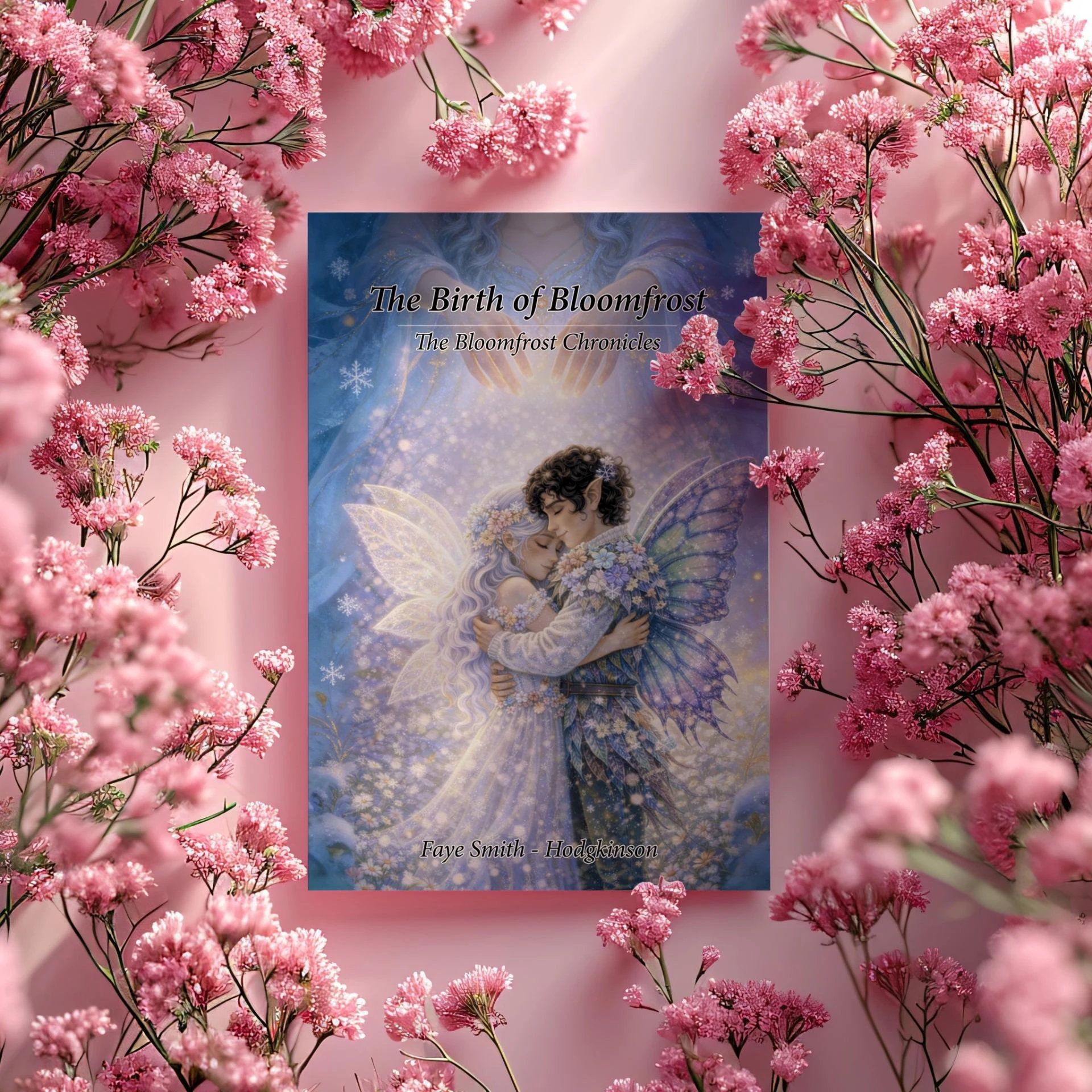

Fairy tales endure when they speak to truths that transcend time. The Bloomfrost Chronicles by Faye Smith-Hodgkinson achieve this by grounding their magic in emotional realism—especially in the delicate interplay between love, fear, and balance.
At the heart of Bloomfrost is a simple but profound question: what happens when love changes the world? The answer offered across The Birth of Bloomfrost and The Season of Courage is not idealized or simplistic. Change is possible—but it is rarely comfortable.
Bloomfrost itself is a metaphor for transformation handled with care. Snow and flowers coexist, not because rules were broken recklessly, but because they were reexamined thoughtfully. This new season does not erase winter or spring. It asks them to soften toward one another.
The second book explores what happens when that softness becomes frightening.
Fear spreads through the seasons not because Bloomfrost is harmful, but because it challenges certainty. The seasons begin to worry about what they might lose. This fear leads to imbalance—storms without rhythm, growth without patience, endings without kindness.
What makes Faye Smith-Hodgkinson’s approach particularly compelling is her refusal to villainize fear. Fear is portrayed as protective instinct taken too far. The danger lies not in feeling fear, but in letting it fracture connection.
Lumi and Aerin’s response to this fear is measured and courageous. They do not attempt to convince the world through words alone. They demonstrate balance by walking through each season, absorbing its lessons, and returning changed—but not diminished.
This journey reframes leadership. True leadership, Bloomfrost suggests, does not impose solutions. It models understanding.
When fear finally confronts Lumi and Aerin, the exchange is brief but transformative. The question—“What if love fails?”—forces a recognition that no choice comes with certainty. The answer—“Then we try again”—redefines strength as persistence rooted in care.
By allowing fear to exist without allowing it to rule, Bloomfrost achieves a rare balance. The world is not “fixed” in a traditional sense. It is steadied. The seasons listen again. Love does not dominate—it collaborates.
This is why Bloomfrost feels timeless. Its message aligns with contemporary conversations about change, resilience, and emotional intelligence while remaining accessible to younger readers through imagery and warmth.
In the end, The Bloomfrost Chronicles by Faye Smith-Hodgkinson remind us that balance is not static. It must be nurtured. Love must be tended. And courage often means choosing gentleness even when fear feels louder.
That lesson, like Bloomfrost itself, belongs to everyone.