
Medical disclaimer: This article is for general education only and is not a diagnosis or individual treatment plan. Symptoms, injuries and health histories differ. Speak with a licensed health professional for assessment and advice that is appropriate for you.
Choosing massage therapy ne calgary is easier when you start with the reason you want massage rather than the name of a technique. Relaxation, general muscle tension, sports-related soreness and a specific painful area can lead to different conversations with a massage therapist, and one style is not automatically best for every person.
Massage therapy includes a range of approaches to soft tissue. Evidence for specific conditions varies, and the National Center for Complementary and Integrative Health notes that research on massage for pain is mixed and often supports short-term rather than guaranteed long-term benefit. That makes an individual discussion about goals, health history, pressure preference and precautions important before treatment.
Start by defining what you want from massage therapy
The first useful question is not 'Which massage is strongest?' but 'What am I trying to address?' A person looking for relaxation may have different preferences from someone who has a localized area of muscle tension or someone who wants massage as one part of a broader rehabilitation plan.
AlphaOne's registered massage therapist calgary ne service page lists several options, including Swedish massage, deep tissue massage, sports massage and trigger point massage. Those labels can help organize the discussion, but the therapist still needs to consider your individual tolerance, health history and goals.
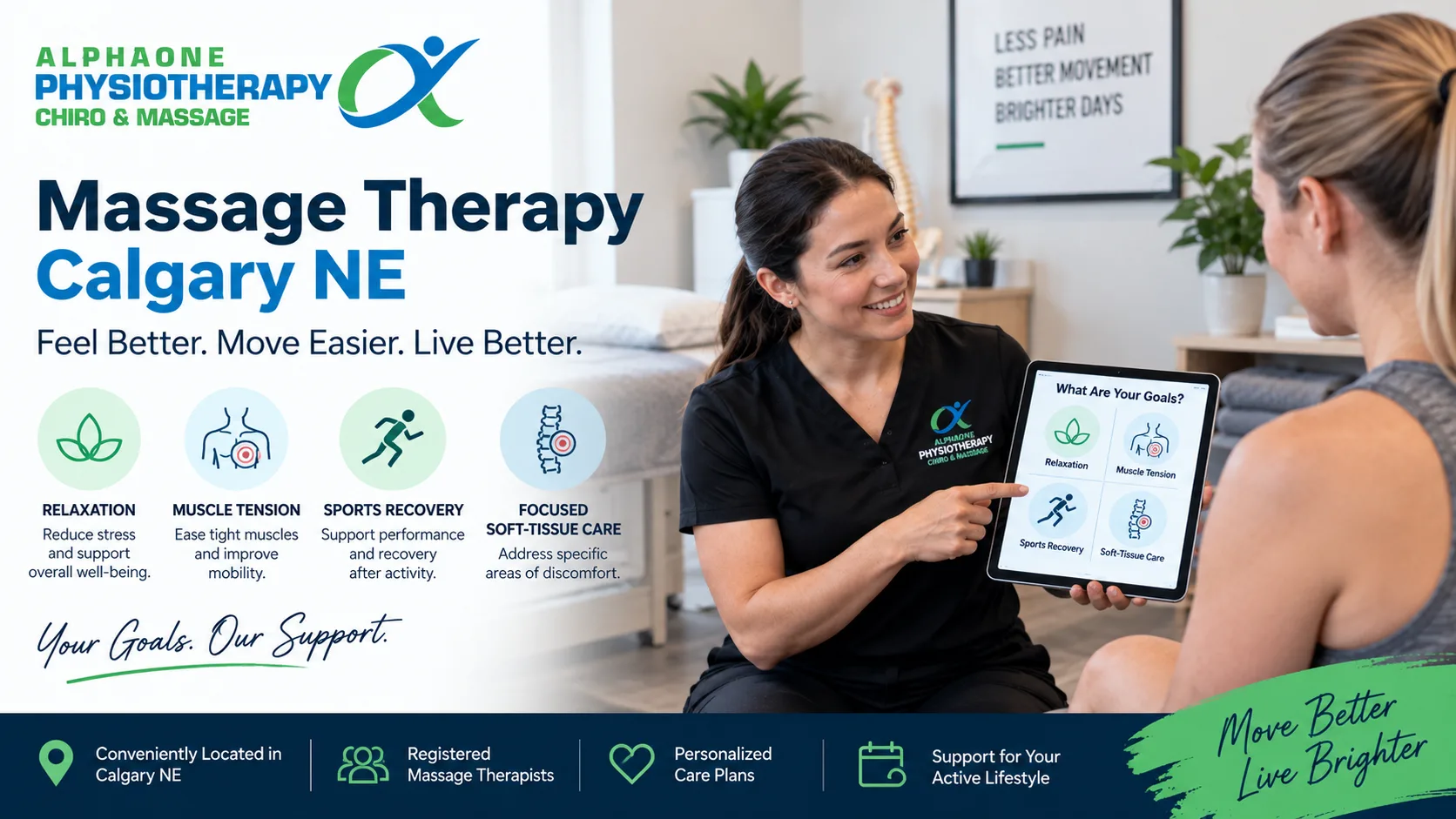
· Relaxation and general stress reduction.
· Muscle tightness or soreness after daily activity.
· A focused area of soft-tissue discomfort.
· Sports-related recovery preferences.
· Massage as a complementary service during a broader rehabilitation plan.
Massage Therapy NE Calgary does not have one 'best' technique
Different massage styles use different pressure, pacing and treatment focus, so the right choice depends on what you want and how your body responds. A deeper technique is not automatically more effective, and discomfort during treatment should not be treated as proof that a massage is working.
Swedish-style massage generally uses broader, flowing techniques and is commonly associated with relaxation. Deep tissue approaches use more focused pressure. Sports massage is usually framed around activity demands, while trigger point techniques focus attention on specific sensitive areas in soft tissue. These descriptions are useful for orientation, not for self-diagnosing the source of pain.
For a more detailed service comparison, AlphaOne's existing blog How to Choose the Best Massage Therapy in Calgary for Your Needs is a useful internal reference. The service page itself is the better destination when you are ready to review booking options.
When massage is part of pain management, keep expectations realistic
Massage can be considered for some pain-related goals, but the quality of evidence differs by condition. NCCIH reports that research suggests massage may offer short-term help for some types of low-back, neck or shoulder pain, while the overall evidence is not consistently strong.
That is a reason to avoid claims that massage will 'fix' the underlying cause of every pain problem. Persistent, severe, unexplained or worsening pain may need assessment by an appropriate health professional. The massage therapist should also know about relevant medical conditions, medications, recent surgery, acute injuries, skin problems or other issues that could affect whether massage is suitable.
If your main concern involves movement restriction, recurrent pain or return to activity, reviewing AlphaOne's physiotherapy in calgary services may help you understand when a physiotherapy assessment is more appropriate than choosing a massage technique on your own.
How massage can fit alongside physiotherapy or rehabilitation
Massage therapy can be one component of a broader plan, but it should have a defined purpose. If physiotherapy is addressing strength, mobility, movement tolerance or functional goals, massage may be considered separately for soft-tissue or relaxation goals rather than replacing active rehabilitation.
After a collision, for example, people should first understand the injury and insurance pathway that applies to them. AlphaOne provides a dedicated mva physiotherapy calgary page for accident rehabilitation. For other specialised needs, the clinic also provides information on pelvic floor physiotherapy calgary.
The important practical question is coordination. If you are seeing more than one provider, tell each provider what other care you are receiving. That helps avoid duplicated advice and gives you a clearer understanding of what each appointment is intended to accomplish.
What to ask a massage therapist before treatment
A short conversation before the session can make the experience safer and more useful.
1. What type of massage do you recommend for my stated goal, and why?
2. How much pressure do you expect to use, and can I ask you to change it during the session?
3. Are there any reasons I should postpone massage or seek another health assessment first?
4. What should I expect to feel during and after the session?
5. If my symptoms persist, when would you recommend that I speak with a physiotherapist, physician or another licensed professional?
A therapist should be comfortable with feedback. You should not feel pressured to tolerate pain, disclose more information than is relevant to safe care, or agree to a treatment approach you do not understand.
Common mistakes when choosing massage therapy
· Choosing the deepest pressure because it sounds more therapeutic.
· Using massage to delay assessment of severe, unexplained or worsening symptoms.
· Assuming a massage therapist can guarantee a specific medical outcome.
· Booking a style based only on a trend or social-media recommendation.
· Ignoring how massage fits with physiotherapy, exercise, medical care or an accident-rehabilitation plan you are already following.
Key takeaways
· Choose a massage style by goal, health context and pressure preference.
· The evidence for massage varies by condition, so keep expectations realistic.
· Communicate discomfort and preferences during the session.
· Use massage as part of a coordinated care plan when another condition or rehabilitation goal is involved.
FAQ
What type of massage should I choose for muscle tension?
The appropriate technique depends on where the tension is, your health history, pressure tolerance and whether there is an underlying injury or movement problem. Discuss the goal with a qualified massage therapist rather than choosing only by the name of the technique.
Is deep tissue massage always better for pain?
No. More pressure is not automatically better, and massage should not be judged by how painful it feels. Evidence for massage varies by pain condition, and persistent or worsening pain may require assessment by another health professional.
Can massage therapy be combined with physiotherapy?
Yes, in some care plans massage and physiotherapy can be used for different goals. The providers should understand what other care you are receiving so that the plan is coordinated and each service has a clear purpose.
How often should I get massage therapy?
There is no single schedule that is appropriate for everyone. Frequency should depend on your goals, response, health status, therapist recommendations and any broader rehabilitation plan rather than a fixed package.
Choose massage by purpose, not by marketing
A sensible way to choose massage therapy ne calgary is to identify the goal of the session, discuss your health context and preferences, and select a technique with the therapist rather than assuming one style is universally superior. If pain or restricted function is the main problem, consider whether a physiotherapy assessment should also be part of the conversation.