
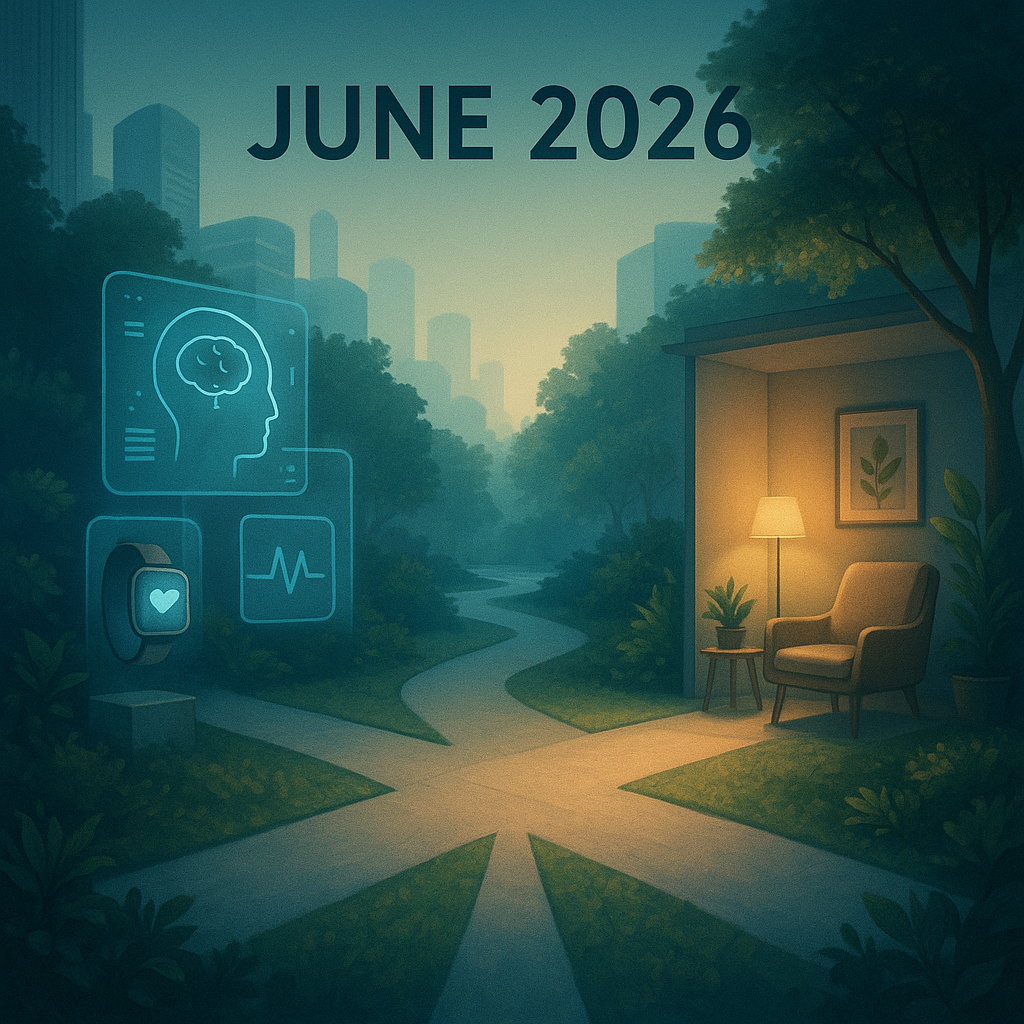
Reimagining Mental Health: A June 2026 Landscape Snapshot
On a warm June morning in 2026, the global mental health community stands at a pivotal juncture. Recent World Health Organization reports estimate that nearly 1 in 5 adults worldwide experience some form of mental health disorder annually — a figure unchanged yet starkly persistent despite advances in medicine and technology. Around the same time, a surge in digital therapeutics, AI-driven diagnostics, and destigmatization efforts are reshaping how society understands and manages mental wellness. This article traces the journey to this moment, analyzes present developments, and explores what lies ahead for mental health care as of June 2026.
Tracing the Roots: How Past Trends Set Today’s Context
Mental health has historically battled invisibility and stigma. Until the early 2020s, societal and systemic barriers often kept mental health care marginalized compared to physical health. The COVID-19 pandemic (2020–2022) drastically accelerated awareness and demand for mental health services globally, as isolation, economic uncertainty, and health anxieties compounded psychological distress. Governments and private sectors responded with unprecedented funding; however, gaps in access and quality remained.
By 2024, widespread adoption of teletherapy and digital mental health platforms had become mainstream. This shift was accompanied by growing recognition that social determinants — such as housing, employment, and social inclusion — deeply influence mental health outcomes. Additionally, advances in neuroscience illuminated the complex biological underpinnings of disorders like depression, anxiety, and PTSD, spurring innovation in targeted pharmacotherapy.
Yet, despite these advances, disparities persisted. Marginalized communities, rural populations, and low-income groups often faced limited access to quality care. According to the National Institute of Mental Health (NIMH) data from 2025, only 60% of individuals diagnosed with a mental health condition received treatment within the past year, highlighting ongoing systemic challenges.
Quantifying the Crisis and Progress: Data-Driven Analysis in 2026
Data from multiple global health agencies and academic institutions reveal a mixed picture this June. The following key figures underscore the complexity:
- Prevalence: Approximately 18% of adults globally report symptoms consistent with anxiety or depressive disorders, with youth (ages 15–24) disproportionately affected at 25%.
- Access to Care: Telehealth platforms now serve 45% of mental health patients in high-income countries, but only 15% in low- and middle-income countries.
- Workplace Mental Health: Corporate adoption of mental wellness programs increased by 30% in the last two years, yet stigma and lack of accommodations remain barriers for employees.
- Investment Trends: Venture capital funding for mental health startups reached $4.7 billion in 2025, a 20% increase from 2024, emphasizing technological innovation.
The rise of AI-assisted diagnostics is a notable breakthrough. Algorithms trained on millions of anonymized patient records now aid clinicians in early detection and personalized treatment plans, improving outcomes by an estimated 15%, according to the Journal of Clinical Psychiatry’s latest meta-analysis.
"The integration of artificial intelligence into mental health care has moved us beyond symptom management toward predictive and preventive strategies," says Dr. Helena Mertz, a leading psychiatrist and researcher.
Simultaneously, the global mental health workforce remains insufficient. WHO estimates a shortage of 20 million mental health professionals worldwide, underscoring the critical need for scalable solutions.
June 2026 Developments: Innovations and Policy Shifts Redefining Care
This month witnessed several landmark events shaping mental health care’s trajectory. The United Nations convened a special session on Global Mental Wellness, resulting in a renewed commitment to integrate mental health into universal health coverage frameworks by 2030. Key policy shifts include expanded funding for community-based care and incentives for mental health workforce training in underserved regions.
On the technology frontier, a consortium of European and North American companies launched MindSync, a pioneering platform combining virtual reality (VR) exposure therapy with AI-driven progress monitoring. Early clinical trials demonstrate promising results in treating PTSD and phobias, with patient adherence rates nearly doubling traditional methods.
Furthermore, social media platforms have introduced enhanced mental health support features after mounting pressure from advocacy groups. These include AI-powered mood tracking and crisis intervention tools embedded within user interfaces, aiming to reduce online harms and facilitate timely access to resources.
In the pharmaceutical arena, the approval of a new class of neuro-modulatory drugs targeting synaptic plasticity marks a significant advance. These medications offer alternatives for treatment-resistant depression, a condition affecting roughly 30% of patients, according to industry reports.
"These innovations signify a holistic approach—melding technology, policy, and pharmacology—to tackle mental health challenges on multiple fronts," observes Dr. Sanjay Patel, policy analyst at the Global Mental Health Initiative.
Voices from the Field: Expert Perspectives and Industry Impact
Experts across disciplines agree that mental health care in 2026 is entering an era defined by integration and personalization. Dr. Mertz emphasizes the importance of embedding mental health within broader health and social services, noting, "Isolated interventions can only achieve limited impact; sustainable mental wellness demands cross-sector collaboration." Similarly, Dr. Patel highlights the economic dimension: "Employers recognize mental health as a critical productivity factor, driving investments in workplace interventions but also demanding measurable outcomes."
Industry leaders in technology stress ethical considerations. MindSync’s CEO, Laura Chen, comments, "Balancing innovation with privacy and equity is paramount. Our goal is to democratize access without compromising patient autonomy or data security." Meanwhile, advocacy groups caution against overreliance on digital tools, urging continued investment in human-centered care.
Insurance models are adapting, with more payers covering digital therapeutics and preventive mental health services. However, reimbursement remains uneven globally, limiting equitable access. Nonprofit organizations continue to fill gaps, particularly in low-resource settings, often through community health worker programs.
These dynamics are reshaping the mental health ecosystem, fostering new partnerships between clinicians, technologists, policymakers, and patients themselves.
Looking Ahead: What to Watch in Mental Health Beyond June 2026
As we move beyond this pivotal month, several trends warrant close attention. Mental health equity remains paramount; expanding culturally competent care and addressing social determinants will be critical to closing disparities. The potential of AI and VR technologies is vast but demands rigorous validation and ethical oversight.
Policy momentum from the UN session could translate to concrete funding and legislative changes, especially in developing countries. The role of schools and workplaces as mental health promoters is expected to grow, with innovative programs designed to build resilience from an early age.
Pharmaceutical innovation continues apace, with gene therapies and microbiome research poised to unlock new treatment avenues. Partnerships between public and private sectors will likely accelerate these developments, supported by data sharing and open science initiatives.
For individuals, the emphasis on self-care and peer support is rising, supported by apps and social platforms designed to foster community and reduce isolation. Yet, experts caution that technology complements rather than replaces traditional therapeutic relationships.
- Expand access through hybrid care models combining digital tools and in-person support.
- Invest in workforce training focused on cultural competence and trauma-informed care.
- Strengthen global data governance frameworks to protect patient privacy.
- Monitor long-term outcomes of emerging therapies to refine best practices.
- Promote mental health literacy campaigns targeting youth and marginalized groups.
Readers interested in intersecting health trends may also find valuable insights in our coverage of Green Tech's Transformative Momentum and EdTech Innovations Transforming Learning, both illuminating how broader societal shifts impact wellbeing.
Case Studies: Real-World Innovations in Mental Health Care
Examining concrete examples of innovation helps illustrate the evolving landscape. In Canada, the province of British Columbia launched the "MindBridge" initiative in early 2026, integrating AI-powered screening tools into primary care clinics. Preliminary data indicate a 25% increase in early identification of depression and anxiety, particularly among young adults.
In Kenya, community health workers trained via mobile platforms provide culturally tailored counseling in rural areas, overcoming traditional barriers. This program, supported by international NGOs, reports improved treatment adherence and reduced stigma within participating communities.
Meanwhile, in Japan, corporate giant NipponTech introduced mandatory mental wellness days coupled with on-site digital therapy kiosks for employees. Internal surveys reveal a 40% reduction in reported burnout cases over six months, highlighting workplace mental health as a strategic priority.
Such case studies exemplify the promise and diversity of approaches tailored to local needs and resources, reinforcing that no single solution fits all contexts.