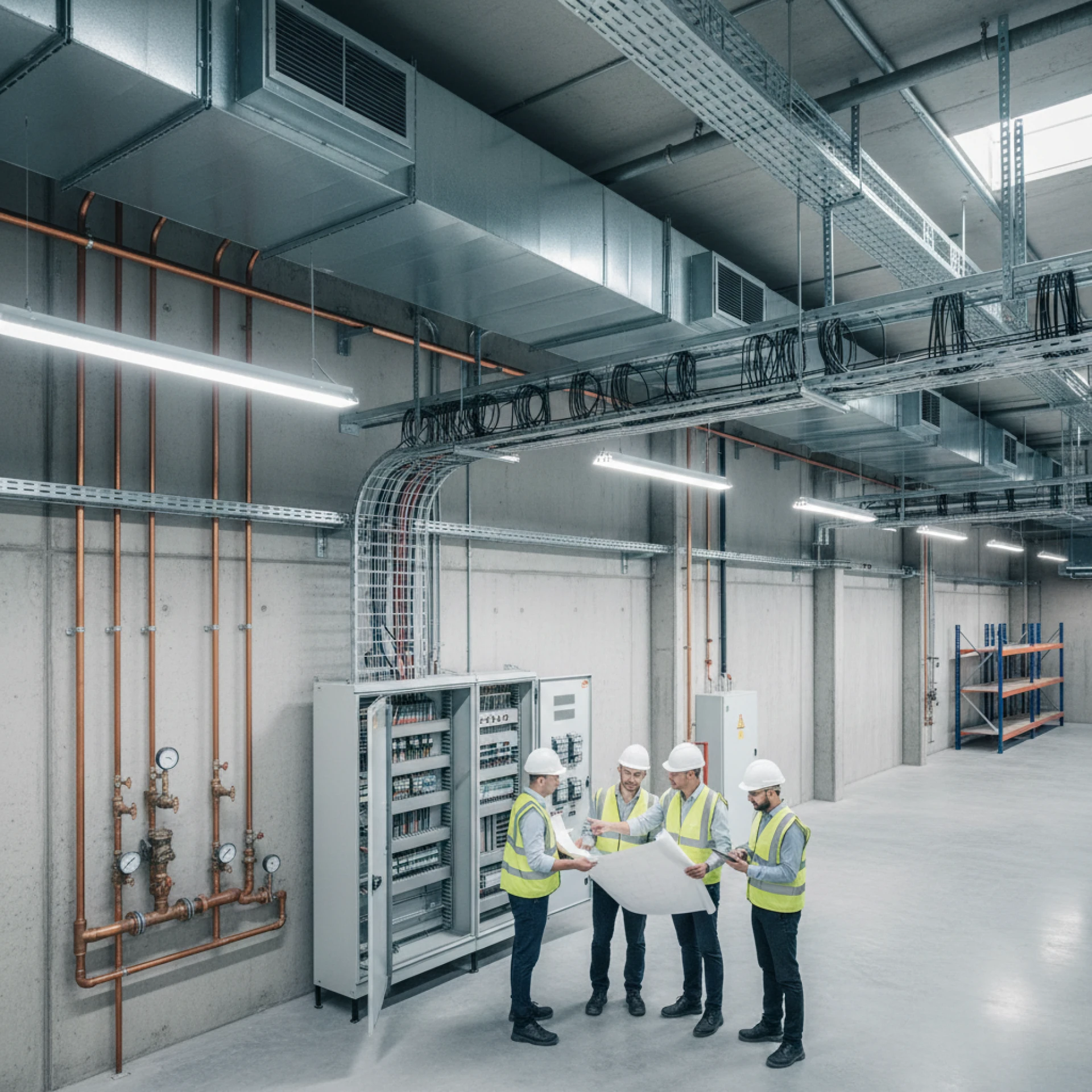
Modern infrastructure is no longer judged only by its visual appeal. Today, true value lies in how efficiently a facility operates and how effectively it controls long-term operational costs. For industrial plants, warehouses, logistics parks, and commercial buildings, the real drivers of performance often remain unseen, embedded behind walls, above ceilings, and within service corridors.
This is where MEP Services (Mechanical, Electrical, and Plumbing) play a critical role. When planned and executed correctly, MEP systems significantly reduce energy consumption, minimize maintenance expenses, and enhance the overall lifespan of infrastructure assets. Poorly designed or improperly implemented MEP systems, however, can quickly become major cost liabilities.
A strategic, end-to-end approach to MEP design and execution enables organizations to achieve higher reliability, better efficiency, and long-term cost control, making MEP services a key factor in maximizing infrastructure ROI.
Why MEP Services Directly Impact Cost and Performance
MEP systems represent one of the largest contributors to both capital investment and ongoing operating expenses in any building. These systems run continuously and influence everything from energy usage and safety to comfort and productivity.
A well-executed MEP service ensures:
- Reduced energy and utility bills
- Lower breakdowns and maintenance costs
- Improved system reliability and uptime
- Strong compliance with safety and regulatory standards
- Increased long-term asset value
In contrast, inefficient mechanical, electrical, and plumbing systems result in energy losses, frequent repairs, and operational downtime, especially in high-demand environments such as warehouses and manufacturing facilities.
Common Cost Leaks Caused by Poor MEP Planning
Many infrastructure projects face avoidable cost overruns because MEP is treated as a secondary activity rather than a core design component.
1. Inefficient Energy Design
Oversized HVAC systems, poorly planned lighting, and inefficient power distribution lead to excessive energy consumption throughout a building’s lifecycle.
2. Frequent Maintenance and Breakdowns
Incorrect equipment selection and substandard installation increase wear and tear, leading to higher maintenance costs and shorter equipment life.
3. Operational Downtime
Electrical failures, plumbing leaks, or HVAC breakdowns can halt operations, disrupt tenants, and directly impact revenue.
4. Retrofitting and Rework Costs
Lack of coordination between civil, architectural, and MEP teams often results in system clashes and expensive retrofits after project completion.
This is why MEP planning must begin at the design stage, not after construction is underway.
How Professional MEP Services Cut Operational Expenses
Optimized MEP Design
Professional MEP engineering focuses on right-sizing systems based on actual load requirements, preventing unnecessary capital spend and reducing long-term energy costs.
Energy-Efficient Systems
Modern HVAC solutions, efficient electrical layouts, LED lighting, and water-saving plumbing systems significantly reduce monthly operating expenses.
Integrated Design and Execution
Coordinated MEP installation ensures seamless integration of mechanical, electrical, and plumbing systems, minimizing errors, delays, and inefficiencies.
Preventive Reliability
High-quality execution results in stable systems with fewer failures, reducing maintenance costs and extending equipment life.
Core Elements of MEP Services
Effective MEP solutions are built around three essential infrastructure systems:
1. Mechanical Systems
- HVAC and ventilation systems
- Heating and cooling solutions
- Fire protection and smoke management
Efficient mechanical systems ensure comfort while controlling energy consumption.
2. Electrical Systems
- Power distribution and load management
- Lighting systems and intelligent controls
- Backup power and safety systems
Optimized electrical systems reduce power losses and enhance reliability.
3. Plumbing Systems
- Water supply and pressure systems
- Drainage and sanitation
- Water efficiency and waste management
Well-designed plumbing systems prevent leaks, wastage, and long-term structural damage.
Together, these systems form the operational backbone of any modern building.
MEP Services for Industrial, Commercial, and Warehouse Projects
Industrial MEP Services
Industrial facilities require high-capacity, robust MEP systems designed for continuous operations, safety compliance, and production efficiency.
Warehouse MEP Services
Warehouses demand energy-efficient lighting, optimized HVAC, fire safety integration, and reliable power systems to maintain uninterrupted operations.
Commercial MEP Services
Commercial buildings rely on high-performance MEP systems to deliver comfort, code compliance, and operational efficiency.
Across all these environments, MEP performance directly affects productivity and operating costs.
Why Turnkey MEP Services Deliver Better ROI
Choosing a turnkey MEP services provider simplifies project execution and improves outcomes.
A turnkey approach includes:
- MEP consultancy and design
- System selection and engineering
- Installation, testing, and commissioning
- Coordination with civil and architectural teams
- Maintenance-ready and future-proof solutions
This approach eliminates coordination gaps, reduces risks, and provides single-point accountability, resulting in better cost control and faster project delivery.
Why BuildMyInfra Is a Trusted MEP Services Provider
At BuildMyInfra, MEP is treated as a strategic performance driver, not just a contracting activity.
Our end-to-end MEP services include:
- Efficient MEP design and execution
- Industrial and commercial MEP solutions
- Warehouse-specific MEP services focused on efficiency
- Turnkey MEP system implementation
- Compliance-driven, future-ready designs
By aligning mechanical, electrical, and plumbing systems with business operations, BuildMyInfra helps clients reduce costs while improving infrastructure performance.
The Future of MEP Services: Smart, Efficient, and Sustainable
The future of MEP engineering lies in:
- Energy-efficient system design
- Smart building integration and automation
- IoT-enabled monitoring and controls
- Sustainable, low-maintenance solutions
Facilities that adopt modern MEP principles today will benefit from lower operating costs, higher resilience, and long-term sustainability.
Conclusion: MEP Services Are the Foundation of Cost-Efficient Infrastructure
MEP systems are not hidden expenses, they are long-term cost controllers. They determine how efficiently a building operates throughout its lifecycle. Strategic planning and professional execution of MEP services reduce energy consumption, minimize maintenance costs, improve system lifespan, and maximize infrastructure performance.
BuildMyInfra turnkey MEP solutions deliver infrastructure that is reliable, cost-effective, and future-ready. Investing in the right MEP partner is not an expense, it is a smart, long-term investment.