Smart glasses have moved beyond being experimental gadgets and are becoming practical wearable technology. Meta’s smart glasses, including the Ray-Ban Meta line and newer Meta AI glasses, combine familiar eyewear with cameras, microphones, speakers, wireless connectivity, and artificial intelligence. Instead of requiring users to constantly reach for a smartphone, these glasses are designed to provide information, capture content, and communicate through hands-free interactions.
As of 2026, Meta’s glasses have expanded considerably from their original role as wearable cameras and headphones. Newer generations offer improved cameras, longer battery life, stronger AI capabilities and, in some models, display technology.
What Are Meta Smart Glasses?
Meta smart glasses are wearable devices designed to look and feel much like conventional sunglasses or optical glasses. The Ray-Ban Meta generation was developed by Meta in partnership with EssilorLuxottica, combining Ray-Ban's eyewear design with Meta's technology.
Unlike virtual-reality headsets, traditional Ray-Ban Meta glasses do not place a large digital screen in front of your eyes. Instead, they use cameras, open-ear speakers, microphones and AI to interact with the surrounding environment while allowing you to see normally.
The latest generations have introduced improvements in battery life, camera quality and AI capabilities. Ray-Ban Meta Gen 2, for example, offers an ultra-wide 12MP camera capable of higher-quality 3K video and improved battery performance.
Meta has also introduced Meta Glasses with dedicated hardware controls, open-ear audio, advanced microphones and more than eight hours of battery life.
How Do Meta Smart Glasses Work?
The basic operation of Meta smart glasses involves several technologies working together.
Cameras Capture Your Point of View
A built-in camera allows the glasses to capture photographs and videos from the wearer's perspective. Instead of taking out a smartphone, you can use a physical capture button or voice command.
This makes the glasses useful for recording walks, trips, events, cooking demonstrations and everyday moments. Earlier Ray-Ban Meta models introduced an ultra-wide 12MP camera and 1080p video recording, while newer generations have improved video resolution.
The camera can also become an input for Meta AI. When you ask questions about something you're looking at, the system can use an image from the camera to understand the scene and provide an answer.
Microphones Listen to Your Commands
Multiple microphones are built into the glasses. They are used for phone calls, voice messages, video recording and interaction with Meta AI.
Advanced microphone arrays can help reduce wind and background noise, making conversations and voice commands easier to understand. Meta says its newer glasses use advanced wind-noise reduction for calls, messaging and voice control.
You can therefore interact with the glasses without constantly touching them. Depending on the model and software, users can activate Meta AI using a voice command or a dedicated button.
Open-Ear Speakers Deliver Sound
The speakers are positioned so that users can hear music, podcasts, calls and AI responses without covering their ears.
This open-ear approach is particularly useful when walking, cycling or working because users can remain aware of surrounding sounds. Meta has continued improving directional audio and reducing sound leakage in its newer glasses.
AI Connects Everything
Artificial intelligence is one of the biggest differences between modern Meta glasses and conventional smart eyewear.
Meta AI can answer questions, provide information, help with creative tasks and interact with visual information. For example, you could look at a landmark and ask what it is, point the camera toward a menu and request a translation, or ask about an object in front of you.
Meta's visual AI capabilities allow the glasses to use what the camera sees when responding to certain requests.
What Can Meta Smart Glasses Do?
Take Photos and Videos
One of their most obvious features is hands-free photography.
You can capture moments without holding a phone. This is particularly useful for activities where using a smartphone is inconvenient, such as travelling, hiking, cooking or attending an event.
Captured content can be transferred to a connected smartphone, where users can review, edit and share it.
Make Phone Calls
The glasses can function as a hands-free calling device. Their microphones capture your voice while the open-ear speakers allow you to hear the other person.
This means you don't necessarily need to hold a phone next to your ear during a conversation.
Send Messages
Voice interaction allows users to communicate without typing on a smartphone. Meta has also added support for sending voice messages through services such as WhatsApp and Messenger on supported configurations.
This can be useful when your hands are occupied or when you want to remain focused on an activity.
Listen to Music and Podcasts
Meta smart glasses can also act as lightweight audio devices. Users can listen to music, podcasts and audiobooks through the built-in speakers.
Meta has expanded integrations with audio services, making the glasses more useful as everyday wearable entertainment devices.
Ask Meta AI Questions
Meta AI gives the glasses an interactive assistant.
You can ask general questions or, where supported, ask about things in your surroundings. The AI can provide information about objects, locations, signs and other visual subjects.
For example, a traveller could ask the glasses to identify a landmark, while someone shopping could ask for suggestions based on products they are viewing.
Translate Languages
Translation is another important application.
Meta has introduced real-time translation capabilities that can allow users to hear translated speech through the glasses. In India, Meta has also expanded language support, including Hindi interaction with Meta AI.
These features can make smart glasses particularly useful for travel and multilingual conversations.
Livestream and Share Your View
Meta's glasses can also connect the physical world with social media. Supported models allow users to livestream directly to platforms such as Facebook and Instagram.
This means viewers can see the experience from the wearer's perspective instead of relying on a traditional smartphone camera.
Video Calling
Supported features allow users to share their point of view during video calls through services such as WhatsApp and Messenger.
Instead of pointing a phone camera at something, the glasses can provide a hands-free first-person perspective.
Do Meta Smart Glasses Have a Display?
This is an important distinction because not every Meta smart-glasses product works in the same way.
Traditional Ray-Ban Meta glasses generally provide information through audio rather than projecting information directly into the user's field of view. You hear responses through the speakers rather than looking at a conventional screen.
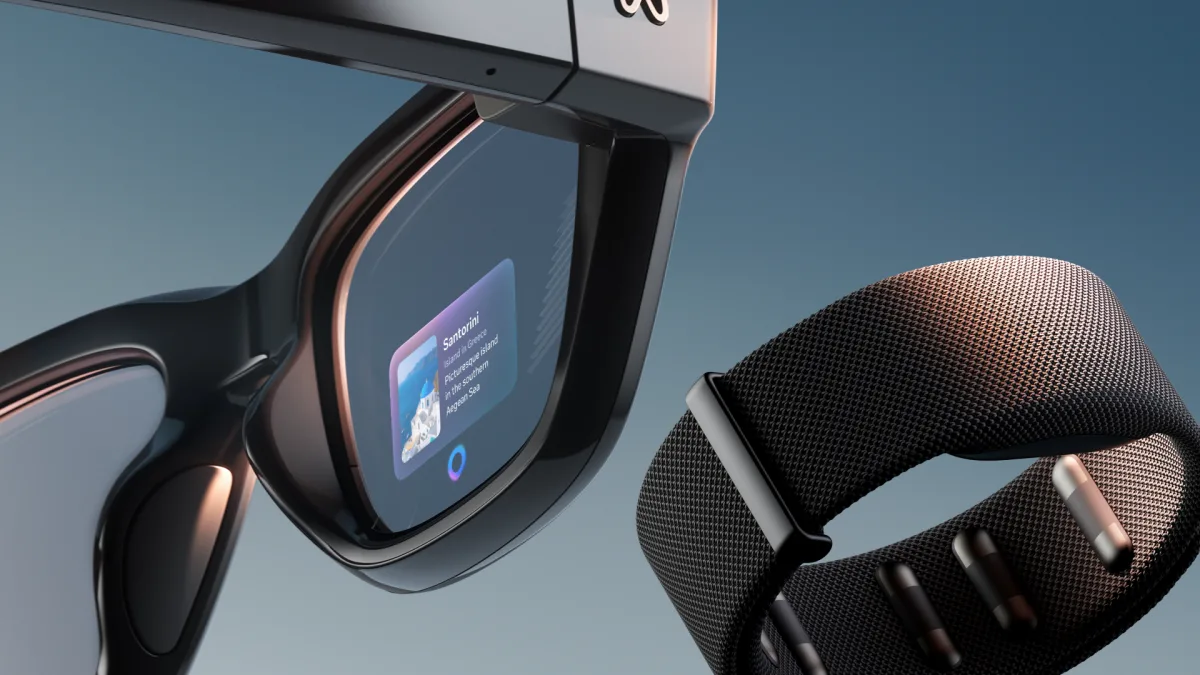
However, Meta has also developed display-equipped glasses. Meta Ray-Ban Display incorporates a full-color, high-resolution display positioned toward the side of the lens. It can show information such as messages, translations, photos and navigation.
This represents a major shift from camera-and-audio smart glasses toward glasses that can provide visual information directly to the wearer.
Privacy and Security
Because smart glasses contain cameras and microphones, privacy is an important consideration.
Meta includes a visible capture LED designed to indicate when the camera is recording or capturing content. According to Meta, newer AI glasses can disable the camera if the capture LED is blocked or tampered with.
Users should still be considerate when recording in public places. Smart glasses make photography less obvious than using a smartphone, so responsible use is important.
Meta also says that captured photos and videos are stored privately on the glasses until users choose to import them to their phone or share them.
Battery Life and Everyday Use
Battery life depends on the specific model and how heavily features such as recording, AI and streaming are used.
Newer Meta Glasses models announced in 2026 are designed to provide more than eight hours of battery life, while their charging cases can provide additional power throughout the day.
The glasses are therefore designed primarily for everyday activities rather than replacing a smartphone completely.
Who Can Benefit From Meta Smart Glasses?
Meta smart glasses can appeal to a wide range of users.
Travellers can use AI, translation, cameras and hands-free navigation-related features.
Content creators can record first-person videos without carrying a camera.
Students and professionals can use voice-based AI assistance for quick information and everyday tasks.
Music and podcast listeners can enjoy audio without wearing traditional headphones.
Accessibility users may benefit from hands-free AI, visual assistance, voice interaction and audio feedback. Meta has highlighted applications of its glasses for blind and low-vision users.
The Future of Meta Smart Glasses
Meta's development suggests that smart glasses are moving toward a more natural relationship between AI and the physical world.
The next stage is not simply making glasses that take pictures. Instead, the goal is to create wearable assistants capable of understanding surroundings, responding to voice commands, displaying information and helping users interact with digital services without constantly looking at a phone.
Display-equipped Meta glasses demonstrate this direction. Features such as visual AI assistance, messaging, navigation, live captions and translation could eventually make glasses a more practical computing platform.
Conclusion
Meta smart glasses combine familiar eyewear with cameras, microphones, speakers, wireless connectivity and artificial intelligence. Their biggest advantage is hands-free interaction: users can capture photos, record videos, make calls, listen to audio, communicate, translate information and ask AI questions while continuing to look at the world around them.
The technology is evolving quickly. Traditional Ray-Ban Meta glasses focus heavily on camera, audio and AI, while newer display-equipped products point toward a future where smart glasses can also provide visual information directly in front of the wearer.
For now, Meta smart glasses are best understood not as replacements for smartphones, but as a wearable extension of them—one that makes everyday digital tasks more immediate, conversational and hands-free.