
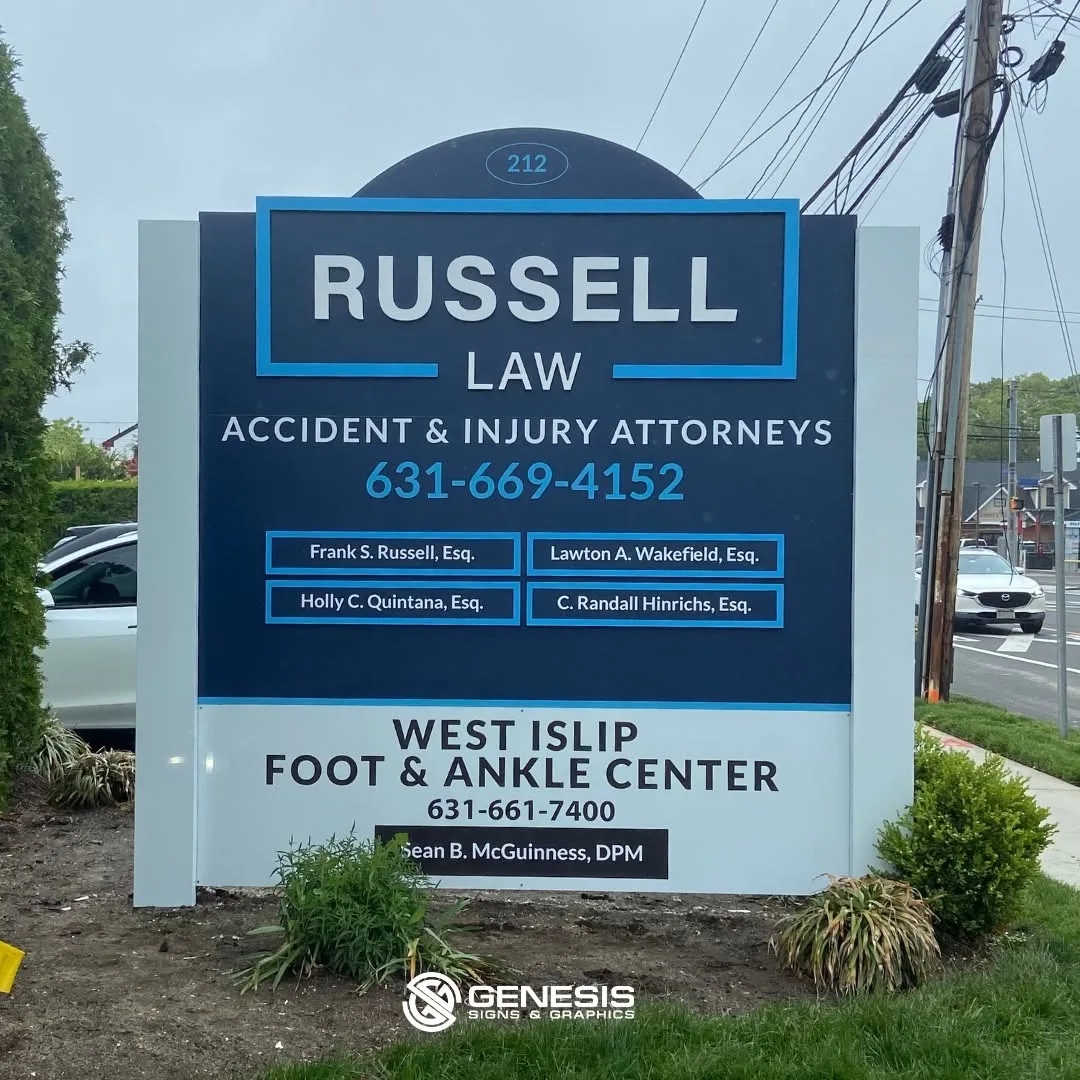
For a business, a sign is more than a way to display a name. It can influence how customers perceive a property, help drivers locate a business, and strengthen brand recognition. For companies across Long Island, choosing the right type of exterior signage is especially important because businesses operate in a wide variety of settings, from busy commercial corridors and shopping centers to office parks and professional properties.
Two popular options are monument signs and pylon signs. Although both are freestanding outdoor signs, they serve different purposes. Understanding the differences can help property owners and business managers decide which solution best fits their location.
What Are Monument Signs?
Monument signs are freestanding signs positioned relatively close to the ground. They typically feature a substantial base constructed from materials such as brick, stone, concrete, aluminum, or other fabricated materials.
Because of their architectural appearance, monument signs can blend naturally with a property's building and landscaping. They are commonly used at entrances to office buildings, medical facilities, schools, residential communities, corporate campuses, and commercial properties.
Businesses searching for monument signs in Long Island often choose this type of signage because it provides a professional and permanent way to identify a property without creating an overly tall structure.
A monument sign can include a company logo, business name, address, tenant information, dimensional lettering, or illumination.
What Are Pylon Signs?
Pylon signs are generally taller freestanding structures designed to provide visibility from a greater distance. They may be supported by poles or a larger structural framework and can contain one or multiple sign panels.
These signs are often associated with shopping centers, retail developments, restaurants, automotive businesses, gas stations, and commercial properties located along busy roads.
The additional height can help a business stand out above vehicles, landscaping, and other visual obstacles.
For properties where customers need to recognize the business before reaching the entrance, the visibility of a pylon sign can be a major advantage.
Monument Signs vs. Pylon Signs: What's the Difference?
The most important difference is how and where the sign is viewed.
Monument signs are generally designed for property-level visibility. They can help visitors identify an entrance, office building, business campus, or commercial property.
Pylon signs are designed to attract attention from farther away. Their height can make them particularly useful for businesses located along roads with significant vehicle traffic.
Here's a quick comparison:
FeatureMonument SignsPylon SignsTypical profileLow and substantialTall and prominentPrimary purposeProperty identificationLong-distance visibilityBest suited forOffices, campuses, medical facilities, communitiesShopping centers, retail, roadside businessesArchitectural integrationExcellentModerate to highMultiple tenant listingsPossibleParticularly suitableRoadside visibilityGoodExcellentBranding opportunitiesExcellentExcellentNeither option is automatically better. The right choice depends on the property and business objectives.
Why Choose a Monument Sign?
A monument sign can be an excellent choice when a business wants to create a polished and permanent entrance presence.
Professional Appearance
Monument signs can be designed to complement the architecture of a property. Materials, colors, lettering, and lighting can be coordinated to create a cohesive appearance.
This is particularly valuable for professional offices, healthcare facilities, financial businesses, law firms, and corporate properties.
Strong Property Identification
A monument sign can make it easier for customers to recognize a property as they approach the entrance.
For businesses located inside office parks or larger commercial developments, clear property identification can improve the visitor experience.
Customizable Design
Modern monument signage can incorporate dimensional letters, logos, LED illumination, decorative panels, and architectural materials.
This flexibility allows businesses to create signage that represents their brand rather than relying on a generic sign format.
When Is a Pylon Sign the Better Choice?
A pylon sign can be more appropriate when visibility from a distance is the primary objective.
Busy Roads
Businesses located along heavily traveled roads may need signage that drivers can identify before they reach the property.
The additional height of a pylon sign can increase visibility in these situations.
Shopping Centers and Commercial Plazas
Pylon signs can accommodate multiple businesses, making them useful for multi-tenant properties.
A single structure can identify the shopping center while providing individual panels for participating businesses.
Long-Distance Branding
If a business depends heavily on passing traffic, a highly visible roadside sign can help potential customers recognize the business before they arrive.
Which Sign Is More Affordable?
The cost of a monument or pylon sign depends on the project's specifications rather than simply the sign type.
Factors that can influence pricing include:
- Overall dimensions
- Materials
- Structural requirements
- Illumination
- Dimensional lettering
- Electrical work
- Installation
- Engineering
- Permitting
- Number of tenant panels
- Site conditions
- Custom fabrication
A simple monument sign may be more economical than a large, engineered pylon structure. However, a highly customized monument sign using premium materials and integrated lighting can also require a substantial investment.
For this reason, businesses should compare complete project estimates rather than choosing solely based on the initial sign price.
Design Matters as Much as Sign Type
Selecting monument or pylon signage is only the first step. The design must also be optimized for the location.
Prioritize Readability
Customers should be able to understand the main message quickly. Clear typography and appropriate letter sizing are essential for outdoor signage.
Use Strong Contrast
The contrast between the sign background and lettering can significantly affect visibility, particularly from moving vehicles.
Consider Illumination
LED lighting can improve nighttime visibility and help businesses maintain a consistent presence after dark.
Keep the Message Focused
Outdoor signs are not the place for excessive information. The business name, logo, and essential identification information should receive priority.
Consider the Surrounding Property
The sign should complement nearby buildings, landscaping, parking areas, and architectural features. A well-integrated sign can look like a permanent part of the property.
What Should Long Island Businesses Consider Before Installation?
Businesses should evaluate the site before deciding on a sign type.
Important questions include:
- How far away will customers see the sign?
- Is the property located on a busy road?
- How fast is surrounding traffic moving?
- Are trees or buildings blocking visibility?
- Is the property a single-tenant or multi-tenant location?
- Is the sign primarily intended for drivers or pedestrians?
- How much space is available?
- Does the property have architectural or landscaping requirements?
- Will the sign need illumination?
- What local regulations apply?
These considerations can make the decision much easier.
Don't Forget Local Sign Regulations
Long Island contains many municipalities, and sign requirements can differ depending on the property's location.
Regulations may address sign height, dimensions, setbacks, placement, illumination, landscaping, and other factors. Some properties may also have additional restrictions because of zoning, development agreements, or property-owner requirements.
Before beginning fabrication, businesses should verify the requirements applicable to their specific property and determine whether permits or approvals are required.
A professional signage provider can help identify the information needed for the project, while the appropriate local authority ultimately determines whether a proposed sign complies with applicable regulations.
Monument Signs or Pylon Signs: Which One Should You Choose?
The answer depends on what you need the sign to accomplish.
A monument sign may be the better option if your priorities include:
- A professional architectural appearance
- Property identification
- Entrance visibility
- A permanent branding element
- Integration with landscaping and buildings
- A lower-profile design
A pylon sign may be preferable when you need:
- Greater roadside visibility
- Long-distance recognition
- A taller structure
- Multiple tenant listings
- Strong visibility along busy commercial roads
In certain commercial developments, both options can work together. A pylon sign can attract attention from the road, while a monument sign can provide clear identification once customers reach the property.
Making the Right Investment in Outdoor Signage
Outdoor signage can remain part of a business property for many years, so choosing the right design should be viewed as a long-term investment.
Instead of focusing only on appearance, consider visibility, durability, maintenance, branding, installation requirements, and local regulations.
For businesses considering custom monument signs in Long Island, a professional consultation can help determine the appropriate dimensions, materials, lettering, illumination, and placement for the property.
The goal is not simply to create a larger sign. It is to create signage that communicates the right message to the right audience at the right viewing distance.
Final Thoughts
Monument signs and pylon signs can both provide valuable visibility for Long Island businesses, but they are designed for different environments and purposes.
Monument signs are often ideal for businesses seeking a professional, architectural entrance marker, while pylon signs can be especially effective for properties that depend on long-distance roadside visibility or need to display multiple businesses.
Before choosing between the two, evaluate your property's location, traffic patterns, available space, branding goals, tenant requirements, budget, and local regulations. With the right combination of design and placement, an outdoor sign can become an important part of a business's identity and customer experience.
For Long Island businesses planning a new exterior signage project, taking the time to select the appropriate sign type can make the investment more effective for years to come.