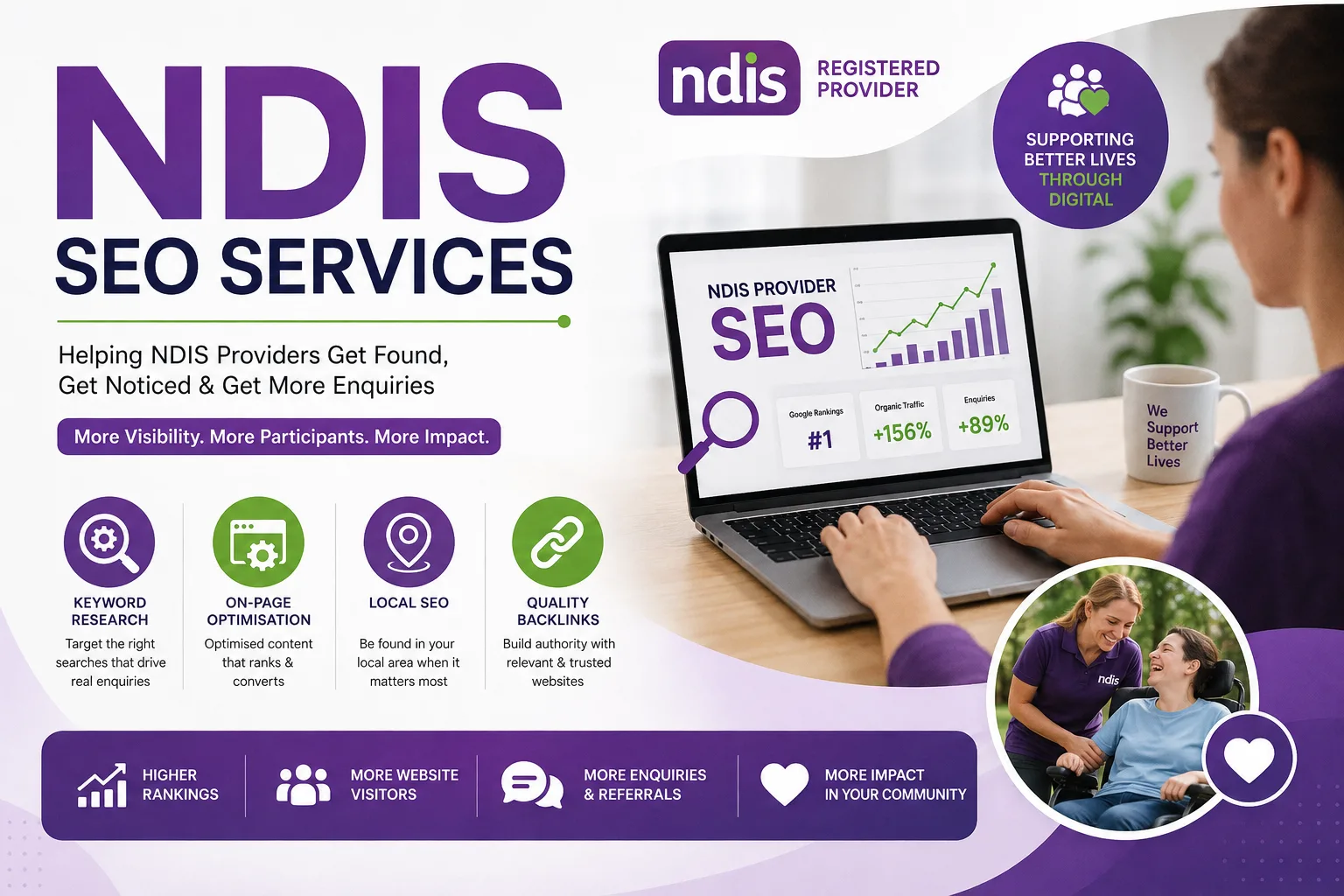
For an NDIS provider, having a professional website is only one part of building a strong online presence. Your website also needs to be easy for potential participants, families, support coordinators and carers to find when they search for relevant services online.
This is where NDIS SEO services can make a meaningful difference. A well-planned SEO strategy can help your website appear in relevant search results, attract the right visitors and turn online searches into genuine enquiries.
What Are NDIS SEO Services?
NDIS SEO services involve search engine optimisation strategies designed around the needs of NDIS providers and their audiences. Rather than focusing only on general keywords, the strategy considers what people are actually searching for when looking for disability support services.
For example, someone may search for an NDIS provider in their local area, a particular type of support, or information about accessing a specific service. Your website needs to provide clear, useful answers to these searches while also making it easy for visitors to take the next step.
Effective SEO is not about placing keywords repeatedly throughout a page. It is about creating a website that search engines can understand and, more importantly, that people can genuinely use.
Why SEO Matters for NDIS Providers
The NDIS sector is competitive, and people often have many providers to consider. When someone searches online, appearing prominently in search results can give your organisation an opportunity to introduce its services before a potential participant discovers another provider.
Good SEO can also help establish credibility. A website with useful service information, clear contact details, helpful resources and an easy-to-understand structure gives visitors more confidence in your organisation.
Over time, consistent optimisation can bring relevant organic traffic to your website without relying entirely on paid advertising.
Start With an NDIS-Focused Website
Before investing heavily in SEO, it is important to consider the website itself. A strong NDIS website design should put accessibility, clarity and user experience at the centre.
Visitors should be able to quickly understand what your organisation does, who you support and how they can contact you. Service pages should explain what you offer in straightforward language rather than relying on complicated industry terminology.
Your website should also work well on mobile devices. Many people use their phones when researching services, so slow-loading pages, difficult navigation or poorly displayed contact forms can create unnecessary barriers.
SEO and website design work together. Driving visitors to a website is much more valuable when those visitors can easily find the information they need.
Understand What Your Audience Is Searching For
A successful SEO strategy begins with understanding search intent.
Instead of creating content around keywords simply because they have search volume, think about the questions your potential audience might have.
Someone who searches for “NDIS support services” may be exploring their options. Another person searching for a specific support service in a particular suburb may already be closer to making an enquiry.
These different searches require different types of content. Your website should provide useful information for people at various stages of their decision-making journey.
This approach makes your content more natural and helps prevent the common problem of keyword stuffing.
Create Useful Service Pages
Your main service pages are some of the most valuable pages on your website. Each page should clearly explain the service, who it may be suitable for and how people can enquire.
Rather than creating one large page covering every service, consider developing dedicated pages where there is enough useful information to justify them.
For example, if your organisation provides several distinct forms of support, each service can have its own page explaining the offering in detail. This gives search engines clearer information about your services and gives visitors a more relevant experience.
The goal should always be usefulness first and optimisation second.
Make Local SEO Part of Your Strategy
For many NDIS providers, location matters. Participants and families often want to work with providers who operate in their local community.
Local SEO can help your organisation become more visible for searches involving specific suburbs, cities or service areas. Your website should clearly communicate where you provide services without creating repetitive pages that offer little value.
Consistent business information across relevant online profiles can also support local visibility.
Most importantly, your local content should reflect the areas you genuinely serve. Avoid creating location pages simply to target search terms if you do not actually provide services there.
Build Trust Through Helpful Content
Content can do more than attract visitors from Google. It can help answer questions and demonstrate that your organisation understands the needs of its audience.
A useful NDIS blog might explain how a particular service works, what someone should consider when choosing a provider, or common questions families have when exploring support options.
The strongest content is written for people first. It should be accurate, easy to understand and based on genuine knowledge of the services being discussed.
This is especially important in the disability support sector, where visitors may be looking for clear information before making an important decision.
Ready to Improve Your Online Visibility?
If your NDIS website is receiving little organic traffic or struggling to generate enquiries, it may be time to review your current SEO strategy. A focused approach can identify technical issues, content opportunities and areas where your website could better serve potential participants.
Improve Your Website's Technical Performance
SEO is not only about content. Technical website performance also affects how visitors and search engines interact with your site.
Important areas include page speed, mobile responsiveness, website structure, broken links, indexing and metadata. Your pages should also have clear headings and logical navigation so that both users and search engines can understand the information.
Accessibility deserves particular attention for NDIS websites. Clear typography, sensible page structures, readable content and accessible navigation can make the website easier for a broader audience to use.
Technical improvements may not always be visible to visitors, but they can contribute to a better overall website experience.
Build Authority With Quality, Not Quantity
A common mistake is assuming that publishing large amounts of content or acquiring as many backlinks as possible will automatically improve rankings.
Search engines increasingly focus on relevance, quality and usefulness. For an NDIS provider, it is more valuable to have a smaller collection of genuinely helpful resources than dozens of thin pages created primarily for search engines.
Likewise, links from relevant and trustworthy websites can be more valuable than a large number of low-quality links.
This is why professional SEO services for NDIS providers should focus on sustainable growth rather than shortcuts.
Measure What Actually Matters
SEO results should not be measured by rankings alone.
A successful strategy should consider whether the website is attracting relevant visitors and whether those visitors are taking meaningful actions. Depending on your goals, this might include contact form submissions, phone calls, consultation requests or visits to important service pages.
Tracking these outcomes helps you understand which areas of your SEO strategy are contributing to business growth.
SEO also takes time. Search visibility can fluctuate, and meaningful results usually come from consistent improvements rather than a single optimisation project.
Choosing the Right SEO Approach
Every NDIS provider is different. A small local provider may need a strong local SEO strategy, while a larger organisation operating across several regions may need a broader content and technical strategy.
Before choosing an SEO provider, look for someone who takes time to understand your organisation, services, audience and locations. Avoid strategies that promise instant rankings or rely heavily on repetitive keywords.
A good SEO approach should work alongside your website, content and broader digital marketing efforts.
Final Thoughts
For Australian NDIS providers, SEO can be an effective way to build long-term online visibility and connect with people who are actively searching for support services.
The best results come from combining helpful content, a user-friendly NDIS web design, strong technical foundations and a clear understanding of your audience.
Whether you are launching a new website or improving an existing one, investing in NDIS SEO services can help create a stronger digital presence. When SEO is approached with the needs of participants and families in mind, better search visibility becomes part of a bigger goal: making it easier for the right people to discover your services and get in touch.