
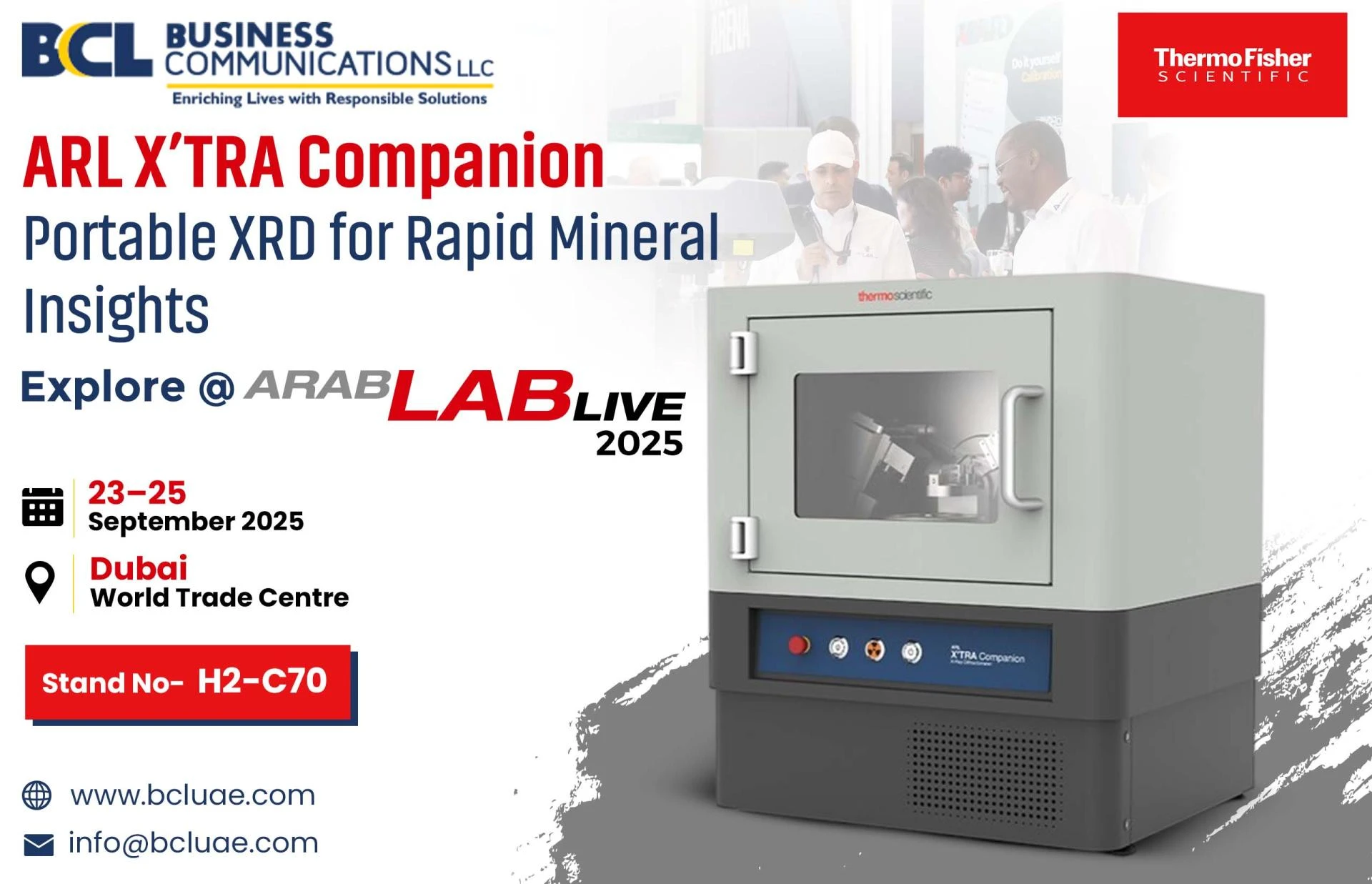
In today’s industrial and research landscape, accurate material characterization plays a crucial role in ensuring quality, performance, and reliability. One of the most widely adopted techniques for structural and mineralogical analysis is X-ray diffraction (XRD). Tools such as the ARL X’TRA Companion X-ray Diffractometer from Thermo Fisher Scientific have been designed to simplify complex mineral analysis while ensuring non-destructive testing for laboratories, academic institutions, and industrial users alike.
Understanding the Role of X-ray Diffraction
X-ray diffractometers are used to study the crystallographic structure of materials. Unlike traditional destructive methods of mineral testing, XRD enables researchers and engineers to analyze powders, thin films, or bulk materials without altering the original sample. This makes it indispensable in industries such as mining, metallurgy, cement, ceramics, pharmaceuticals, and advanced materials development.
When a material is subjected to X-rays, the resulting diffraction pattern provides detailed information about its atomic arrangement. This allows specialists to identify unknown compounds, determine phase purity, and evaluate structural properties with high accuracy.
The ARL X’TRA Companion X-ray Diffractometer
The ARL X’TRA Companion stands out as a versatile solution for both routine quality control and advanced research. Designed for ease of use, the system supports laboratories that require fast, reliable, and reproducible results. Its modular configuration ensures compatibility with a wide range of applications, from basic mineral identification to in-depth crystalline phase analysis.
Key advantages of using modern X-ray diffractometers include:
- Non-destructive testing – Preserves the integrity of samples during analysis.
- Versatility – Suitable for powders, thin films, single crystals, and bulk materials.
- High precision – Offers detailed insights into structural and phase composition.
- Efficiency – Enables laboratories to process multiple samples with minimal downtime.
Single Crystal X-ray Diffractometer vs Powder XRD
While powder diffraction remains the most common method, single crystal X-ray diffractometers provide unparalleled structural detail at the atomic level. These instruments are often used in research fields such as crystallography, materials science, and pharmaceuticals where understanding precise atomic arrangements is crucial.
In contrast, powder XRD techniques are widely used in industrial settings for routine mineral analysis, quality control, and failure investigation. The ARL X’TRA Companion offers the flexibility to support both routine and specialized requirements.
Complementary Techniques: Fluorescence Spectrophotometer and More
In many laboratories, XRD is often paired with fluorescence spectrophotometers and other spectroscopic instruments to provide a complete material characterization solution. While XRD determines crystal structures, fluorescence analysis delivers information about elemental composition. Together, these techniques enhance decision-making across industries that rely on precise material identification.
Real-World Applications of Modern Diffraction Tools
The use of advanced X-ray diffractometers extends across diverse sectors:
- Mining and Geology – Identifying mineral phases in ores.
- Construction and Cement – Ensuring raw material consistency and cement phase purity.
- Pharmaceuticals – Studying drug polymorphism and ensuring regulatory compliance.
- Metallurgy – Analyzing alloys and heat-treated materials.
- Nanotechnology – Understanding structural properties at the nanoscale.
XRD at ArabLab 2025
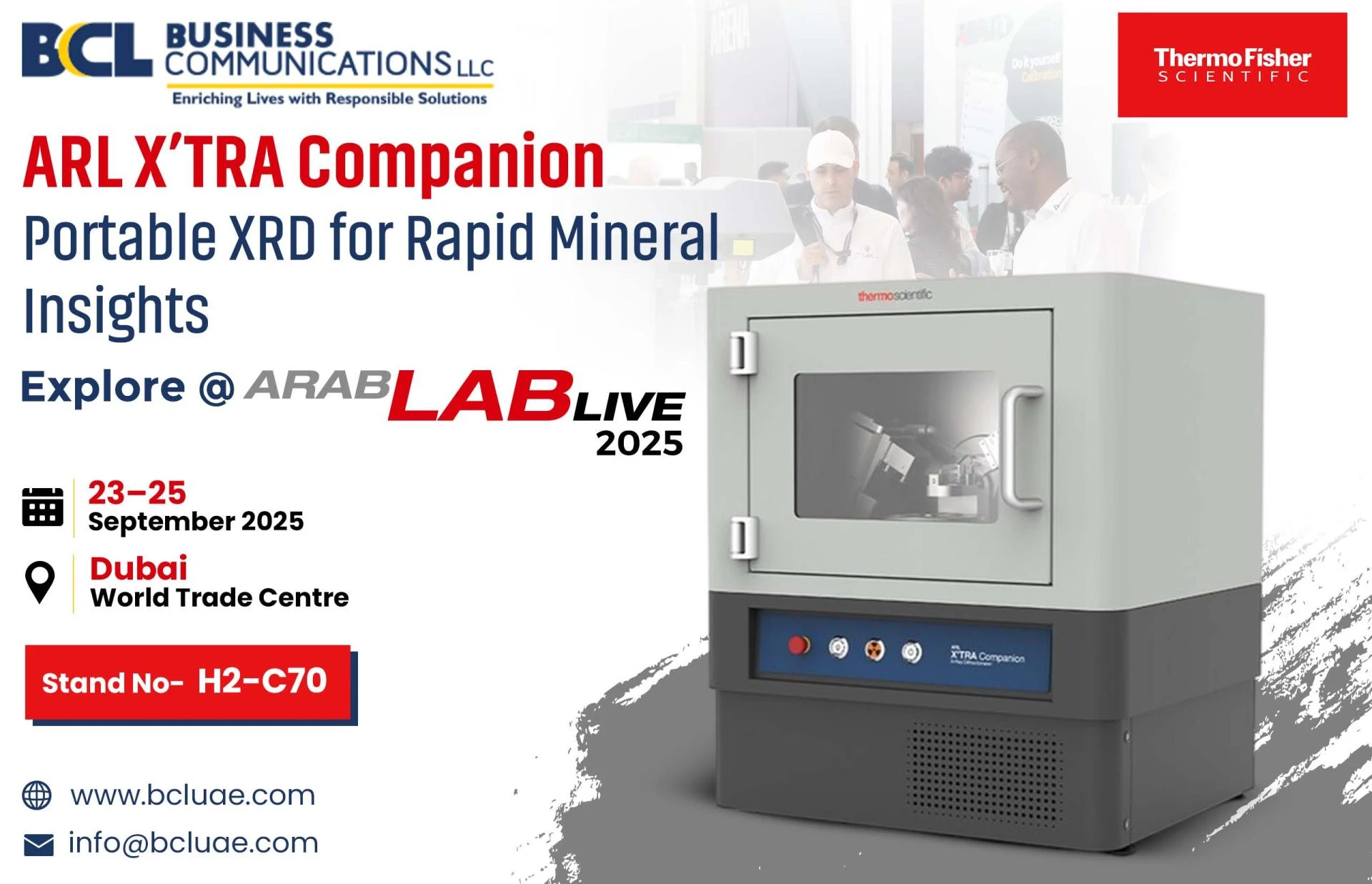
The demand for reliable analytical tools continues to rise, and events such as ArabLab 2025, taking place at the Dubai World Trade Centre from 23–25 September, highlight the growing importance of these technologies. Visitors at Stall No. H2-C70 will have the opportunity to explore innovations in diffraction and spectroscopy, including the ARL X’TRA Companion and other laboratory solutions that support industries across the Middle East and beyond.
Conclusion
Modern XRD benchtop systems such as X-ray diffractometers such as the ARL X’TRA Companion demonstrate how non-destructive mineral analysis has become both accessible and essential for industries and research institutions. By combining precision, efficiency, and versatility, these instruments continue to shape the way materials are studied, characterized, and applied. As global industries move toward smarter, more reliable testing methods, diffraction tools will remain at the forefront of material science innovation.