Cyberattacks aren't slowing down, and neither is demand for people who know how to stop them. That's pushed a lot of students toward tech-focused degrees instead of traditional business or liberal arts paths.
Online cybersecurity programs have become one of the more practical responses to that demand, letting students build real technical skills without relocating or pausing their current job. The flexibility appeals to career changers just as much as recent high school graduates.
Still, not every program delivers the same depth. Understanding what a solid cybersecurity curriculum should include and how to separate strong programs from weaker ones matters more than most students realize before they enroll.
Why Demand for Cyber Security Talent Keeps Growing
Every industry now depends on digital systems, from hospitals managing patient records to banks processing transactions. That dependence creates constant exposure to risk.
A few reasons this field keeps expanding:
- Data breaches have become more frequent and more costly for organizations
- Remote work increased the number of vulnerable access points companies need to secure
- Regulations around data privacy have tightened across many countries
- Small and mid-sized businesses now need security expertise they previously ignored
This isn't a temporary spike tied to one event. It reflects a structural shift in how much organizations rely on protected digital infrastructure just to function day to day.
What a Strong Curriculum Actually Covers
Cyber security isn't one skill. It's a mix of technical knowledge, analytical thinking, and constant adaptation to new threats.
A well-structured program typically includes:
- Network security fundamentals and firewall configuration
- Ethical hacking and penetration testing basics
- Risk assessment and incident response planning
- Cryptography and secure system design
- Legal and regulatory frameworks around data protection
Programs that skip the legal and regulatory side often leave graduates unprepared for compliance-heavy industries like healthcare or finance, where technical skill alone isn't enough.
Choosing Between a Certificate and a Full Cyber Security Bachelor Degree Online
Short certificates can validate specific skills quickly, but they rarely offer the depth employers look for in long-term hires. A cyber security bachelor's degree online covers more ground and carries more weight during hiring.
Here's how the two generally compare:
- Certificates: fast to complete, narrow in scope, useful for supplementing existing experience
- Bachelor's degrees: broader curriculum, includes general education and critical thinking components, typically required for advancement into senior or managerial security roles
Students already working in IT sometimes start with a certificate, then pursue a full degree once they decide to specialize long-term. That sequencing can work well if the certificate credits transfer into a degree program later.
Skills That Matter More Than Memorized Theory
Employers in this field consistently prioritize applied skills over theoretical knowledge alone. Knowing how an attack works matters less than knowing how to stop or contain one in real time.
Skills that tend to matter most on the job:
- Hands-on experience with security tools like intrusion detection systems
- Comfort working in simulated attack environments or labs
- Clear documentation and communication skills, since incidents require detailed reporting
- Familiarity with cloud security, given how much infrastructure has shifted to cloud platforms
Programs that include lab-based coursework or simulated cyberattack scenarios tend to produce graduates who adjust faster once they're in an actual job.
What to Check Before Enrolling in Any Program
Marketing pages often emphasize job placement rates or salary potential without explaining program specifics. It helps to dig past that.
Before committing, students should verify:
- Whether the program is accredited by a recognized education authority
- If faculty have practical industry experience, not just academic backgrounds
- Whether the curriculum is updated regularly to reflect current threats and tools
- If there are opportunities for internships or applied capstone projects
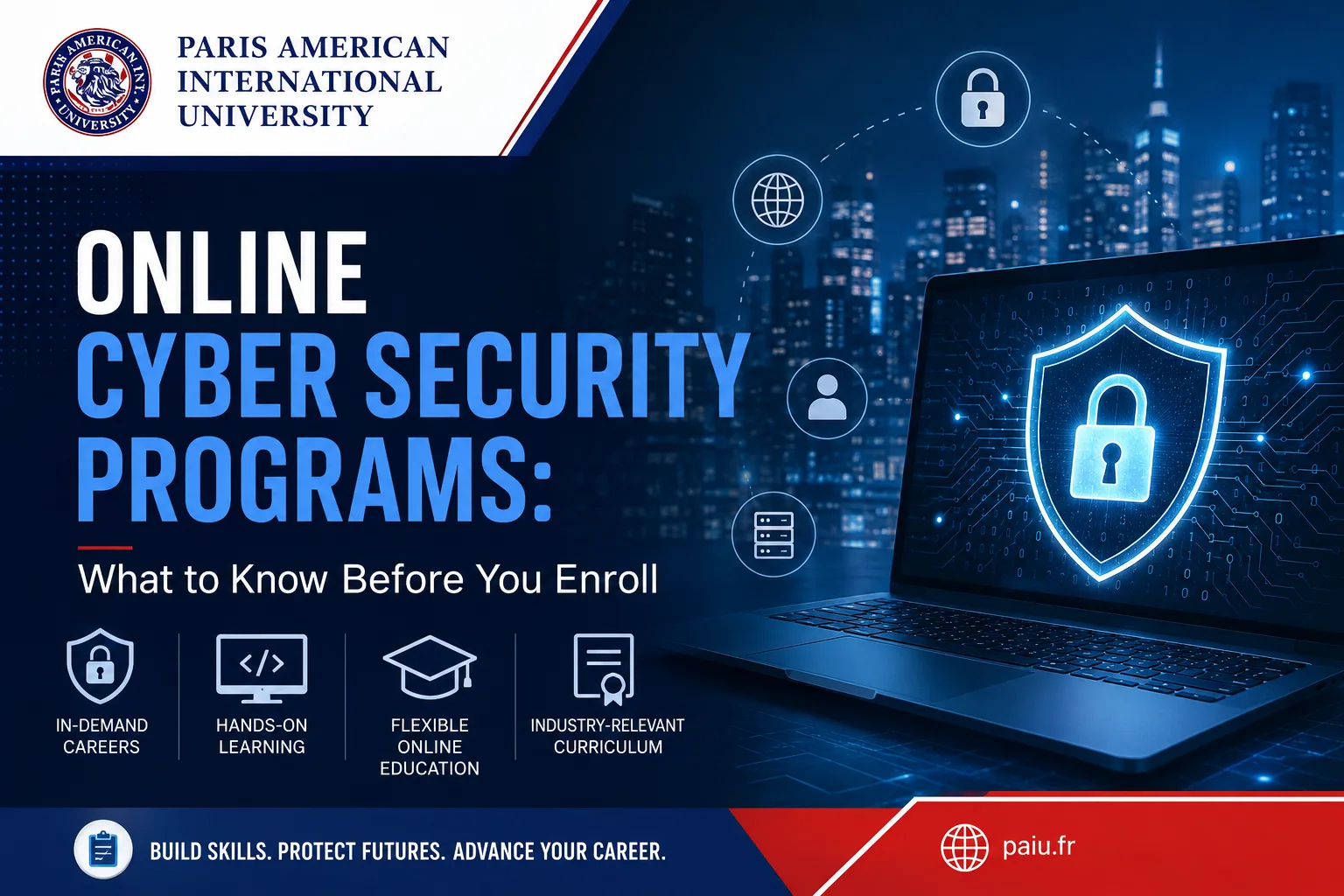
Institutions like Paris American International University have structured their technology-focused programs around this kind of practical exposure, pairing foundational coursework with real-world application so students aren't left relying purely on theory once they graduate.
How This Degree Translates Into Real Career Paths
Graduates from solid cyber security programs typically move into a range of entry- to mid-level roles, with room to specialize further over time.
Common starting positions include
- Security analyst or SOC (security operations center) analyst
- Junior penetration tester
- Information security specialist
- IT auditor focused on compliance and risk
Career growth in this field tends to be steady rather than explosive, but demand remains consistent across almost every industry, which offers more job security than many other tech specializations.
Making a Decision That Actually Fits Your Goals
Choosing between multiple online cybersecurity programs usually comes down to more than reputation or marketing. It's about matching curriculum depth, faculty experience, and career support to personal goals.
Paris American International University offers a structured path for students who want that balance of technical depth and applied learning, without requiring a complete lifestyle overhaul to pursue it.
Before enrolling anywhere, take time to compare curriculum structure, accreditation status, and how recent graduates describe their transition into the workforce. A degree only holds value if the program behind it actually prepared you for what comes next. Get that part right, and the rest tends to follow.