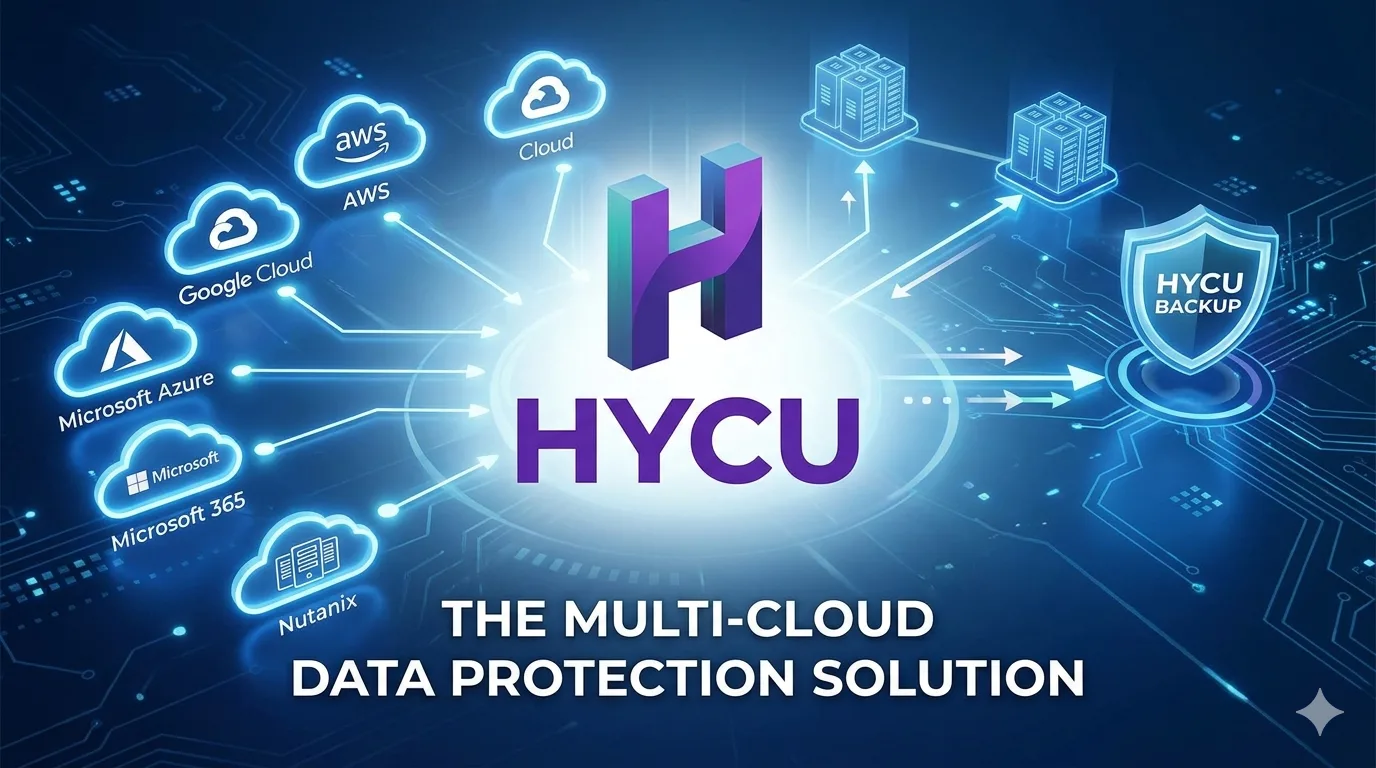
Managing enterprise data across distributed environments requires purpose-built tools. Legacy backup platforms often struggle to accommodate the dynamic nature of hybrid and multi-cloud architectures, introducing unnecessary overhead and compatibility issues. HYCU (Hybrid Cloud Up) provides a specialized data protection solution engineered specifically for these complex ecosystems.
By natively integrating with cloud platforms and hypervisors, HYCU backup delivers a modernized approach to data resilience, disaster recovery, and data migration. This article examines the core mechanics of HYCU Backup, detailing its architectural features and explaining how it addresses contemporary data management challenges for IT professionals.
Core Architectural Features of HYCU
HYCU differentiates itself from traditional backup software through a design philosophy that prioritizes native integration and minimal infrastructure footprint.
Agentless Deployment
Traditional backup solutions often require installing and maintaining software agents on every virtual machine or server. HYCU backup utilizes an entirely agentless architecture. By communicating directly with hypervisor and cloud APIs, it eliminates the compute overhead and administrative burden associated with lifecycle agent management. This approach ensures cleaner deployments and reduces potential security vulnerabilities.
Native Multi-Cloud Integration
Modern IT infrastructure rarely relies on a single vendor. HYCU provides native support across major environments, including Nutanix, Google Cloud Platform (GCP), Microsoft Azure, and Amazon Web Services (AWS). Rather than treating cloud storage as a simple repository, HYCU leverages the native snapshots and identity access management (IAM) protocols of each specific platform, ensuring seamless and secure operations.
Application-Aware Backups
Data consistency is critical during the recovery process. HYCU features application-aware backup capabilities that automatically discover applications running within virtual machines. By integrating with protocols like Microsoft Volume Shadow Copy Service (VSS), HYCU ensures that databases such as Microsoft SQL Server or Active Directory are captured in an application-consistent state. This prevents data corruption and allows for precise point-in-time recoveries.
Operational and Financial Advantages
Implementing a cloud-native backup solution yields measurable improvements in both system performance and resource allocation.
Streamlined Data Management
HYCU consolidates backup, recovery, and monitoring tasks into a single management console. Administrators can assign policy-based backup routines based on service level agreements (SLAs) rather than manually configuring individual jobs. This centralized visibility significantly reduces the administrative hours required to maintain data compliance.
Accelerated RTO and RPO
Recovery Time Objectives (RTO) and Recovery Point Objectives (RPO) are critical metrics for business continuity. Because HYCU utilizes native hypervisor and cloud snapshots, the data capture process is nearly instantaneous. This allows organizations to define highly aggressive RPOs. Furthermore, the localized recovery options enable rapid restoration of individual files or entire virtual instances, minimizing system downtime.
Optimized Cost Efficiency
By eliminating the need for dedicated backup appliances and external compute nodes, HYCU reduces hardware expenditures. Its dynamic resource allocation means organizations only pay for the storage and compute they actually consume during backup operations. Additionally, built-in tiering capabilities allow administrators to automatically migrate aging backups to lower-cost archive storage layers.
High-Impact Enterprise Use Cases
The architectural advantages of HYCU make it highly effective for specific enterprise scenarios requiring robust data protection.
Securing Hybrid Cloud Environments
For organizations transitioning from on-premises Nutanix clusters to public clouds, HYCU acts as a vital bridge. It allows administrators to seamlessly replicate on-premises backups to cloud targets for disaster recovery, or even spin up local workloads directly within the public cloud environment during an outage.
Protecting Mission-Critical Applications
Databases with high transaction volumes require specialized handling. HYCU excels in environments where SQL, Exchange, or Oracle databases dictate strict consistency requirements. The application-aware nature of the software ensures that transaction logs are properly truncated and databases can be restored without requiring complex manual rebuilds.
Securing the Future of Enterprise Data
Data protection must evolve in tandem with the infrastructure it supports. HYCU Backup provides a compelling framework for modern data resilience, utilizing an agentless, native approach to bypass the limitations of legacy software. By simplifying multi-cloud management and enabling aggressive recovery objectives, it equips IT teams with the tools necessary to maintain continuous operations.
For technology professionals architecting the next iteration of their infrastructure, evaluating cloud-native tools like HYCU is a logical step. Reviewing your current RTO and RPO metrics against backup appliance capabilities will help determine if an architectural upgrade is required to secure your organizational data.