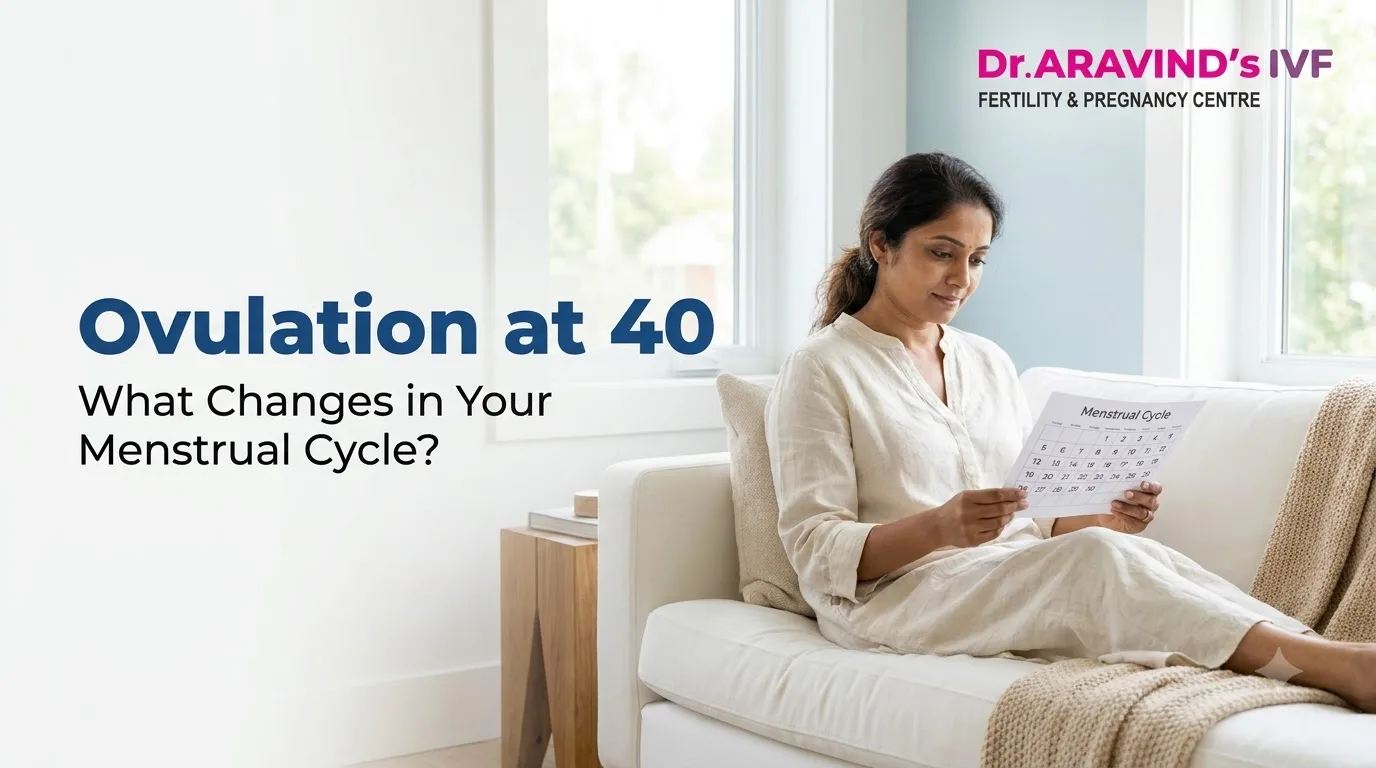
Turning 40 does not mean that ovulation stops immediately. Many women continue to have menstrual cycles and release eggs naturally during their 40s. However, changes in ovarian reserve, hormone levels, and egg quality can make periods less predictable and conception more difficult.
If you are noticing shorter cycles, missed periods, or changes in menstrual flow, you may be wondering whether these are signs of reproductive ageing. Understanding ovulation at 40 can help you recognise what is normal, when to seek medical advice, and how age may influence your chances of pregnancy.
For women researching the best fertility centre in Trichy, the important thing to remember is that menstrual changes should be interpreted alongside individual health, symptoms, and fertility goals.
Does Ovulation Still Happen at 40?
Yes. Many women continue to ovulate at 40, although ovulation may become less consistent as ovarian ageing progresses.
During a menstrual cycle, hormones stimulate the development of ovarian follicles. Usually, one follicle releases a mature egg. As the number of remaining eggs decreases with age, hormonal patterns may become more variable.
Some women in their early 40s continue to experience regular periods, while others notice irregular cycles or occasional months without ovulation. Regular menstruation does not always confirm that ovulation occurs in every cycle.
Menstrual Cycle Changes at 40: What Should You Expect?
Changes in your menstrual cycle at 40 can be associated with the natural transition towards perimenopause. This transition may begin several years before menopause, and its timing varies between women.
1. Shorter or Longer Menstrual Cycles
One of the earliest changes may be a difference in cycle length. Some women experience shorter cycles, while others notice longer or unpredictable intervals between periods.
These changes can occur because the hormonal signals controlling follicle development and ovulation become less consistent.
2. Changes in Menstrual Flow
Your periods may become heavier, lighter, or different in duration than they were in your 20s and 30s.
However, unusually heavy bleeding, bleeding between periods, or bleeding after sex should not automatically be attributed to age. Conditions such as fibroids, polyps, and hormonal disorders may also cause these changes and deserve medical assessment.
3. Missed or Irregular Periods
Occasional missed periods may occur when ovulation does not happen in a particular cycle. As perimenopause progresses, irregular menstruation can become more common.
If periods stop unexpectedly, pregnancy should still be considered when conception is possible. Other hormonal and medical causes may also need evaluation.
Why Does Ovulation Become Less Predictable at 40?
The main reason is reproductive ageing. Women are born with a finite supply of eggs, and this reserve gradually decreases throughout life.
By 40, several changes may influence fertility:
- Lower ovarian reserve: Fewer eggs remain in the ovaries.
- Reduced egg quality: A greater proportion of eggs may have chromosomal abnormalities.
- Hormonal fluctuations: Changes in follicle-stimulating hormone and other reproductive hormones may affect cycle patterns.
- Irregular ovulation: Some cycles may not release an egg.
- Reduced conception chances: Both egg quantity and quality influence the likelihood of pregnancy.
Importantly, ovarian reserve and egg quality are not identical. A woman may have regular ovulation but still experience age-related changes in egg quality.
Signs of Ovulation and Perimenopause at 40
Ovulation signs may include clear, slippery cervical mucus, mild one-sided pelvic discomfort, and changes in basal body temperature. However, these signs do not confirm ovulation in every case.
Perimenopause may involve additional symptoms, including:
- Hot flashes or night sweats
- Sleep disturbances
- Mood changes
- Vaginal dryness
- Changes in menstrual cycle length
These symptoms can overlap with other health conditions. A healthcare professional can help determine whether they are related to perimenopause or another cause.
Can You Get Pregnant Naturally at 40?
Yes. Natural pregnancy is still possible at 40, but the likelihood is generally lower than at younger reproductive ages. The risk of miscarriage also increases with age, partly because of a higher chance of chromosomal abnormalities in eggs and embryos.
Women aged 40 or older who want to conceive are generally advised to seek fertility evaluation promptly rather than waiting several months.
An assessment may include menstrual history, ovulation evaluation, ovarian reserve tests such as AMH, ultrasound, and partner fertility testing. AMH can help estimate ovarian reserve, but it cannot independently predict natural conception or guarantee IVF success.
When Should You Consult a Fertility Specialist?
Consider professional advice if you experience persistent irregular periods, unusually heavy bleeding, repeated missed cycles, or difficulty conceiving. Seek medical evaluation promptly if you are 40 or older and planning pregnancy.
For a more detailed explanation, read our guide on menstrual cycle changes at 40.
Dr.Aravind's IVF Fertility & Pregnancy Centre
At Dr.Aravind's IVF Fertility & Pregnancy Centre, women can seek guidance on ovulation, ovarian reserve, menstrual health, and fertility planning. If you are looking for the best fertility centre in Trichy, an individual assessment can help you understand how age and reproductive health may influence your pregnancy plans.
Fertility care should be based on medical history, test results, and personal goals—not age alone. When comparing options, including the best IVF centre in India, look for clear explanations, appropriate investigations, and treatment recommendations tailored to your circumstances.
Frequently Asked Questions
Q1. Do women still ovulate regularly at 40?
Answer: Some women continue to ovulate regularly at 40, while others experience irregular or occasional anovulatory cycles as ovarian ageing progresses.
Q2. Why do menstrual cycles become irregular at 40?
Answer: Menstrual cycles may become irregular because hormonal fluctuations and declining ovarian reserve affect follicle development and ovulation during the transition towards perimenopause.
Q3. Can I get pregnant naturally at 40?
Answer: Yes. Natural pregnancy is possible at 40, although conception is generally less likely than at younger ages and miscarriage risk is higher.
Q4. Does a regular period mean I am ovulating at 40?
Answer: No. Regular periods do not guarantee ovulation in every cycle. A clinician may recommend progesterone testing or ultrasound monitoring when confirmation is needed.
Q5. When should I seek fertility advice at 40?
Answer: If you are 40 or older and planning pregnancy, seek fertility advice promptly rather than waiting for six or twelve months of trying. Early evaluation can help identify suitable next steps.