A visitor finds a dog on your shelter website.
They like the photo. They read the profile. They are interested.
Then they have one question.
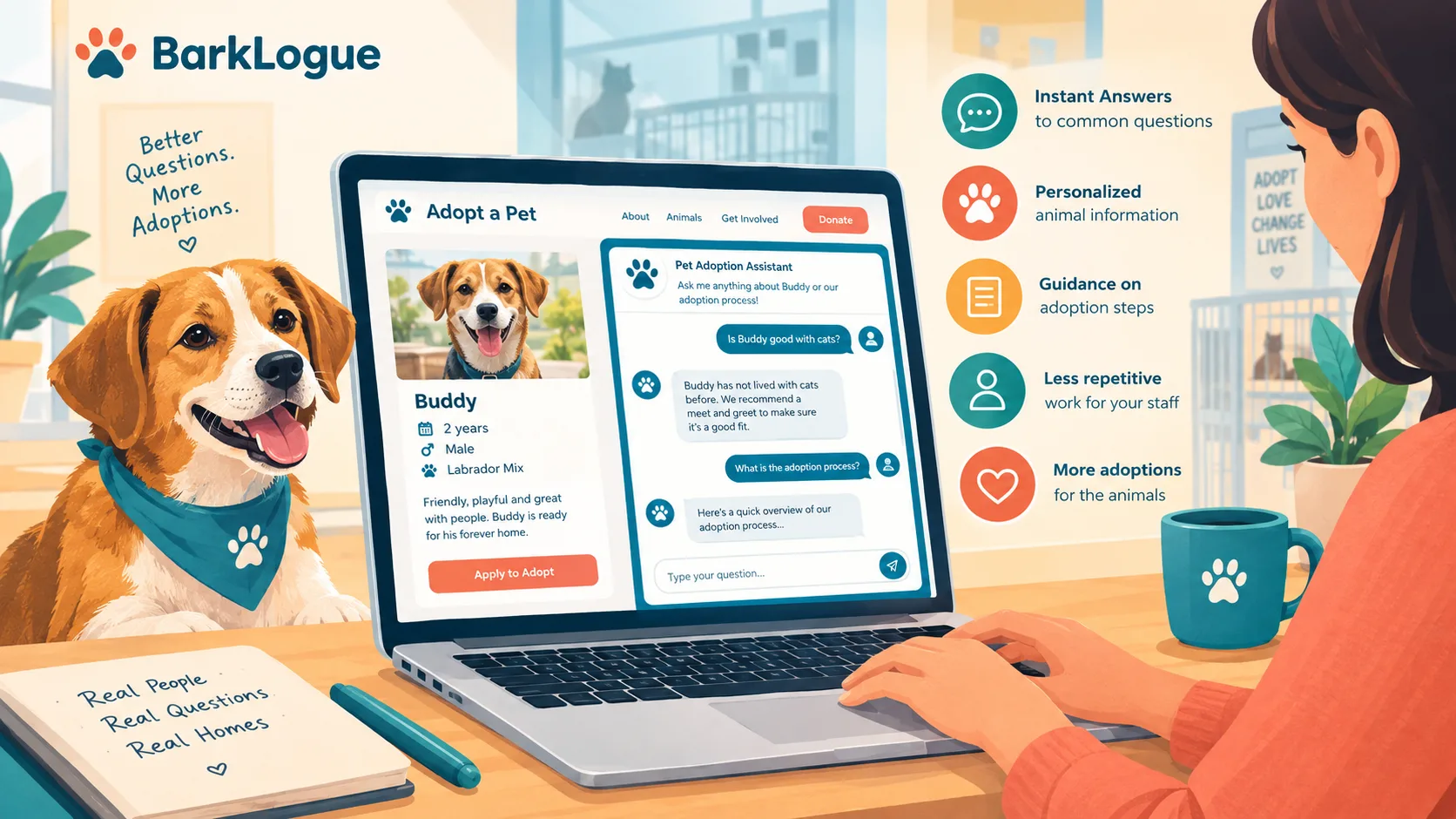
“Is this dog good with cats?”
If nobody answers quickly, that visitor may leave.
This is where a pet adoption chatbot for shelters can make a meaningful difference. Instead of forcing potential adopters to search through FAQs, send an email, or wait for staff to respond, an AI chatbot can provide immediate answers and guide them toward the next step.
The opportunity is significant. Shelter Animals Count estimates that 5.8 million cats and dogs entered U.S. shelters and rescues in 2025, while 4.2 million were adopted. Although adoption numbers improved slightly, shelters still face the challenge of helping individual animals connect with the right people.
A chatbot will not solve every adoption problem.
But it can help close one important gap: the space between visitor interest and visitor action.
1. Why Pet Adoption Websites Lose Potential Adopters
Most shelter adoption journeys look simple:
Find a pet → Read the profile → Apply → Meet the pet → Adopt
In reality, several questions appear between those steps.
A visitor may want to know:
- Is the dog good with children?
- Does the cat live well with other cats?
- Is this pet house-trained?
- How much exercise does the dog need?
- Can renters apply?
- What documents are required?
- How long does the adoption process take?
- What happens after submitting an application?
If the website does not answer these questions, the visitor has to find another way to get information.
That creates friction.
A pet adoption chatbot for shelters can answer common questions directly on the website while the visitor is still engaged.
The goal is not to replace the adoption team.
The goal is to keep interested people moving.
2. What Is a Pet Adoption Chatbot for Shelters?
A pet adoption chatbot is an AI-powered website assistant designed to help people navigate the adoption process.
A general website chatbot may answer questions about business hours or contact information.
A shelter-focused chatbot can go further.
It can help visitors understand individual animals, adoption requirements, application steps, fostering opportunities, volunteer options, and other shelter information.
The most valuable version is connected to accurate animal information.
For example, instead of giving a generic answer about adopting a dog, the chatbot could help a visitor understand a specific dog's personality, behavior, story, and adoption information.
That creates a more personal experience.
BarkLogue takes this approach by giving individual shelter animals interactive, personality-driven profiles that visitors can engage with directly.
3. The Biggest Opportunity Is on the Animal Profile Page
The animal profile is often where adoption interest begins.
It is also where important questions appear.
Imagine a visitor looking at a senior dog.
The profile says the dog is friendly and available for adoption.
But the visitor wants to know:
“Would he be comfortable in an apartment?”
If the answer is not available, the visitor may email the shelter or simply continue browsing.
A chatbot can provide a conversational layer around the profile.
Visitors can ask questions in their own words.
They can learn more before deciding whether to apply.
This is especially useful for animals with longer or more complicated stories. A conversation can help transform a static profile into an experience.
4. AI Can Help First-Time Adopters Feel More Confident
First-time adopters often have more questions.
They may not understand the application process. They may worry about eligibility. They may be unsure what happens after submitting an application.
A chatbot can explain the process step by step.
For example:
Visitor: “I have never adopted before. What do I need to do?”
Chatbot: It can explain the basic process, required information, expected next steps, and where to begin.
That immediate guidance can reduce uncertainty.
This matters because adoption policies vary significantly between organizations. A 2025 Shelter Animals Count survey found that adoption hours and requirements differ across government shelters, private shelters, and rescues.
A good chatbot should therefore provide your shelter's actual policies, not generic adoption advice.
5. A Shelter Chatbot Can Reduce Repetitive Questions
Shelter employees already manage a long list of responsibilities.
They care for animals.
They coordinate volunteers.
They communicate with fosters.
They process applications.
They answer phone calls and emails.
They also respond to many of the same website questions repeatedly.
A chatbot can handle the repetitive layer.
Questions such as:
- “What are your adoption hours?”
- “How do I apply?”
- “Do you allow same-day adoption?”
- “Can renters adopt?”
- “What happens after I submit an application?”
- “Where is the shelter located?”
can often be answered automatically.
That gives staff more time for questions that actually require human judgment.
6. The Best Chatbot Knows When Not to Answer
This is one of the most important considerations when choosing an AI chatbot for animal shelters.
A chatbot should never invent information.
If it does not know whether an animal is good with cats, it should not guess.
If medical information is unavailable, it should not create an answer.
If a question requires an adoption coordinator, the chatbot should route the visitor to a human.
Good fallback behavior builds trust.
For example:
“That information is not available in this animal's current profile. Please contact our adoption team for the most accurate answer.”
That is better than a confident but incorrect response.
The quality of the underlying shelter data matters just as much as the AI.
7. What Results Should Shelters Measure?
Do not install a chatbot and simply ask whether “it worked.”
Measure the adoption journey.
Useful metrics include:
Chat engagement: How many visitors start a conversation?
Qualified inquiries: How many conversations show genuine adoption intent?
Application clicks: How many chatbot users move toward an application?
Application completion: Are fewer people abandoning the process?
Staff workload: How many repetitive questions are handled automatically?
Adoption inquiries: Are more visitors contacting the shelter about specific animals?
These measurements create a more realistic picture of chatbot performance.
Shelter Animals Count reported that 2025 adoption activity reached approximately 4.2 million dogs and cats, while also noting shorter median lengths of stay from intake to adoption across organization types.
The objective is not to claim that a chatbot caused those outcomes.
Instead, shelters should measure whether better website engagement contributes to their own adoption funnel.
Frequently Asked Questions
What is a pet adoption chatbot for shelters?
It is an AI-powered website chatbot designed to answer adoption questions, provide animal information, explain shelter policies, and guide potential adopters toward the appropriate next step.
Can a chatbot help increase pet adoptions?
It can help remove information and communication barriers that cause interested visitors to leave. However, results depend on website traffic, animal information, adoption policies, staff processes, and overall shelter operations.
Can a chatbot answer questions about individual animals?
Yes, if the chatbot has access to accurate information about the animal. This can include personality traits, behavior, background, availability, and other approved profile information.
Will a chatbot replace shelter adoption staff?
No. The best use case is to handle repetitive questions and provide basic guidance while routing complex, sensitive, or uncertain situations to staff.
Is a shelter chatbot useful after business hours?
Yes. A website chatbot can provide information when staff are unavailable, including evenings and weekends. That can help visitors continue their adoption journey instead of waiting for a response.
Does a shelter need technical staff?
Not necessarily. No-code adoption chatbot platforms are designed to let nonprofit teams manage animal profiles and website chatbot experiences without building the technology themselves.
What should shelters look for when choosing an AI chatbot?
Look for accurate animal data, clear human handoff, easy maintenance, website compatibility, privacy practices, simple analytics, and the ability to support the actual adoption journey rather than just answering generic FAQs.
Conclusion
A pet adoption chatbot for shelters is not a magic solution.
It cannot replace a strong adoption program.
It cannot make an unavailable animal available.
It cannot replace experienced adoption staff.
What it can do is remove unnecessary friction.
When someone is interested in an animal, the next question should be easy to ask.
The answer should be easy to find.
And the path to the next step should be clear.
That is where an AI chatbot can become more than another website feature. It can become an always-available engagement layer that helps shelters turn more website interest into meaningful adoption conversations.
For shelters already investing in better animal profiles, adoption marketing, and website conversion, this may be the next practical step worth testing.