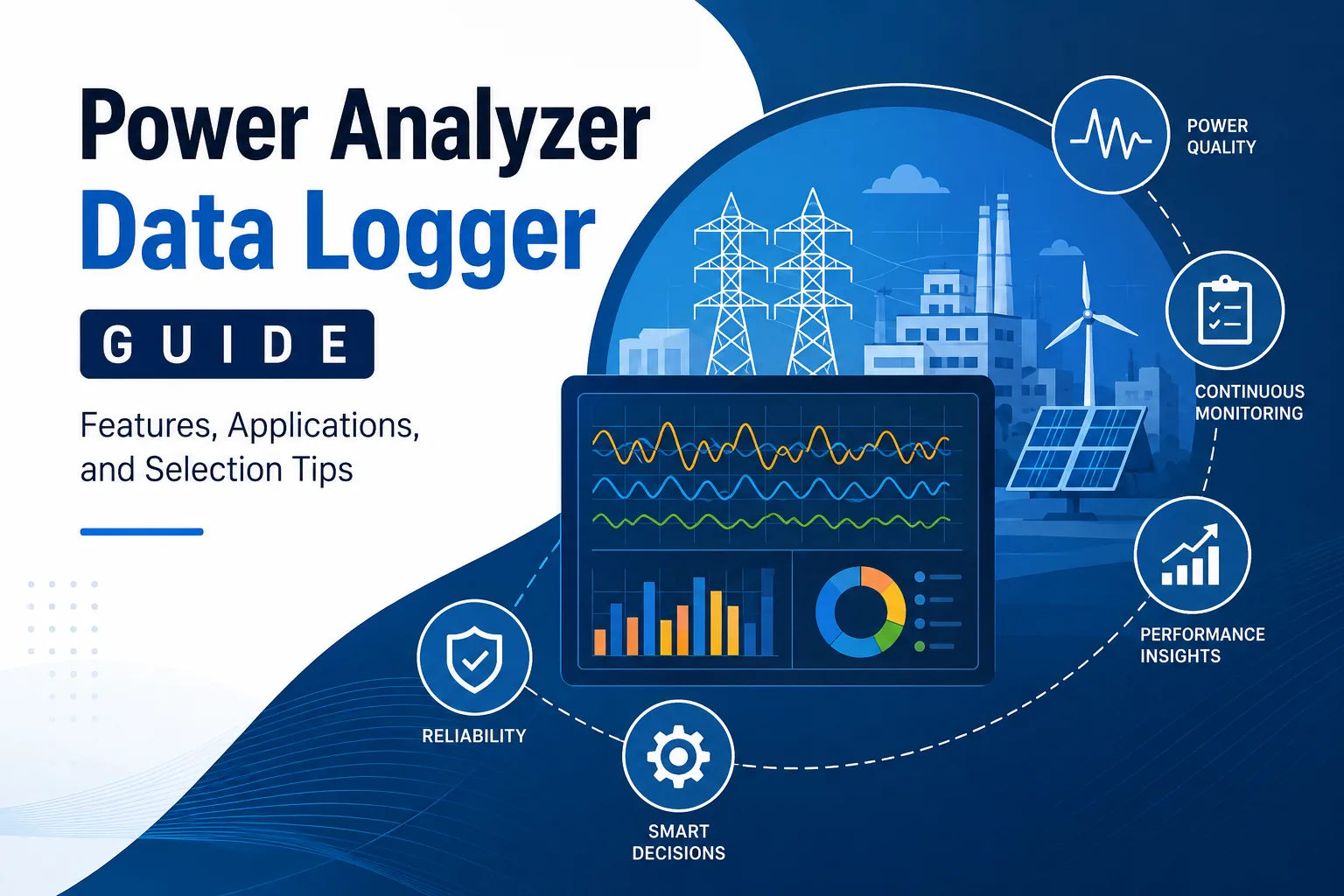
Power quality has become a critical part of maintaining reliable electrical systems. As industrial facilities, utilities, renewable energy sites, and commercial buildings rely on increasingly complex equipment, even minor electrical disturbances can affect performance, efficiency, and equipment lifespan. Identifying these issues requires more than a single measurement. It requires accurate data collected over time.
A Power Analyzer Data Logger provides continuous insight into electrical system performance by recording key parameters and power quality events as they occur. Instead of relying on assumptions, engineers can use recorded data to identify recurring issues, verify system performance, and make informed maintenance decisions.
Whether you're troubleshooting electrical faults, monitoring energy usage, or planning long-term asset condition monitoring, selecting the right monitoring solution is essential. Understanding its capabilities and applications is the first step toward achieving more reliable and efficient power systems.
What Is a Power Analyzer Data Logger?
A Power Analyzer Data Logger is a monitoring instrument that measures and records electrical parameters over a specified period. Unlike a standard meter that displays live readings, it stores historical data for later analysis.
It continuously records information such as:
- Voltage
- Current
- Frequency
- Active, reactive, and apparent power
- Power factor
- Harmonics
- Total Harmonic Distortion (THD)
- Energy consumption
- Power demand
Many modern Power Quality Analyzers combine real-time monitoring with advanced logging capabilities, allowing engineers to investigate intermittent faults that may otherwise go unnoticed.
For systems that require continuous monitoring, a power quality logger provides valuable data that supports troubleshooting, compliance, and long-term performance analysis.
Why Is Power Quality Monitoring Important?
Electrical systems are expected to operate reliably under varying load conditions. However, poor power quality can affect both equipment performance and operational efficiency.
Common power quality issues include:
- Voltage sags
- Voltage swells
- Harmonic distortion
- Frequency fluctuations
- Flicker
- Power interruptions
- Transient events
These disturbances can result in:
- Unexpected equipment failures
- Production downtime
- Reduced equipment lifespan
- Higher maintenance costs
- Increased energy consumption
A Power Analyzer Data Logger records these events over days, weeks, or even months, helping engineers identify recurring patterns instead of relying on occasional spot measurements.
What Can a Power Analyzer Data Logger Measure?
The capabilities of a Power Analyzer Data Logger extend beyond basic voltage and current measurements. Modern devices provide detailed insights into overall electrical system performance.
Typical measurements include:
- Voltage and current
- Frequency
- Active power (kW)
- Reactive power (kVAR)
- Apparent power (kVA)
- Power factor
- Energy consumption (kWh)
- Demand
- Harmonic analysis
- Total Harmonic Distortion (THD)
- Voltage imbalance
- Current imbalance
- Event logging
- Waveform capture
These measurements help maintenance teams understand both immediate issues and long-term system behaviour.
Power Analyzer Data Logger vs Power Quality Analyzer
Although the terms are sometimes used interchangeably, they are not always identical.
FeaturePower Analyzer Data LoggerPower Quality AnalyzerContinuous data logging✔✔Real-time measurements✔✔Power quality analysisLimited to modelAdvancedHarmonic analysis✔✔Compliance testingSome modelsCommonDetailed event analysis✔✔Many advanced Power Quality Analyzers also function as data loggers, providing comprehensive monitoring and reporting in a single device.
The right choice depends on whether your primary goal is continuous monitoring, compliance testing, troubleshooting, or a combination of these tasks.
Key Features to Look for in a Power Analyzer Data Logger
Not every application requires the same functionality. Selecting the right device depends on the complexity of your electrical system and the type of data you need.
Important features include:
- High measurement accuracy
- Long-term data logging
- Three-phase monitoring
- High-speed event recording
- Harmonic and THD analysis
- Remote communication
- Cloud or network connectivity
- Large internal memory
- User-friendly reporting software
- Compliance with relevant IEC standards
A portable power quality meter may be suitable for temporary investigations, while permanently installed systems support continuous monitoring in critical facilities.
How to Choose the Right Power Analyzer Data Logger
Choosing the right monitoring solution begins with understanding your operational requirements.
Consider the following questions:
What are you monitoring?
Are you investigating a specific fault, monitoring energy usage, or analysing long-term power quality?
How long will monitoring continue?
Short-term troubleshooting may only require portable equipment, while continuous monitoring benefits from permanent installations.
Is three-phase monitoring required?
Industrial plants, substations, and utility networks often require a Three phase power quality logger capable of monitoring all phases simultaneously.
What level of accuracy is needed?
Higher accuracy is essential for compliance testing, detailed diagnostics, and performance verification.
How will the data be accessed?
Modern systems may support:
- Ethernet
- Wi-Fi
- Cellular communication
- Cloud platforms
- Remote reporting
Selecting equipment that meets both current and future monitoring needs can reduce replacement costs and improve long-term value.
Where Are Power Analyzer Data Loggers Used?
Power monitoring is important across many industries.
Manufacturing
Production facilities rely on continuous monitoring to minimise downtime and improve equipment reliability.
Utilities
Utilities use Power Analyzer Data Loggers to monitor distribution networks, investigate faults, and improve power quality.
Renewable Energy
Solar and wind installations benefit from continuous monitoring to optimise performance and detect electrical abnormalities.
Commercial Buildings
Facility managers use logged data to identify inefficient electrical systems and reduce energy costs.
Data Centres
Reliable power is critical for IT infrastructure. Continuous monitoring helps reduce the risk of outages.
Mining
Mining operations often operate under demanding electrical conditions where detailed monitoring improves reliability.
Rail Infrastructure
Rail networks require stable electrical performance to maintain operational safety and minimise service disruptions.
Substations
Substations rely on continuous monitoring to identify developing issues before they affect network reliability.
How Power Analyzer Data Loggers Support Asset Condition Monitoring
Electrical assets gradually deteriorate over time. Monitoring performance trends helps identify potential failures before they become critical.
This is where asset condition monitoring becomes valuable.
Instead of reacting to failures, maintenance teams can identify warning signs early through continuous data collection.
Benefits include:
- Early fault detection
- Reduced unplanned downtime
- Improved maintenance scheduling
- Extended equipment life
- Better investment planning
Historical data also supports root cause analysis after unexpected events.
Portable Power Quality Meter or Fixed Data Logger?
Both options have their advantages.
A portable power quality meter is well suited for:
- Temporary investigations
- Site commissioning
- Energy audits
- Field service work
- Fault diagnosis
Fixed monitoring systems are better for:
- Continuous monitoring
- Critical infrastructure
- Utility networks
- Industrial plants
- Long-term asset management
The choice depends on whether monitoring is temporary or permanent.
How Transformer Monitoring Complements Power Quality Logging
Power quality monitoring provides valuable information about electrical performance, while transformer monitoring focuses on equipment health.
Solutions such as the Miro-F Transformer Monitor and Logger help monitor transformer operating conditions alongside power quality data.
Together, these technologies provide greater visibility into:
- Transformer loading
- Temperature trends
- Operating conditions
- Potential faults
- Long-term equipment performance
Combining these insights allows organisations to make more informed maintenance decisions and improve overall system reliability.
Common Mistakes When Choosing a Power Analyzer Data Logger
Selecting equipment based solely on price can limit future capabilities.
Common mistakes include:
- Ignoring long-term data storage requirements
- Choosing insufficient measurement accuracy
- Overlooking communication options
- Selecting the wrong measurement category
- Failing to consider future expansion
- Underestimating reporting software capabilities
A solution should support both current operational needs and future monitoring requirements.
Improve Monitoring with the Right Solution
Selecting the right Power Analyzer Data Logger involves more than comparing specifications. The best solution should match your monitoring objectives, system complexity, and long-term maintenance strategy. Whether you need temporary fault investigation, continuous power quality monitoring, or enhanced asset condition monitoring, choosing reliable equipment can lead to better operational decisions and improved system performance.
As a trusted power quality technology provider, CHK Power Quality offers monitoring solutions designed to support engineers, utilities, and industrial organisations with accurate data and dependable power quality insights.
Frequently Asked Questions
What is a Power Analyzer Data Logger used for?
It measures and records electrical parameters over time, helping engineers analyse power quality, identify faults, and improve system performance.
What is the difference between a Power Analyzer Data Logger and a power quality logger?
A power quality logger focuses on recording power quality events, while a Power Analyzer Data Logger often includes broader measurement and analysis capabilities.
When should I use a Three phase power quality logger?
It is recommended for industrial facilities, substations, utilities, and commercial buildings where three-phase electrical systems are used.
Can a portable power quality meter measure harmonics?
Yes. Many modern portable instruments can analyse harmonics, voltage disturbances, and other power quality events.
Why is asset condition monitoring important?
Continuous monitoring helps identify developing faults early, reducing downtime and extending equipment life.