
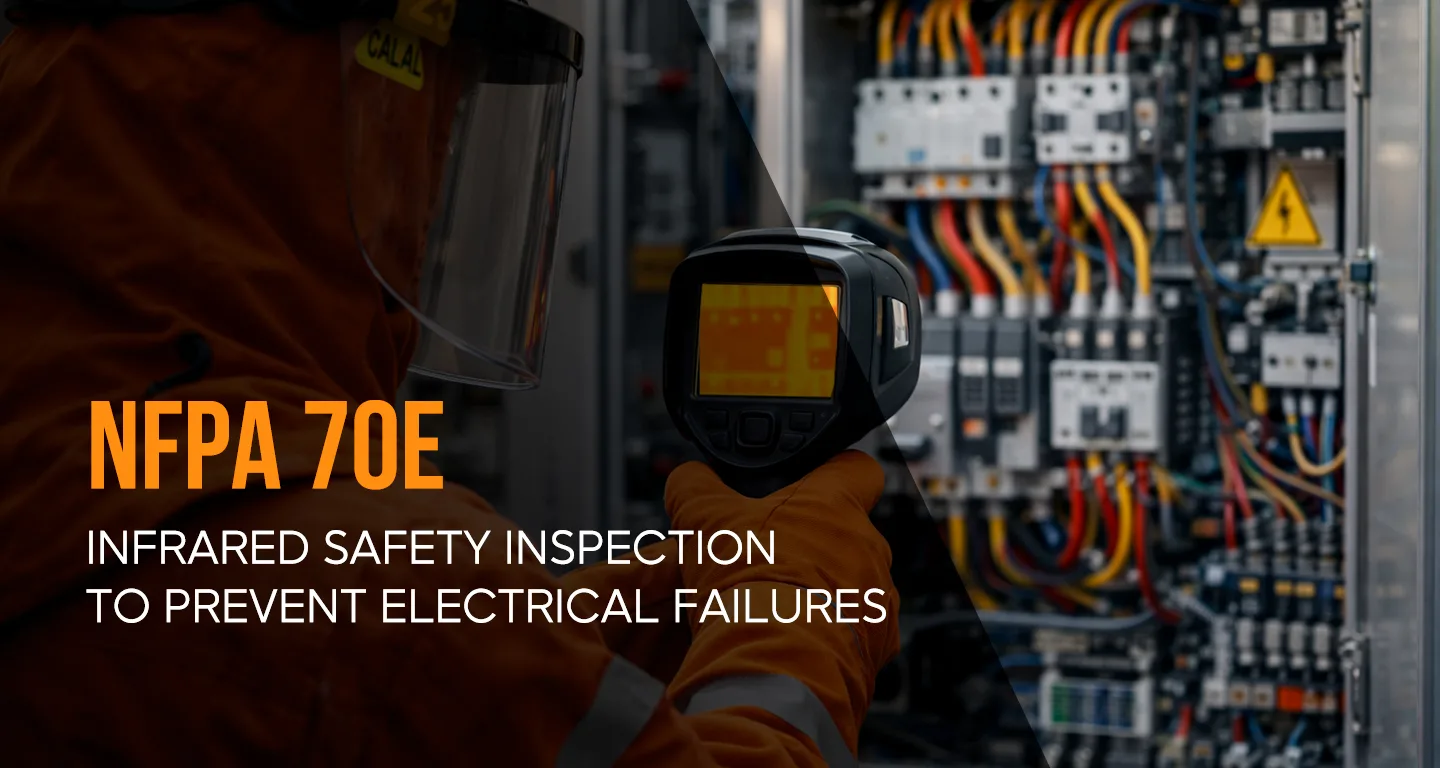
Electrical failures rarely happen without warning. In most facilities, overheating components, loose connections and overloaded circuits develop gradually, often out of sight, until they result in arc flash incidents, equipment damage or unplanned downtime. NFPA 70E infrared safety inspections are designed to identify these hidden risks early, helping organizations protect people, assets, and operational continuity.
What Are NFPA 70E Infrared Safety Inspections?
NFPA 70E infrared safety inspections are non-contact diagnostic evaluations that use thermal imaging to detect abnormal heat patterns in energized electrical systems while aligning with NFPA 70E electrical safety requirements.
By identifying temperature anomalies before they escalate, these inspections support safer work practices, reduce arc flash exposure and strengthen electrical safety programs.
Infrared inspections are especially valuable because most electrical failures generate heat before failure. Unlike visual checks, thermal scans reveal problems inside panels, switchgear, transformers and motor control centers without interrupting operations.
Why NFPA 70E Matters for Electrical Safety
NFPA 70E exists to reduce electrical hazards that can cause severe injuries or fatalities.
The standard focuses on safe work practices, arc flash risk mitigation and hazard awareness when working on or near energized equipment. While NFPA 70E does not mandate infrared inspections explicitly, it strongly supports proactive maintenance and hazard identification, areas where infrared thermography excels.
When combined with a documented safety program, infrared inspections help organizations demonstrate due diligence, reduce incident rates and improve compliance posture during audits or safety reviews.
How Infrared Inspections Prevent Electrical Failures
Infrared inspections prevent failures by detecting abnormal heat signatures that indicate developing electrical issues.
Common problems identified through thermal imaging include loose or corroded connections, phase imbalances, overloaded circuits, insulation degradation and failing components.
These issues often go unnoticed until a breaker trips or equipment fails. Thermal scans allow corrective action during planned maintenance windows, significantly reducing the risk of sudden outages, fires or arc flash events.
The Role of Infrared Inspections in Arc Flash Risk Reduction
Arc flash hazards are often linked to deteriorating electrical conditions.
Overheating conductors and connections increase resistance, which can trigger catastrophic failures under load. Infrared inspections provide actionable data that helps mitigate these risks before they reach critical levels.
When paired with NFPA-aligned safety planning, thermographic findings can guide maintenance priorities, improve labeling accuracy and support safer energized work decisions.
Integrating Inspections into Compliance and Safety Programs
A strong electrical safety program integrates inspection data into ongoing compliance efforts.
Infrared findings support maintenance documentation, risk assessments and corrective action tracking, key elements of an effective NFPA 70E strategy.
Facilities pursuing formal NFPA 70E Compliance Assessments benefit from infrared inspections because they provide objective, visual evidence of system condition. This data strengthens audit readiness and helps safety managers justify maintenance investments with clear, measurable insights.
Why Electrical Infrared Inspections Are a Smart Investment
Electrical infrared inspections deliver a high return by preventing costly failures rather than reacting to them. They reduce emergency repairs, extend equipment lifespan and minimize operational disruptions, especially in critical facilities such as manufacturing plants, data centers, healthcare buildings and commercial complexes.
Professional Electrical Infrared Inspections are performed by certified thermographers who understand electrical load conditions, safety boundaries and diagnostic interpretation. This ensures findings are accurate, actionable and aligned with real-world operating conditions.
Regional Safety Needs and Inspection Windows
Electrical safety challenges can vary by environment and infrastructure age. In regions like the Southeast, humidity and aging electrical systems can accelerate corrosion and connection degradation. Using inspection windows and planned scan access points improves safety while allowing consistent monitoring of energized equipment.
Facilities looking to strengthen regional safety practices can review insights on Infrared Electrical Safety Inspections Georgia, which highlight how inspection windows enhance safety and compliance without interrupting operations.
Supporting Arc Flash Studies and System Recertification
Infrared data is also valuable when updating electrical studies or preparing for recertification.
Thermal findings can inform Arc Flash Hazard Analysis by identifying real-world system weaknesses that affect fault conditions and risk levels. This leads to more accurate assessments and safer protection strategies.
For buildings undergoing periodic evaluations, infrared inspections support Electrical System Compliance for Recertification by documenting system condition and demonstrating proactive maintenance. This is especially important for commercial and multi-occupancy properties where safety and reliability are closely scrutinized.
In Conclusion
Preventing electrical failures is far more effective and less costly, than responding to emergencies. NFPA 70E infrared safety inspections provide the visibility needed to act early, protect personnel and maintain reliable operations.
To discuss your facility’s needs or explore tailored inspection solutions, connect with us and take a proactive step toward safer, more resilient electrical systems. If you’re evaluating your current electrical safety strategy or planning your next inspection cycle, consider speaking with specialists who can align thermography, compliance and risk reduction into one cohesive approach.
To know more visit us at : https://bradyinfrared.com/