
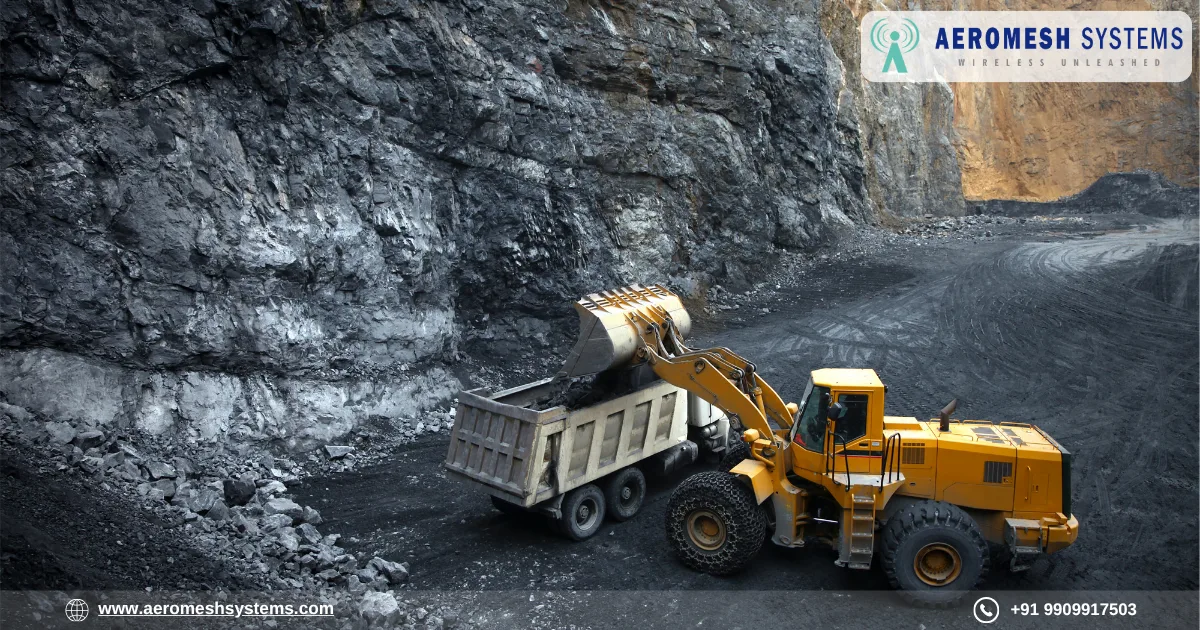
Mining operations are becoming increasingly connected, with vehicles, equipment, workers, cameras, and monitoring systems depending on continuous access to network services. However, maintaining connectivity across large and changing mine sites can be difficult. A private wireless network for mines provides a dedicated communication infrastructure designed around the specific requirements of mining environments, helping connect operational areas without depending entirely on conventional wired infrastructure.
Addressing Connectivity Challenges Across Mine Sites
Mining environments can cover large areas with changing terrain, heavy machinery, dust, vibration, and moving vehicles. As operations expand or work areas shift, network coverage may also need to change. Running cables across every operational zone can be difficult and may require additional infrastructure whenever a new area becomes active.
Private wireless networking offers a flexible approach. Wireless access points, mesh nodes, and other network infrastructure can be positioned across important areas to extend connectivity. In a wireless mesh network, connected nodes can communicate through multiple network paths, helping data move between different parts of a site. This approach can be useful for open-pit mines, stockyards, processing areas, workshops, and other distributed locations.
How a Private Wireless Network for Mines Supports Operations
A reliable network is not limited to employee internet access. Modern mining sites use connectivity for a wide range of operational systems. A private wireless network for mines can provide the communication foundation for applications that require consistent data exchange between field equipment, control rooms, vehicles, and monitoring systems.
Common applications include:
- CCTV and video surveillance: Network connectivity can support cameras positioned around haul roads, entry points, stockyards, and other areas that require remote visibility.
- Vehicle coordination: Connected vehicles can exchange operational information with centralized systems, supporting better awareness across busy work zones.
- Equipment monitoring: Machinery and field equipment can send operational information to monitoring platforms, helping teams track conditions and identify issues.
- Industrial IoT: Sensors and connected devices can transmit data from distributed areas to support monitoring, analysis, and operational decision-making.
- Mine communication: Field teams can stay connected with control rooms and other operational departments across the site.
These applications can generate different types and volumes of network traffic. A properly planned private network can help organize connectivity according to the requirements of each application rather than treating every device in the same way.
Scaling Connectivity as Mining Operations Change
One important requirement in mining is adaptability. Work areas can move, new equipment can be introduced, and temporary operational zones may become important over time. A network that is difficult to expand can create additional deployment challenges.
Wireless mesh architecture can help address this requirement by allowing network coverage to extend through interconnected nodes. Instead of designing connectivity around one fixed location, the network can be planned around the movement and distribution of mining operations. This can be particularly useful where extending physical cabling is impractical.
Network planning is still essential. Factors such as terrain, equipment locations, radio coverage, interference, bandwidth requirements, and network redundancy should be considered before deployment. The objective is to create connectivity that matches the actual operating environment rather than simply adding wireless equipment without a broader network design.
Supporting Connected and Data-Driven Mining
As mining becomes more dependent on remote monitoring, automation, digital communication, and Industrial IoT, dependable connectivity becomes an important part of the underlying infrastructure. A private wireless network for mines can bring different operational systems onto a dedicated communication platform while allowing network architecture to be designed around site-specific requirements.
AeroMesh Systems works in industrial wireless connectivity and outdoor mesh networking, supporting connectivity requirements across demanding environments. Its approach can be relevant for organizations looking to connect distributed mining infrastructure, monitoring systems, and field operations through wireless networking.
Conclusion
A private wireless network for mines can provide a practical foundation for connected mining operations. By supporting communication, CCTV, vehicle coordination, equipment monitoring, and Industrial IoT applications, private wireless connectivity can help mining teams maintain better visibility across large and changing sites. As digital systems become more integrated into daily operations, a flexible and thoughtfully designed wireless network can play an important role in keeping mining infrastructure connected.