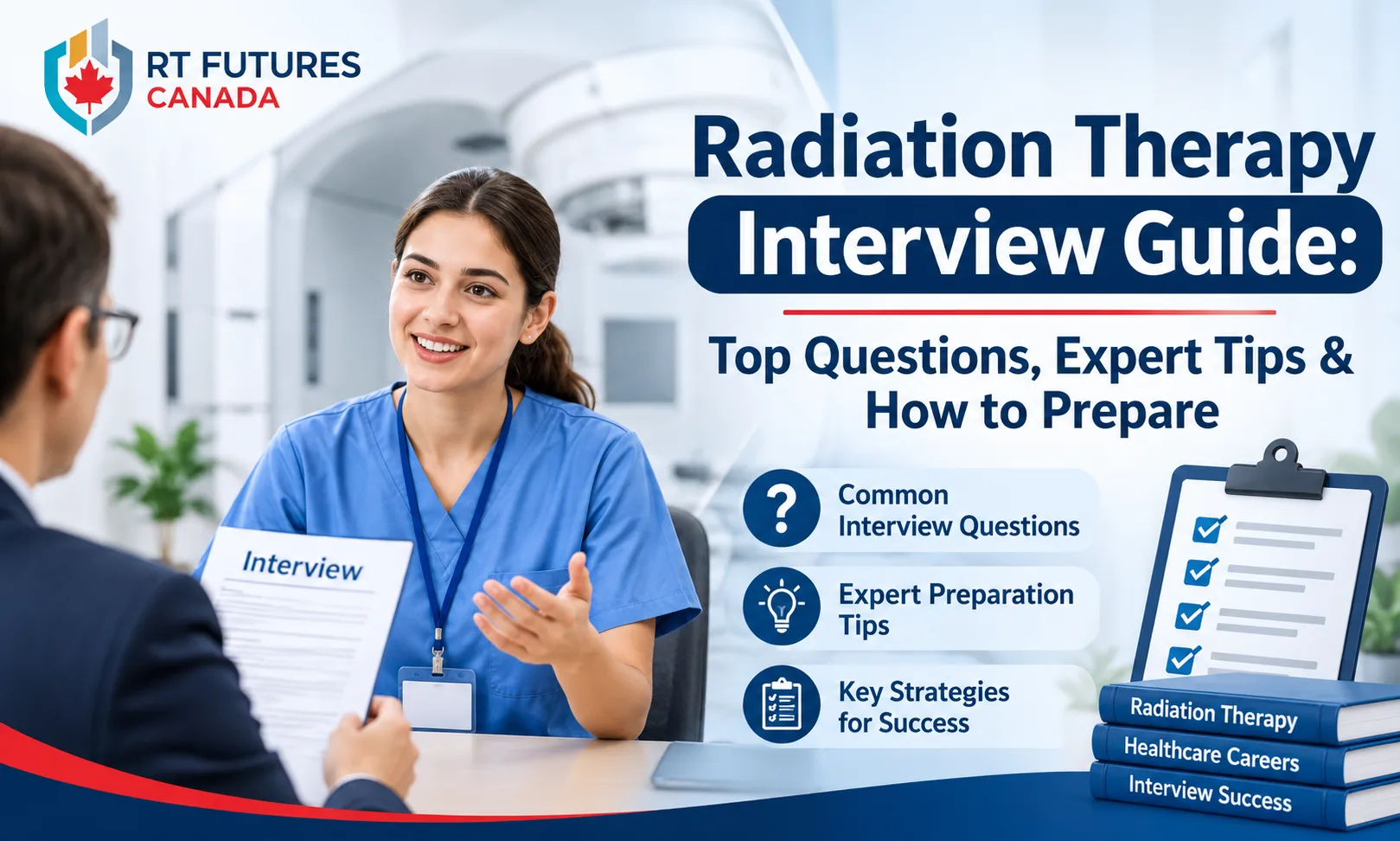
Choosing a career in radiation therapy is an important step toward building a rewarding future in healthcare. For students interested in becoming radiation therapists, the admission interview is an important opportunity to demonstrate their knowledge, communication skills, motivation, and understanding of patient care.
A well-prepared candidate should understand the profession, know why they want to enter the field, and be ready to explain how their personal qualities align with the responsibilities of a radiation therapist. This Radiation Therapy Interview Guide will help aspiring students understand what to expect, prepare for common interview questions, and approach their interviews with greater confidence.
1. Understand the Role of a Radiation Therapist
Before attending an interview, learn about the responsibilities of a radiation therapist. Radiation therapists are healthcare professionals who work with advanced medical technology to deliver prescribed radiation treatments, primarily to patients with cancer.
Their responsibilities include:
- Preparing patients for radiation treatment.
- Positioning patients accurately before treatment.
- Operating specialized radiation therapy equipment.
- Following treatment plans and safety procedures.
- Communicating with patients and healthcare professionals.
- Supporting patients throughout their treatment journey.
Understanding these responsibilities demonstrates that you have researched the profession and recognize the importance of accuracy, compassion, and teamwork.
2. Research the Radiation Therapy Program
Interviewers may ask why you selected a particular educational institution or radiation therapy program. Researching the program beforehand helps you provide a thoughtful answer.
Consider learning about:
- Program structure and duration.
- Academic prerequisites and admission requirements.
- Clinical placement opportunities.
- Practical learning experiences.
- Professional development opportunities.
- The institution's approach to healthcare education.
For students applying to Canadian programs, it is also helpful to understand the accredited education pathway and the professional requirements for entering the field.
3. Prepare for Common Radiation Therapy Interview Questions
One of the most important parts of interview preparation is practising potential questions. While questions vary between institutions, applicants should be prepared to discuss their motivation, understanding of healthcare, and personal strengths.
Common questions to practise include:
Q1. Why do you want to become a radiation therapist?
Explain your interest in healthcare, science, technology, and helping patients. Connect your personal motivation with the responsibilities of the profession.
Q2. What do you know about radiation therapy?
Describe how radiation therapy uses carefully planned radiation to treat diseases such as cancer. Mention the importance of accurate treatment delivery and patient safety.
Q3. What qualities make a good radiation therapist?
Discuss compassion, communication, attention to detail, teamwork, responsibility, and problem-solving skills.
Q4. How would you communicate with an anxious patient?
Explain that you would listen carefully, communicate clearly, show empathy, and help the patient feel comfortable while respecting professional boundaries.
Q5. How do you handle stressful situations?
Share an example of how you manage pressure, organize priorities, remain calm, and focus on finding practical solutions.
Q6. Why should we select you for this program?
Highlight your interest in the profession, willingness to learn, academic commitment, communication abilities, and dedication to patient-centred care.
4. Develop Important Interview Skills
Strong interview performance involves more than memorizing answers. Admissions committees want to understand how you communicate, think, and respond to different situations.
Focus on developing these essential skills:
- Communication: Express your thoughts clearly and confidently.
- Empathy: Demonstrate understanding and respect for patients.
- Teamwork: Explain how you cooperate with others.
- Problem-solving: Show your ability to approach challenges logically.
- Attention to detail: Recognize why accuracy is essential in healthcare.
- Adaptability: Demonstrate your willingness to learn and improve.
- Professionalism: Maintain a respectful and positive attitude.
Preparing examples from your academic activities, volunteering, employment, or everyday experiences can help you demonstrate these qualities.
5. Practise Behavioural and Scenario-Based Questions
Some interviews include questions about how you would respond to real-life situations. These questions help assess your judgement, communication, and ability to handle challenges.
For example:
- What would you do if a patient appeared frightened before treatment?
- How would you respond if you noticed a possible mistake in a procedure?
- How would you manage disagreements within a team?
- What would you do if you did not understand an instruction?
A useful approach is the STAR method:
- Situation: Explain the background.
- Task: Describe your responsibility.
- Action: Explain what you did or would do.
- Result: Share the outcome or what you learned.
When discussing clinical situations, emphasize patient safety, following established protocols, and seeking guidance from qualified professionals when necessary.
6. Make a Positive First Impression
Professional presentation and body language can contribute to a successful interview. Whether your interview takes place online or in person, preparation helps you feel more comfortable.
Important interview tips:
- Dress professionally and appropriately.
- Arrive early or join the online meeting on time.
- Maintain appropriate eye contact.
- Listen carefully before answering.
- Speak clearly and avoid rushing.
- Keep your answers relevant and organized.
- Be honest about your knowledge and experiences.
- Thank the interviewers for their time.
Remember that confidence comes from preparation, not from giving memorized or overly complicated answers.
7. Create a Final Interview Preparation Checklist
Before your interview, review the following key pointers:
- Research the radiation therapy profession.
- Understand the program's admission requirements.
- Prepare answers to common interview questions.
- Practise behavioural and scenario-based questions.
- Review your academic and personal experiences.
- Identify your strengths and areas for improvement.
- Prepare appropriate questions for the interview panel.
- Check your interview schedule and required documents.
- Get enough rest before the interview.
Following a preparation checklist can help you stay organized and avoid unnecessary last-minute stress.
Conclusion
Preparing for a radiation therapy program interview requires research, practice, confidence, and a genuine understanding of the profession. Students should focus on demonstrating their interest in healthcare, communication abilities, empathy, teamwork, and commitment to patient safety.
With the right preparation, you can present yourself more confidently and explain why radiation therapy is the right career pathway for you.
RTFutures is dedicated to helping aspiring radiation therapists and their families understand educational pathways, admission expectations, and career opportunities. Explore our educational resources and Interview Success Guide to get practical guidance, prepare for important questions, and take your next step toward a rewarding career in radiation therapy.