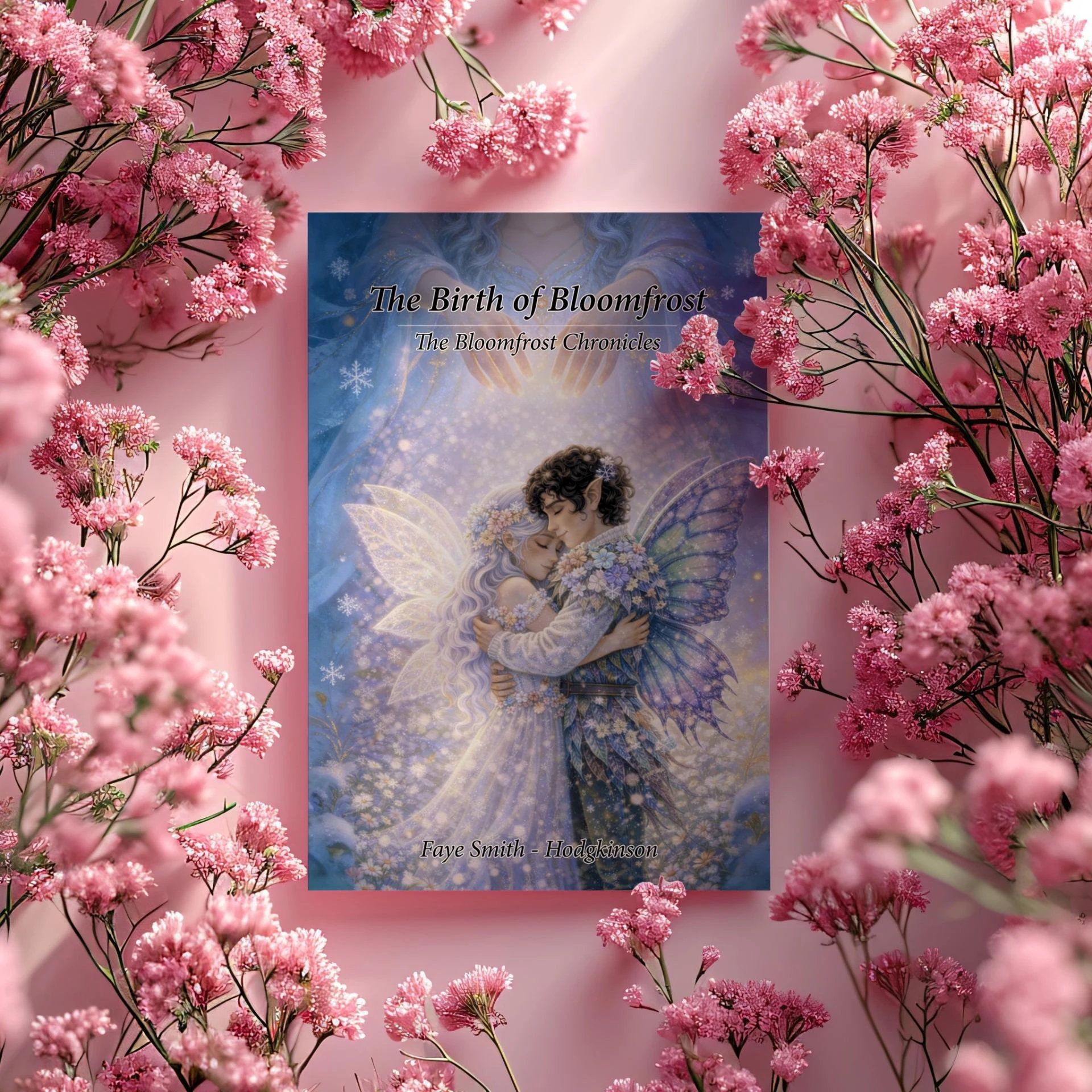

Traditional fairy tales often equate courage with action—slaying monsters, breaking spells, or overthrowing injustice. While these stories have their place, The Bloomfrost Chronicles by Faye Smith-Hodgkinson offer a compelling alternative: courage as emotional endurance, responsibility, and gentleness in the face of fear.
Across The Birth of Bloomfrost and The Season of Courage, bravery is never about dominance. Instead, it is about presence—remaining steady when change feels threatening and uncertainty feels overwhelming.
The foundation of this redefinition is established early. Lumi and Aerin’s love crosses boundaries not because they seek to disrupt order, but because connection finds them naturally. When Mother Nature intervenes, the choice she offers is not heroic in the traditional sense. It is complex, costly, and irreversible. Courage, here, is choosing with full awareness of consequence.
Bloomfrost, the season born from that choice, is intentionally fragile. It demands care and understanding. This fragility becomes the source of fear in the second book, where the world begins to question whether love-driven change is sustainable.
What makes The Season of Courage particularly striking is its portrayal of fear as communal rather than individual. Winter, spring, summer, and autumn all fear loss—of identity, purpose, or control. These fears mirror societal anxieties around transformation, progress, and vulnerability.
Rather than assigning blame, Faye Smith-Hodgkinson invites readers to witness fear compassionately. Fear is not portrayed as malicious; it is portrayed as reactive. The danger lies not in feeling fear, but in allowing it to guide decisions.
Lumi and Aerin’s response to this fear is neither resistance nor reassurance through words alone. They respond through action—but not the kind associated with conquest. They walk the seasons. They separate, learn, and reunite. They demonstrate that courage involves adaptation without erasure.
When fear eventually confronts them directly, the moment is quiet and profound. The question posed—“What if love fails?”—forces a reevaluation of courage itself. Is courage confidence? Certainty? Or is it commitment in the absence of guarantees?
Bloomfrost answers clearly. Courage is choosing to remain visible. It is choosing to try again. It is standing still when fear demands retreat.
This portrayal aligns closely with modern understandings of emotional resilience. Strength is not invulnerability. It is the ability to remain compassionate under pressure and to continue choosing care even when outcomes are uncertain.
By the conclusion of the series’ second book, Bloomfrost no longer represents a miracle. It represents a practice—one that requires listening, patience, and shared responsibility. Courage, as defined by Faye Smith-Hodgkinson, is not an extraordinary act reserved for heroes. It is a quiet discipline available to anyone willing to stay present.
In redefining courage this way, The Bloomfrost Chronicles offer a fairy tale deeply suited to our time—one that teaches readers of all ages that gentleness, when chosen again and again, can change the world.