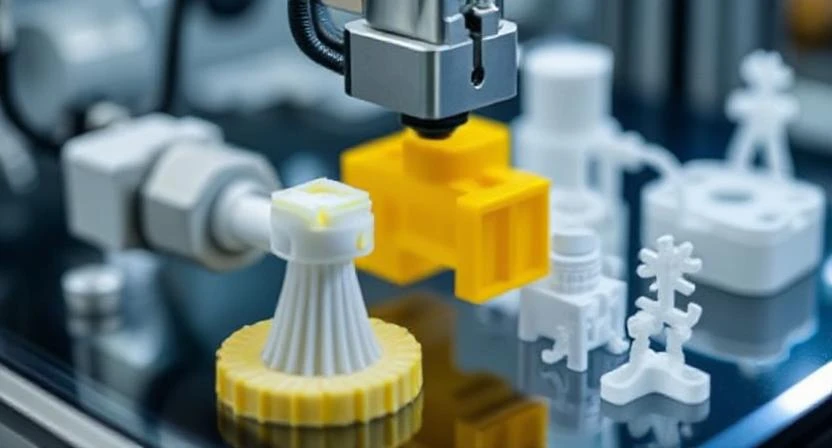
In today's fast-paced manufacturing landscape, businesses and hobbyists alike are turning to plastic 3D printing services to bring their ideas to life. This cutting-edge technology offers unparalleled flexibility, speed, and cost-efficiency, making it a game-changer for industries ranging from aerospace to healthcare.
Whether you're prototyping a new product or producing end-use parts, plastic 3D printing services provide a reliable and innovative solution. Let’s explore how this technology works, its benefits, applications, and how to choose the right service for your needs.
How Plastic 3D Printing Services Work
Plastic 3D Printing Service, also known as additive manufacturing, builds objects layer by layer using various thermoplastic materials. Here’s a breakdown of the most common techniques:
1. Fused Deposition Modeling (FDM)
FDM is the most widely used 3D printing method, where a thermoplastic filament is melted and extruded through a nozzle. It’s ideal for prototyping and functional parts due to its affordability and material versatility.
2. Stereolithography (SLA)
SLA uses a UV laser to cure liquid resin into hardened plastic. This method delivers high-resolution prints with smooth finishes, making it perfect for detailed models and dental applications.
3. Selective Laser Sintering (SLS)
SLS fuses powdered nylon or other plastics using a laser, creating strong, durable parts without the need for support structures. It’s commonly used for complex industrial components.
4. Multi Jet Fusion (MJF)
Developed by HP, MJF uses an inkjet array to apply fusing agents to a bed of plastic powder, resulting in highly accurate and consistent parts with excellent mechanical properties.
Key Benefits of Using Plastic 3D Printing Services
Why should businesses consider outsourcing their 3D printing needs? Here are the top advantages:
1. Rapid Prototyping & Faster Time-to-Market
Traditional manufacturing methods can take weeks or months to produce a prototype. With plastic 3D printing, designs can be turned into physical parts in hours, accelerating product development cycles.
2. Cost-Effective for Low-Volume Production
Injection molding requires expensive tooling, making it impractical for small batches. 3D printing eliminates these costs, allowing for economical small-scale production.
3. Design Freedom & Customization
Complex geometries, internal channels, and lightweight structures that are impossible with conventional methods can be easily achieved with 3D printing.
4. Reduced Material Waste
Unlike subtractive manufacturing (e.g., CNC machining), 3D printing only uses the material needed, minimizing waste and supporting sustainable practices.
Industries Transformed by Plastic 3D Printing Services
From healthcare to automotive, plastic 3D printing is making waves across multiple sectors.
1. Medical & Dental
Custom prosthetics, surgical guides, and dental aligners are now efficiently produced using biocompatible 3D-printed plastics.
2. Aerospace & Automotive
Lightweight yet durable 3D-printed components help reduce fuel consumption and improve performance in vehicles and aircraft.
3. Consumer Goods & Electronics
Companies use 3D printing to create custom phone cases, ergonomic tools, and even wearable tech with intricate designs.
4. Education & Research
Universities and research labs leverage 3D printing for hands-on learning, engineering projects, and scientific models.
How to Choose the Right Plastic 3D Printing Service
Not all 3D printing services are created equal. Consider these factors before selecting a provider:
1. Material Options
Ensure the service offers the right plastic (PLA, ABS, Nylon, PETG, etc.) for your project’s strength, flexibility, and thermal resistance needs.
2. Printing Technology & Precision
High-detail projects may require SLA or MJF, while functional prototypes might work best with FDM or SLS.
3. Turnaround Time & Pricing
Compare lead times and costs between different providers to find the best balance of speed and affordability.
4. Post-Processing & Finishing
Some services offer sanding, painting, or chemical smoothing to enhance the final product’s appearance and functionality.
Final Thoughts
Plastic 3D printing services are reshaping how we design, prototype, and manufacture products. With benefits like speed, cost savings, and unmatched design flexibility, this technology is a must-consider for innovators across industries.
By understanding the different printing methods, applications, and how to select the right service, you can fully leverage the potential of plastic 3D printing to bring your ideas to life.