The Andaman Islands are known for beautiful beaches, tropical landscapes and unforgettable coastal experiences. But for travellers looking beyond traditional sightseeing, the underwater world offers something equally fascinating.
Imagine descending gently beneath the surface, watching colourful fish move around coral formations and discovering an entirely different side of island life.
For many visitors, scuba diving is an adventure they have always wanted to try. Yet questions about swimming ability, safety, equipment and underwater breathing often prevent beginners from booking their first experience.
The encouraging news is that certain introductory scuba programs are suitable for eligible first-time participants, including non-swimmers.
This guide explains how to plan your first underwater experience in the Andaman Islands, choose an appropriate diving program and understand what to expect before entering the ocean.
What Makes the Andaman Islands Special for Scuba Diving?
The Andaman Islands are surrounded by tropical marine environments that support coral reefs, reef fish and diverse underwater ecosystems.
Among the popular diving destinations, Havelock Island, officially known as Swaraj Dweep, offers a well-established selection of scuba diving activities.
The island features shore-accessible reef environments and boat-accessible dive sites, providing opportunities for participants with different experience levels.
Travellers exploring Scuba diving in Andaman can choose from introductory shore diving experiences, supervised boat diving programs and professional certification courses.
The appropriate program depends on individual eligibility, previous diving experience and environmental conditions.
Can Someone Who Cannot Swim Experience Scuba Diving?
Yes. Some supervised introductory scuba diving programs allow people without swimming skills to participate.
However, this does not mean every non-swimmer is automatically eligible.
Participants must satisfy the program's medical and safety requirements, feel sufficiently comfortable in the water and complete the necessary preparation.
Unlike certified recreational diving, introductory experiences involve close supervision from qualified diving professionals.
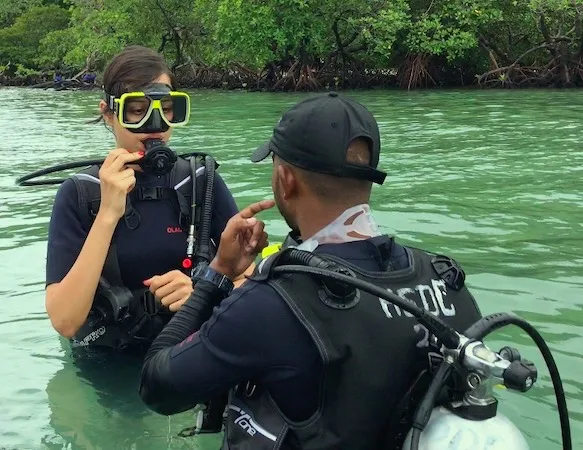
During training, participants learn to breathe through a scuba regulator, communicate using underwater hand signals and follow important safety procedures.
For travellers interested in Scuba diving for non-swimmers in Andaman, dedicated beginner experiences are available around Havelock Island, including shore diving at Nemo Reef and selected introductory boat diving programs.
It is important to distinguish these experiences from a full scuba certification course, which involves additional training and swimming-related assessments.
Where Should Beginners Try Their First Scuba Dive?
Choosing the right location can make a significant difference to your first underwater experience.
Nemo Reef: A Beginner-Friendly Shore Dive
Nemo Reef is a popular shore-entry diving location on Havelock Island.
Shore diving involves entering the water directly from the beach rather than travelling to an offshore location by boat.
This can appeal to beginners who prefer becoming familiar with scuba equipment in a gradual, supervised environment.
Participants practise essential underwater skills before continuing with the dive.
The reef environment provides opportunities to observe tropical fish, coral formations and other marine organisms.
Tribe Gate: An Introductory Boat Diving Experience
Tribe Gate is another recognised dive location around Havelock Island.
Experience Scuba offers a PADI Discover Scuba Diving program at this location, including training and individual professional guidance.
Boat diving provides access to underwater environments beyond the immediate shoreline.
However, site accessibility and program suitability depend on sea conditions, participant readiness and the diving professional's assessment.
Beginners should focus on choosing an appropriate experience rather than selecting a dive simply because it reaches greater depths.
What Does Your First Scuba Diving Experience Look Like?
For first-time visitors, understanding the process can help reduce uncertainty.
Registration and medical assessment
Participants complete the necessary documentation and medical questionnaire before the activity.
Certain health conditions may require additional medical clearance.
Equipment introduction
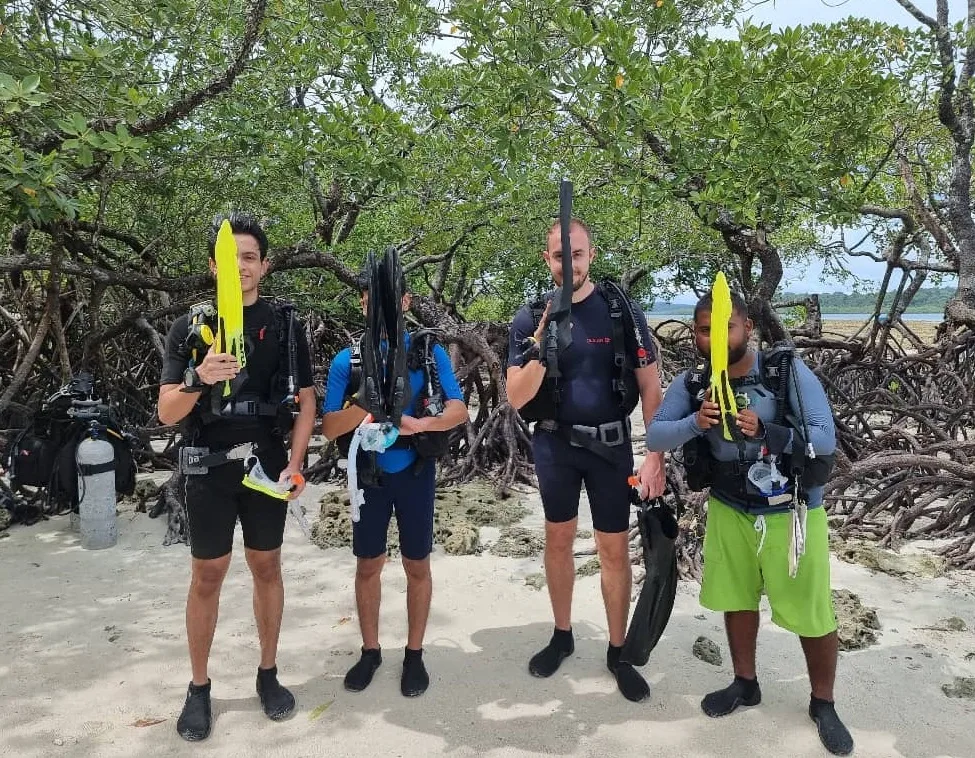
The diving professional introduces the mask, regulator, scuba cylinder, buoyancy equipment and fins.
Participants learn how the equipment functions and how to communicate underwater.
Shallow-water training
Before starting the underwater exploration, beginners practise the required skills in suitable conditions.
This preparation helps the diving professional determine whether the participant is ready to continue.
Supervised underwater exploration
After completing the necessary training, eligible participants can begin their dive under professional supervision.
The experience focuses on maintaining comfort, breathing continuously and observing the surrounding marine environment.
Returning to the surface
After the dive, participants receive assistance and any relevant post-dive instructions.
Depending on the selected package, photographs or videos may also be provided.
What Can You See Beneath the Andaman Sea?
One of the most rewarding aspects of scuba diving is the opportunity to observe marine life in its natural habitat.
The waters around Havelock Island contain coral reef ecosystems that support numerous tropical fish species.
Depending on the diving location and conditions, participants may encounter clownfish, butterflyfish, angelfish, parrotfish and schools of smaller reef fish.
Different hard and soft coral formations also contribute to the underwater scenery.
Occasional encounters with larger marine animals may be possible, but wildlife sightings are never guaranteed.
Responsible underwater behaviour is essential. Divers should avoid touching coral reefs, feeding fish or disturbing marine creatures.
Planning Your Scuba Diving Experience During an Andaman Holiday
Good planning helps travellers include scuba diving in their itinerary without unnecessary scheduling problems.
Choose the Right Season
October to May is generally considered favourable for many diving activities in the Andaman Islands.
However, conditions vary according to rainfall, wind, currents and local weather patterns.
Always confirm dive availability before finalising your travel arrangements.
Keep Time for Training
Scuba diving involves more than the time spent underwater.
A complete session may include registration, equipment preparation, practical training, transportation and post-dive procedures.
Ask your operator about the total duration before booking.
Avoid Scheduling a Dive Immediately Before Flying
Travellers should allow a suitable interval between diving and air travel.
Divers Alert Network recommends a minimum of 12 hours after a single no-decompression dive and at least 18 hours following multiple dives or multiple days of diving.
These are minimum recommendations, not guarantees of safety. Longer intervals may be appropriate.
Check Package Inclusions
Before booking, confirm whether the advertised price includes equipment, training, boat transfers, professional supervision, photographs and videos.
Understanding the package details can help you compare different experiences more effectively.
How to Choose a Reliable Scuba Diving Centre
A professional dive centre should clearly explain what participants can expect before and during the activity.
Ask about instructor qualifications, equipment maintenance, medical screening and emergency procedures.
A beginner should also understand the participant-to-professional ratio and the practical training included in the program.
Experience Scuba, based at Vijaynagar Beach No. 5 on Havelock Island, offers introductory shore diving, guided boat diving and PADI training programs.
Choosing an experience that matches your abilities is more important than selecting one based only on promotional photographs or advertised depth.
Frequently Asked Questions
Can non-swimmers try scuba diving in Andaman?
Yes. Certain supervised introductory scuba programs accept eligible non-swimmers who satisfy the required medical, safety and water-comfort criteria.
Is Havelock Island suitable for beginners?
Yes. Havelock Island offers introductory shore diving at Nemo Reef and selected guided boat diving experiences.
Do I need previous diving experience?
No. Introductory scuba diving programs are designed for eligible first-time participants and do not require previous scuba certification.
What happens if I feel nervous underwater?
Inform your diving professional immediately using the signals taught during training. You should never feel pressured to continue if you are uncomfortable.
Is scuba diving available throughout the year?
Diving availability depends on weather, sea conditions and local operating restrictions. Travellers should confirm arrangements with their chosen operator.
Can couples book a scuba diving experience together?
Yes. Couples can choose suitable diving programs, provided each participant independently meets the eligibility requirements.
Conclusion
Scuba diving offers an opportunity to discover a side of the Andaman Islands that cannot be experienced from the beach alone.
From colourful coral reefs to fascinating marine life, the underwater world provides memorable experiences for eligible beginners and more experienced visitors.
Even if you do not know how to swim, certain introductory programs may allow you to participate with appropriate training and professional supervision.
By choosing the right diving centre, understanding the safety requirements and planning your itinerary carefully, you can make your first underwater adventure an enjoyable part of your Andaman holiday.