
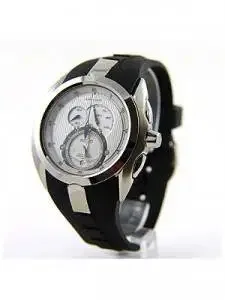
A perpetual calendar means you never have to correct the date for short months or leap years — the watch tracks them automatically for decades. In luxury watchmaking that is a costly mechanical complication, but Seiko builds it into affordable quartz and Kinetic movements instead, which puts the convenience within easy reach. The Seiko range includes several, from quartz calendars to the Kinetic Premier and solar Sportura. This guide explains what a perpetual calendar does, which Seiko movements offer it, and how to choose one.
Quick Answer
A Seiko perpetual calendar automatically accounts for months of different lengths and leap years, so the date stays correct for decades without manual adjustment. Seiko offers it in affordable quartz and Kinetic movements — unlike the costly mechanical perpetual calendars of luxury brands — in lines such as the quartz calendars (calibre 6A32), the Kinetic Premier (7D48), and the solar Sportura chronograph (V198). Most are correct to the year 2100. Choose the movement and style you want, since the perpetual calendar is the shared benefit rather than the deciding feature, and pick the case size and functions to match your wear.
What a perpetual calendar does
A normal date watch needs correcting after any month shorter than 31 days, which means several adjustments a year. A perpetual calendar knows the length of each month and accounts for leap years, so the date stays right without your input. Seiko's versions are typically programmed to remain accurate to the year 2100, which covers the entire working life of the watch. The practical upshot is simple: once it is set, you never touch the date again, which removes one of the small recurring chores of owning a watch and is especially welcome on a watch you rotate in and out of use.
Seiko's affordable approach
In traditional watchmaking a perpetual calendar is one of the most expensive mechanical complications, built from dozens of tiny components and priced accordingly. Seiko instead builds the same set-and-forget behaviour into quartz and Kinetic movements, delivering the convenience at a fraction of the cost and with none of the fragility. That is a genuinely different philosophy: rather than treat the perpetual calendar as a grail complication, Seiko treats it as a practical feature for an everyday watch. For most buyers who simply want a date they never have to correct, that approach makes far more sense than paying for a mechanical version. See Seiko quartz watches.
Quartz perpetual calendars
Seiko's quartz perpetual models, such as those built on the 6A32 calibre, pair battery-powered accuracy with the calendar that never needs adjusting, often in dress or sports cases with around 100m water resistance. They are the simplest and most affordable way into the feature, and being quartz they keep excellent time between the rare battery changes. For a low-fuss everyday watch that always shows the right date without any thought, the quartz perpetual models are the natural starting point and the easiest to live with.
Kinetic and solar perpetual calendars
Seiko also offers the perpetual calendar in Kinetic movements, such as the Premier Kinetic Perpetual on the 7D48 calibre, which charge from wrist motion, and in solar chronographs like the Sportura on the V198, which charge from light. These remove battery changes as well as date-setting, combining two conveniences in one watch. If you already like the idea of not changing a battery, a Kinetic or solar perpetual is the logical choice, giving you a watch that looks after both its power and its date with almost no intervention from you. See solar watches.
Reading and setting one
A perpetual calendar shows the date, and often the month or a leap-year indicator, and once set it looks after itself. The initial setting is a one-time job following the manual, which usually involves setting the year or leap-year position as well as the date, after which the mechanism handles the rest. It is worth keeping the manual for that first setup and for any occasion when the watch fully discharges and stops, since you will need to re-enter the calendar information. After that, you simply wear it and never correct the date again.
How it differs from an annual calendar
A perpetual calendar should not be confused with an annual calendar, which handles months of different lengths but still needs a manual correction once a year at the end of February. A true perpetual calendar accounts for leap years too, so it needs no adjustment at all until its programmed limit. Seiko's models are perpetual in this fuller sense, correct to 2100. If you see a watch described as an annual calendar, expect one correction a year; a Seiko perpetual removes even that, which is the distinction that matters when comparing models.
Choosing a Seiko perpetual calendar
Decide the movement first — quartz for simplicity and lowest cost, Kinetic for wrist charging, or a solar chronograph for extra function — then pick the style, size, and water resistance. The perpetual calendar is the shared benefit across all of them, so choose the watch you would happily wear anyway and treat the complication as a bonus you enjoy every time you glance at the date. If you rotate watches, a quartz perpetual is the most convenient because it holds its charge longest between wears, while daily-wear buyers may prefer the Kinetic or solar options.
Why it makes a good gift
A perpetual calendar Seiko is an unusually good watch to give as a gift, for a reason that goes beyond the styling. Because the date never needs correcting, the person receiving it is spared one of the small recurring chores of watch ownership, which makes it genuinely thoughtful for someone who is not a dedicated watch enthusiast and would not enjoy fiddling with the date each month. On the quartz and Kinetic models the running is low-maintenance too, so it is not a gift that demands upkeep or knowledge to enjoy. Set it once before giving it, and it will simply keep the correct date for years. It also carries a quiet cleverness — a feature that costs a fortune as a mechanical complication, delivered affordably — which makes it feel more special than a plain three-hander at a similar price. For a milestone, a retirement, or a first good watch for someone, a perpetual calendar combines practicality with a bit of horological interest, which is a rare and welcome pairing at an accessible price point.
FAQ
What is a perpetual calendar watch?
It is a watch that automatically accounts for months of different lengths and leap years, keeping the date correct without manual adjustment. Seiko's versions are typically accurate to the year 2100, which covers the working life of the watch.
Does a Seiko perpetual calendar need adjusting?
Not for the date, once it is initially set. It handles short months and leap years itself, so you never correct it month to month. You only set it once following the manual, and again if it fully discharges and stops.
Is Seiko's perpetual calendar mechanical?
No. Seiko builds it into quartz and Kinetic movements rather than as a costly mechanical complication, which makes the feature affordable and reliable on an everyday watch instead of a grail-level luxury piece.
What movements offer it?
Seiko offers perpetual calendars in quartz calibres such as the 6A32, in Kinetic models like the Premier Kinetic Perpetual on the 7D48, and in solar chronographs such as the Sportura on the V198. Each pairs the calendar with a different power source.
How long does the calendar stay accurate?
Most Seiko perpetual calendars are programmed to remain correct to the year 2100, which comfortably covers the working life of the watch. You will not need to override the calendar in normal use before then.
Is a perpetual calendar worth it?
If you dislike correcting the date after short months, yes — it removes that chore entirely. On an affordable quartz or Kinetic Seiko it adds real everyday convenience for little extra cost, especially on a watch you rotate in and out of use.
Verdict
A Seiko perpetual calendar gives you a date that never needs correcting, built affordably into quartz and Kinetic movements rather than a costly mechanical complication. Choose a quartz model for the simplest, cheapest route, or a Kinetic or solar version to remove battery changes as well as date-setting. Set the calendar once following the manual, and the watch handles short months and leap years to 2100 on its own. It is a genuinely useful everyday convenience, and Seiko's approach makes it accessible on a normal watch rather than a luxury piece — so buy the one you would wear anyway and enjoy never touching the date.