A petrol pump is a fast-paced retail workplace where employees must manage customer expectations, operational responsibilities, safety requirements, and payment processes throughout the day. Unlike many other retail environments, fuel stations also require constant attention to safety because employees work around vehicles, fuel, equipment, and moving customers.
For this reason, employee development should be considered an important part of fuel station management. A capable team can communicate more effectively, respond to customers professionally, follow operational procedures, and contribute to a safer workplace.
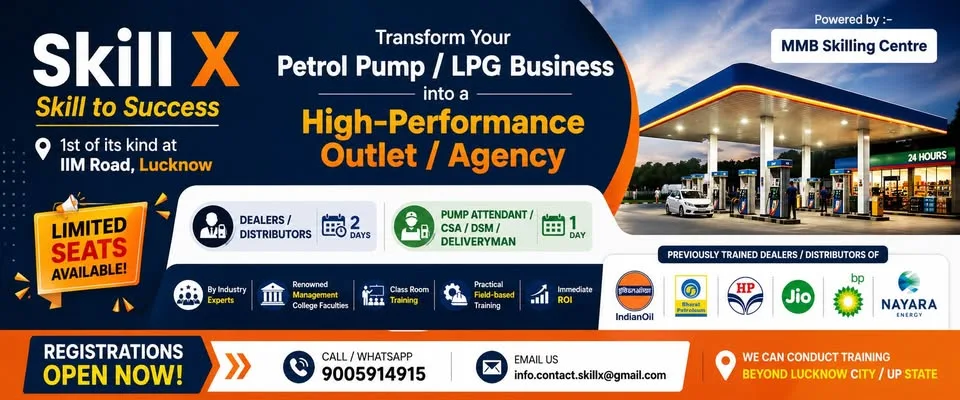
SkillX by MMB is designed as an intensive training program for petrol pump professionals. The program combines practical learning with important workplace skills, helping employees understand the standards expected in modern fuel retail operations.
Why Employee Development Matters at Petrol Pumps
Employees are one of the most visible parts of a fuel station. Customers may interact with several members of the team during a single visit, from the person assisting with fuel to the employee handling payment or recommending additional products.
The quality of these interactions can influence customer satisfaction. A helpful employee can make the transaction feel smooth, while poor communication can create unnecessary frustration.
Training provides employees with a structured understanding of their responsibilities. It can also help managers establish common standards so that different team members approach similar situations in a consistent manner.
Creating a Professional Workplace Image
A professional image begins with everyday habits. Employees working directly with customers should maintain appropriate grooming, clean uniforms, good personal hygiene, and positive body language.
Professional presentation is not only about appearance. It also includes the way employees speak, listen, respond, and behave during working hours.
Workplace discipline supports these standards. Punctuality, cleanliness, responsible conduct, and respect for colleagues can contribute to a better working environment.
When these habits become part of the workplace culture, customers are more likely to experience a consistent level of professionalism.
Understanding Customer Expectations
Customers visit fuel stations for convenience and speed, but their expectations can vary. Some customers may want a quick transaction, while others may ask questions, require assistance, or have specific concerns.
Employees should be able to recognize these differences and adjust their communication accordingly.
A simple service structure can help:
- Acknowledge the customer.
- Understand the requirement.
- Communicate clearly.
- Provide the appropriate assistance.
- Complete the interaction politely.
Roleplays can help employees practice these steps. Realistic situations allow participants to experience different customer behaviors and develop suitable responses.
Making Safety a Daily Responsibility
Safety should not be treated as an occasional topic. It needs to become part of everyday behavior at the fuel station.
Employees should understand common hazards and know the preventive measures expected in their workplace. Fire safety, emergency response, forecourt awareness, and responsible equipment handling are important areas of knowledge.
Employees should also understand that small actions can affect overall station safety. Following procedures, reporting hazards, avoiding unnecessary shortcuts, and remaining alert can reduce preventable risks.
Training can strengthen this mindset by using practical examples rather than relying only on theoretical explanations.
Understanding Fuel Unloading Procedures
Fuel delivery involves specialized operational activities. Tank truck decantation requires attention to the correct sequence, safety precautions, checking procedures, and established requirements.
Employees who understand the process can be more aware of the risks associated with incorrect handling. Training can also highlight common mistakes and explain how preventive measures can reduce operational problems.
The purpose of this learning is to encourage careful and responsible behavior whenever fuel unloading takes place.
Improving Non-Fuel Sales Opportunities
Modern fuel stations may offer products such as lubricants, accessories, and other vehicle-related items. These products can provide additional revenue opportunities when recommended appropriately.
However, employees should avoid making customers feel pressured. Good selling starts with understanding the customer's needs.
For example, a customer discussing vehicle maintenance may be interested in a relevant lubricant or accessory. Staff can explain the product and its potential usefulness while allowing the customer to make the final decision.
Cross-selling and upselling techniques become more effective when they are based on genuine customer requirements.
Handling Digital Payments Efficiently
Digital transactions have become a normal part of fuel retail. Customers may use UPI, cards, or wallets depending on their preference.
Employees should be comfortable with these options and understand how to assist when a customer encounters a payment issue.
A failed or delayed transaction can quickly become frustrating if communication is unclear. Staff should remain calm, explain what is happening, and follow the appropriate process.
Good digital payment handling combines technical awareness with customer service skills.
Turning Complaints Into Learning Opportunities
Complaints provide employees with some of the most challenging customer interactions. A customer may be upset because of a delay, payment problem, misunderstanding, or perceived service issue.
Employees should learn how to listen without becoming defensive. They should understand the concern, communicate respectfully, and follow the appropriate resolution process.
If an issue cannot be resolved at the employee level, knowing when to involve a supervisor is equally important.
Professional complaint handling can help reduce conflict and demonstrate that the business takes customer concerns seriously.
Learning Through Practical Exercises
The effectiveness of training often depends on how easily employees can apply what they have learned.
Practical activities can bridge the gap between theory and workplace behavior. Roleplays, simulations, discussions, and real-world examples allow participants to practice different situations.
For example, employees can simulate a customer complaint, a digital payment problem, or a product recommendation conversation. Trainers can then provide feedback and suggest improvements.
This approach can make training more engaging while helping employees remember important lessons.
Benefits for Fuel Station Managers
Employee training can also support managers by creating a clearer framework for evaluating workplace behavior.
Managers can observe whether employees are following grooming standards, using appropriate communication, maintaining safety awareness, and responding correctly to customers.
Training can therefore become the foundation for ongoing coaching. Instead of addressing every problem individually, managers can refer to common standards established during the program.
This can help create greater consistency across shifts and teams.
Supporting Long-Term Service Quality
Customer expectations will continue to evolve. Digital payments may become more common, new retail products may emerge, and customers may increasingly expect fast and professional service.
Fuel station teams need to adapt alongside these changes.
SkillX provides a structured learning experience that brings together several important aspects of modern fuel retail. By addressing customer service, professional grooming, safety, fuel unloading, sales, payments, and complaint handling, the program helps participants understand the wider responsibilities of their roles.
For petrol pump owners and managers, developing employees can be a practical way to strengthen service standards and workplace discipline. For employees, it can provide greater confidence and a clearer understanding of professional expectations.
A well-prepared team can contribute to safer operations, smoother customer interactions, stronger sales conversations, and a more professional station environment.
In an industry where employees interact with customers throughout the day, investing in practical skills can be an important step toward creating a reliable and customer-focused fuel retail experience.